 Epidemic
What is an Epidemic?
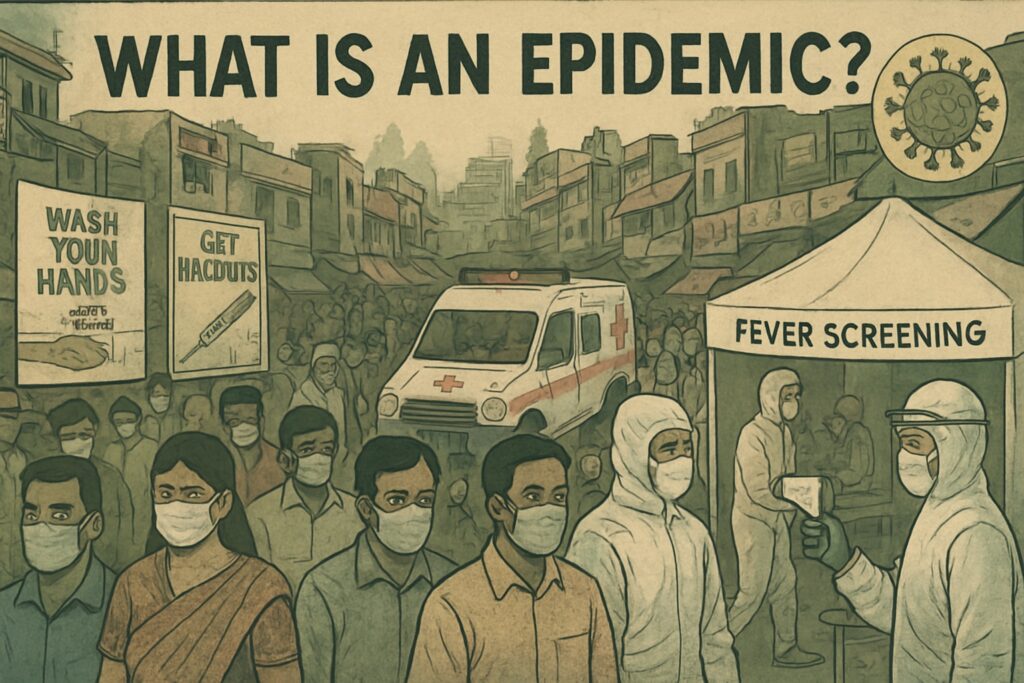
An epidemic occurs when the number of cases of a disease exceeds the normal expected levels in a community or region. If it spreads globally, it becomes a pandemic.
Causes of Epidemics
- Infectious Diseases: Caused by bacteria, viruses, or parasites (e.g., cholera, dengue).
- Poor Sanitation: Leads to the spread of water-borne and vector-borne diseases.
- Overcrowding and Urban Slums: Increases person-to-person transmission.
- Climate Conditions: Monsoons and humid climates can promote the growth of disease vectors like mosquitoes.
- Poor Public Health Awareness: Delayed diagnosis and treatment.
- Global Travel and Migration: Spreads diseases across regions.
Major Epidemics in India
| Year | Disease | Region Affected | Impact |
|---|---|---|---|
| 2020–2021 | COVID-19 | Nationwide | Over 4 crore cases and 5 lakh+ deaths |
| 1994 | Plague | Surat, Gujarat | Panic, mass migration, 50+ deaths |
| 2006 | Chikungunya | Southern India | Over 1 million cases |
| 2009 | H1N1 (Swine Flu) | Maharashtra, Delhi, others | Thousands infected, hundreds of deaths |
| 1817–1947 | Cholera Pandemics | Bengal, across India | Millions died in multiple outbreaks |
Common Epidemic Diseases in India
- Cholera – Water-borne disease, spreads due to contaminated water.
- Dengue and Chikungunya – Spread by Aedes mosquitoes during and after monsoon.
- Malaria – Caused by Plasmodium, spread by Anopheles mosquitoes.
- Typhoid – Spread through food and water contaminated with Salmonella bacteria.
- Swine Flu (H1N1) – Respiratory illness that spreads through human contact.
- COVID-19 – Global viral pandemic caused by the SARS-CoV-2 virus.
Impact of Epidemics
- Loss of life
- Economic disruption
- Closure of schools, markets, and public places
- Strain on healthcare systems
- Psychological trauma and fear
- Migration and social stigma
Government Response to Epidemics
- Surveillance and Early Detection:
- Integrated Disease Surveillance Programme (IDSP)
- Monitoring by National Centre for Disease Control (NCDC)
- Health Infrastructure Development:
- Setting up isolation wards, fever clinics, and dedicated hospitals.
- Training of health workers.
- Vaccination Programs:
- Polio eradication drive
- COVID-19 vaccination campaign
- Awareness Campaigns:
- Promoting hygiene, mask-wearing, mosquito control, and sanitation.
- Legislation:
- Epidemic Diseases Act, 1897
- Disaster Management Act, 2005 (used during COVID-19)
Preventive Measures
- Ensure clean drinking water and sanitation
- Promote hand hygiene and safe food practices
- Use mosquito nets and repellents
- Early diagnosis and timely vaccination
- Maintain social distancing during outbreaks
Conclusion
Epidemics have been a recurring health challenge in India. While medical science and government preparedness have improved, densely populated and under-resourced areas remain at high risk. Public awareness, improved health systems, early detection, and community participation are key to managing and preventing future outbreaks. Learning from past epidemics, especially COVID-19, India continues to strengthen its capacity to handle health emergencies.
Read: Geography Notes