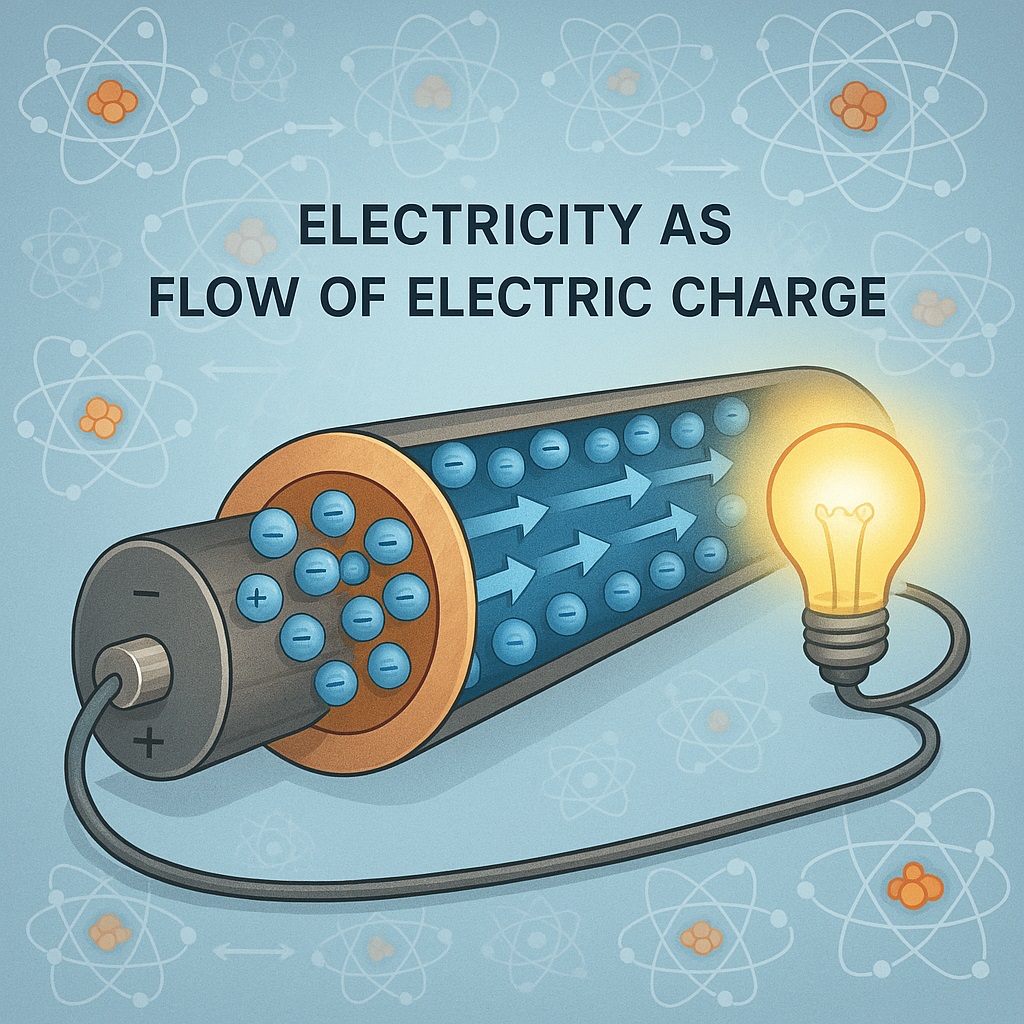
 Electricity
Electric Current and Charge Flow
Electricity originates from the movement of electric charge, primarily electrons, through a conductor.
Direct Current (DC)
Direct Current (DC) is an electric current that flows in one constant direction. Unlike AC, which periodically reverses direction, DC maintains a steady flow of electrons from the negative terminal to the positive terminal of a power source.
Where:
- I= current (in amperes),
- Q = electric charge (in coulombs),
- t = time (in seconds)
Sources of Direct Current
Direct Current (DC) electricity can be generated from various sources. One of the most common sources is chemical sources, such as batteries and cells. Examples include dry cells used in flashlights and lead-acid batteries found in automobiles. These devices rely on electrochemical reactions that create a potential difference, causing electrons to flow in one direction and produce DC.
Another source is the DC generator, which works by converting mechanical energy into electrical energy. It uses a component called a commutator to ensure that the current flows in a unidirectional manner. Lastly, solar cells serve as a clean and sustainable source of DC electricity. They function based on the photovoltaic effect, which allows them to convert solar energy directly into electrical energy without any moving parts or chemical reactions.
 DC Current
Characteristics of Direct Current
- Constant polarity: One terminal remains positive, the other negative.
- Unidirectional flow: Electrons move in a single direction.
- Stable voltage and current: Ideal for devices needing consistent energy input.
- Easily stored in batteries for future use.
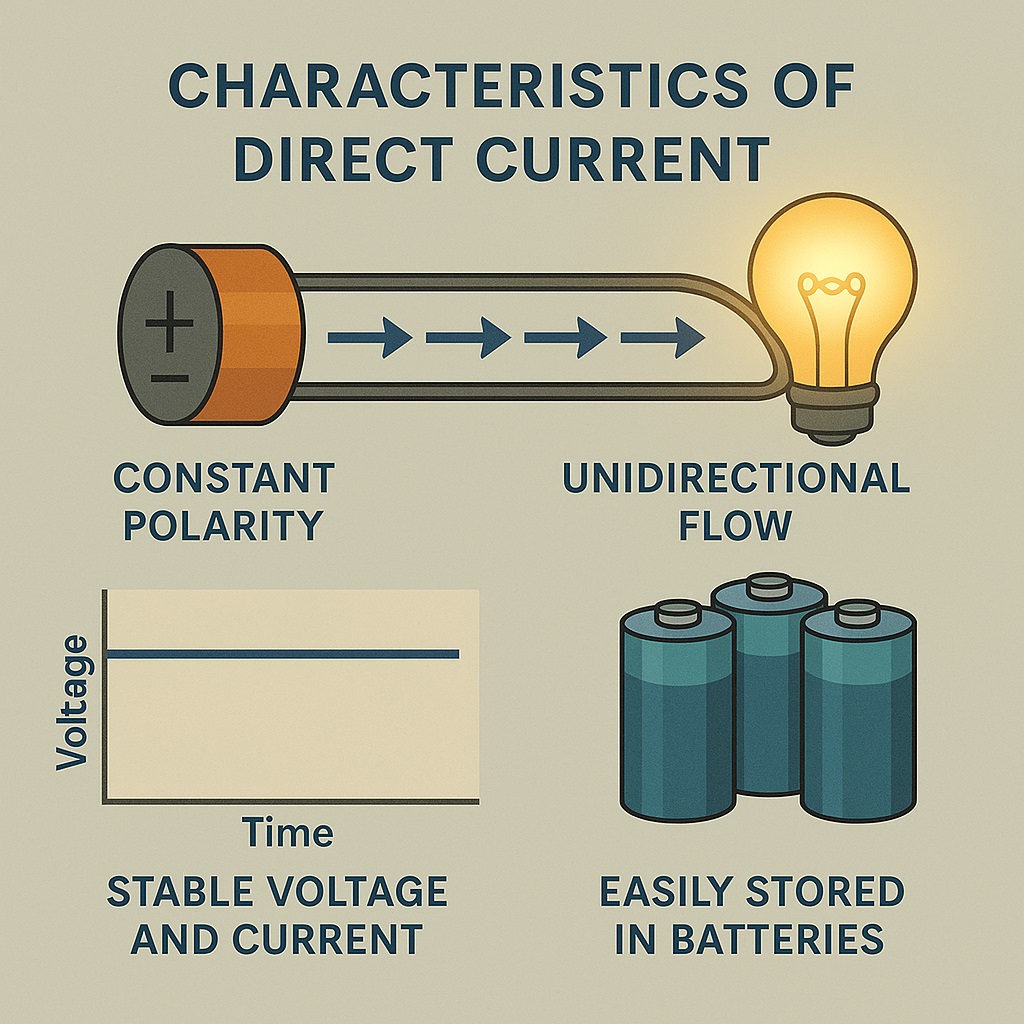 Characteristics of DC Current
Graph of DC vs Time
A DC voltage/time graph is a straight horizontal line, indicating a constant voltage over time.
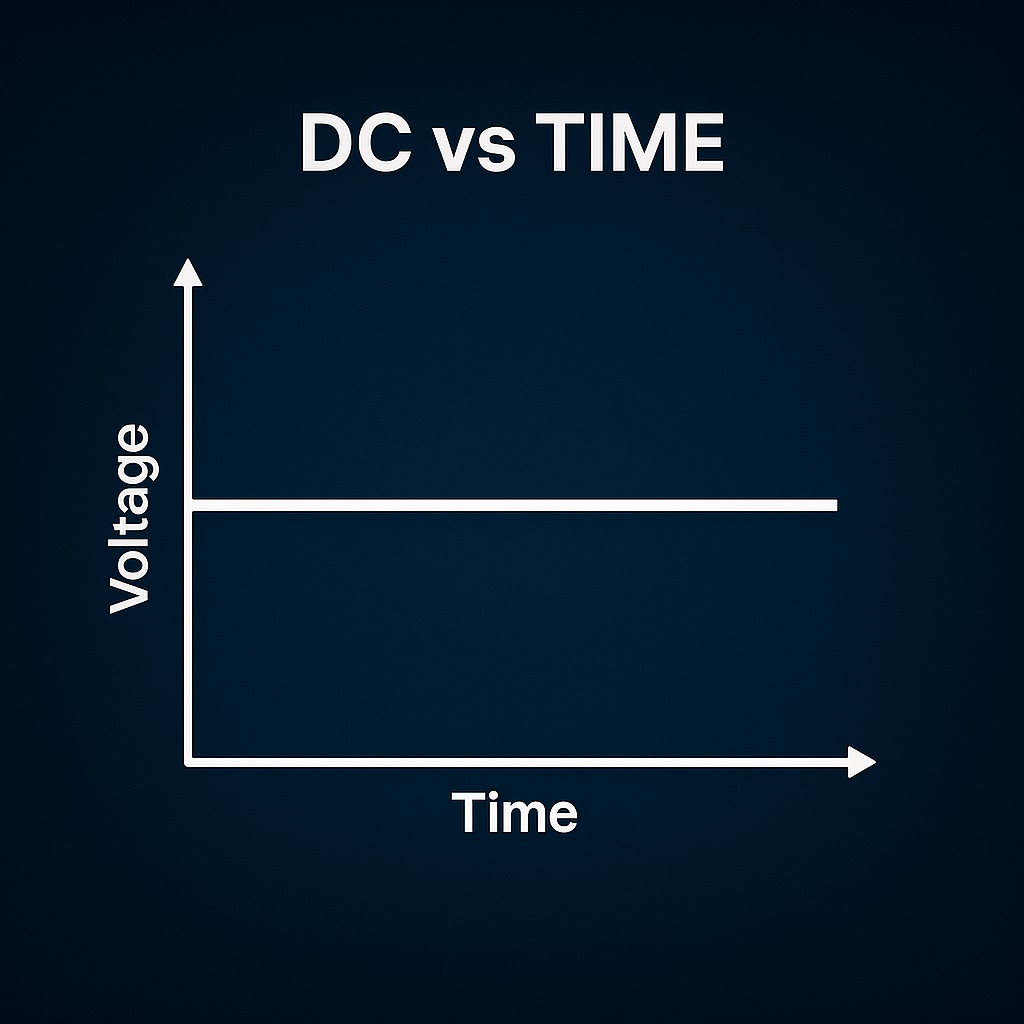 DC Voltage with Time
Types of Direct Current
- Pure DC – Completely constant magnitude (ideal case)
- Pulsating DC – Varies in magnitude but does not reverse direction (commonly from rectifiers)
 Pure and Pulsating DC
Difference Between DC and AC
| Feature | Direct Current (DC) | Alternating Current (AC) |
|---|---|---|
| Direction | Flows in one direction | Reverses direction periodically |
| Source | Batteries, solar cells | Generators, power stations |
| Transmission | Poor over long distance | Efficient over long distances |
| Frequency | Zero | 50 Hz (India), 60 Hz (US) |
| Applications | Electronics, EVs | Household power, heavy appliances |
Read: Science Notes