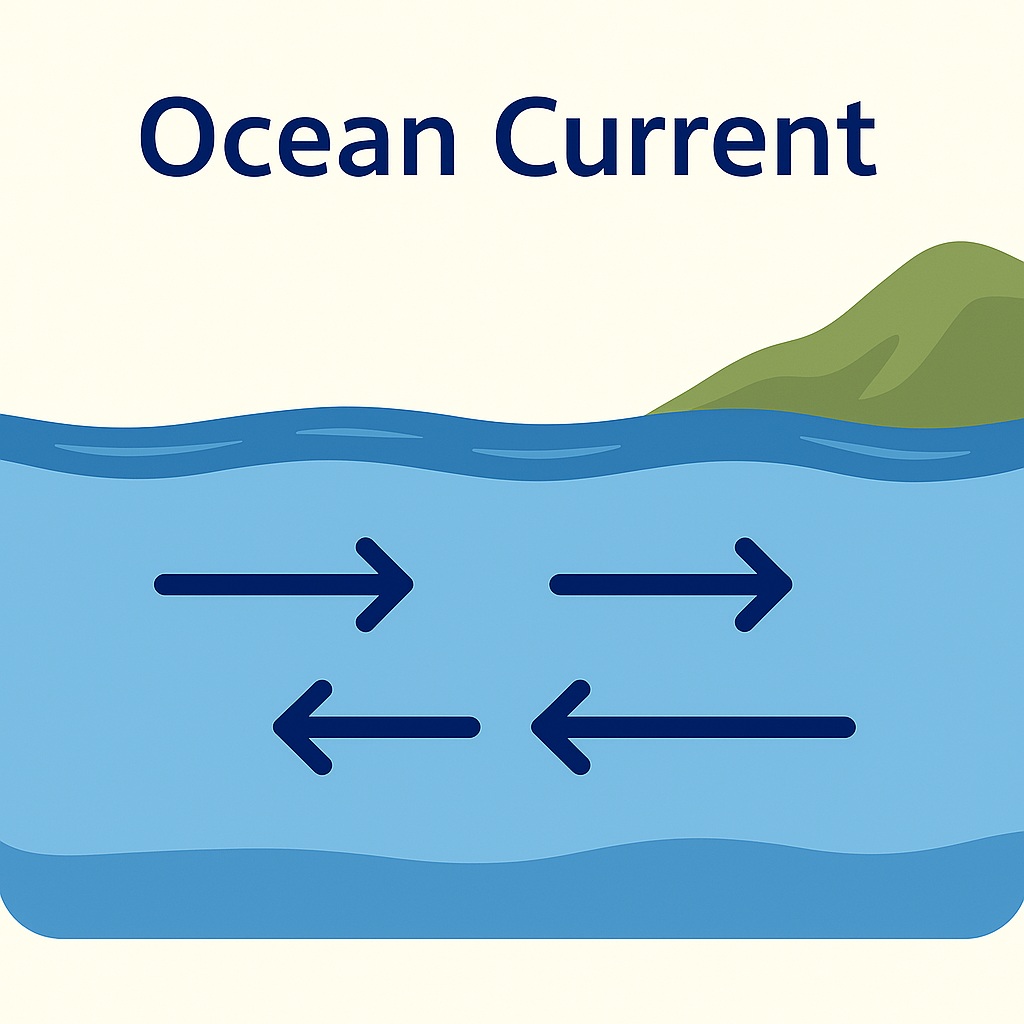
Oceanic current is the large-scale movements of seawater that flow through the world's oceans in well-defined patterns. These currents play a vital role in regulating the Earth's climate, distributing heat, transporting nutrients, and supporting marine life. Ocean currents are generated by various forces acting upon the water, such as wind, temperature differences, salinity variations, and the Earth's rotation.
Causes of Oceanic Currents
Oceanic currents are the steady, directional movements of ocean water, flowing across the globe’s vast seas and oceans. These currents are not random; they are driven by a combination of interconnected natural forces that operate on both surface and deep levels.
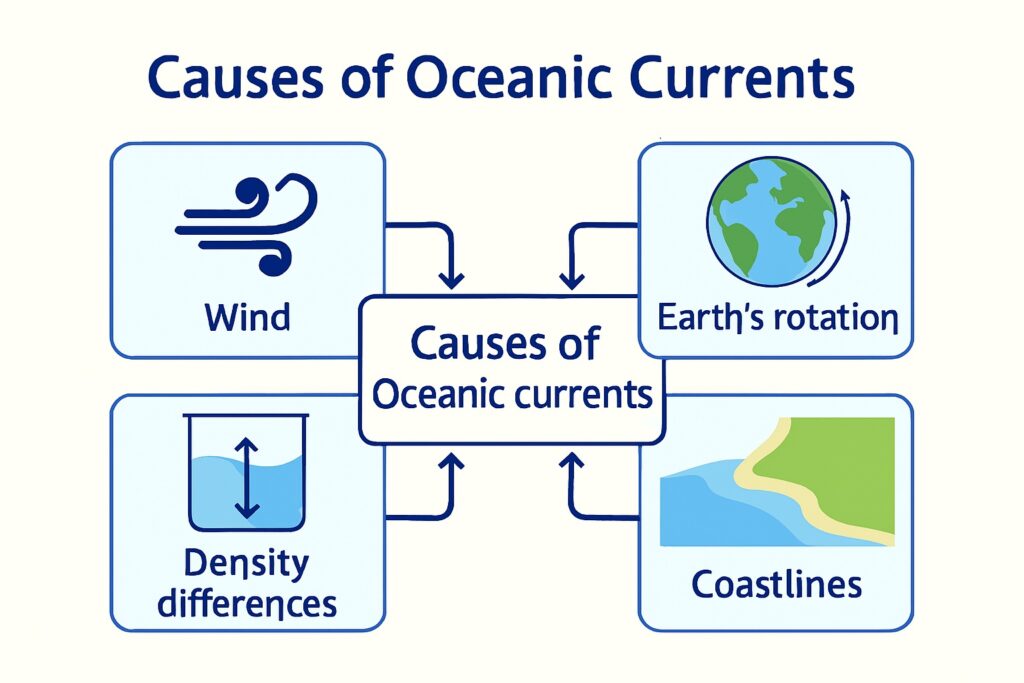
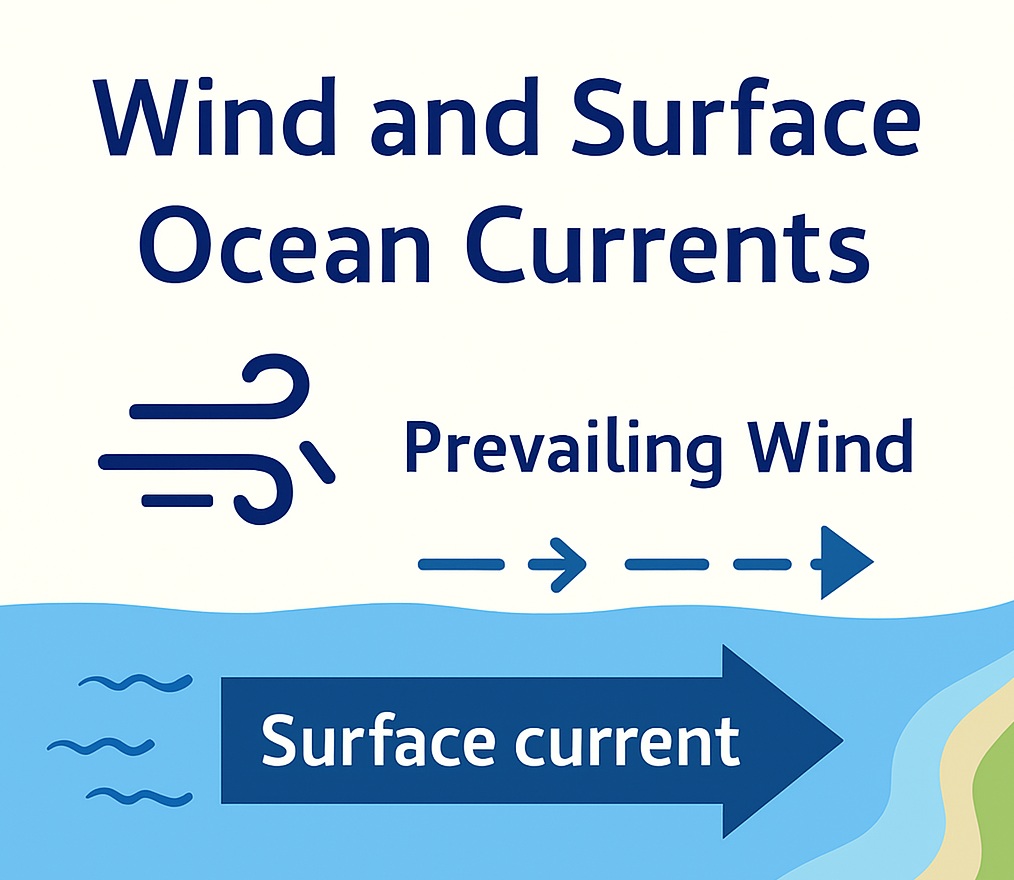
Wind is the most significant force driving surface ocean currents. When wind blows across the surface of the ocean, it transfers energy to the water through friction. This creates surface currents that move in the direction of the prevailing wind. The trade winds near the equator and westerlies in the mid-latitudes are especially important in shaping large ocean currents.
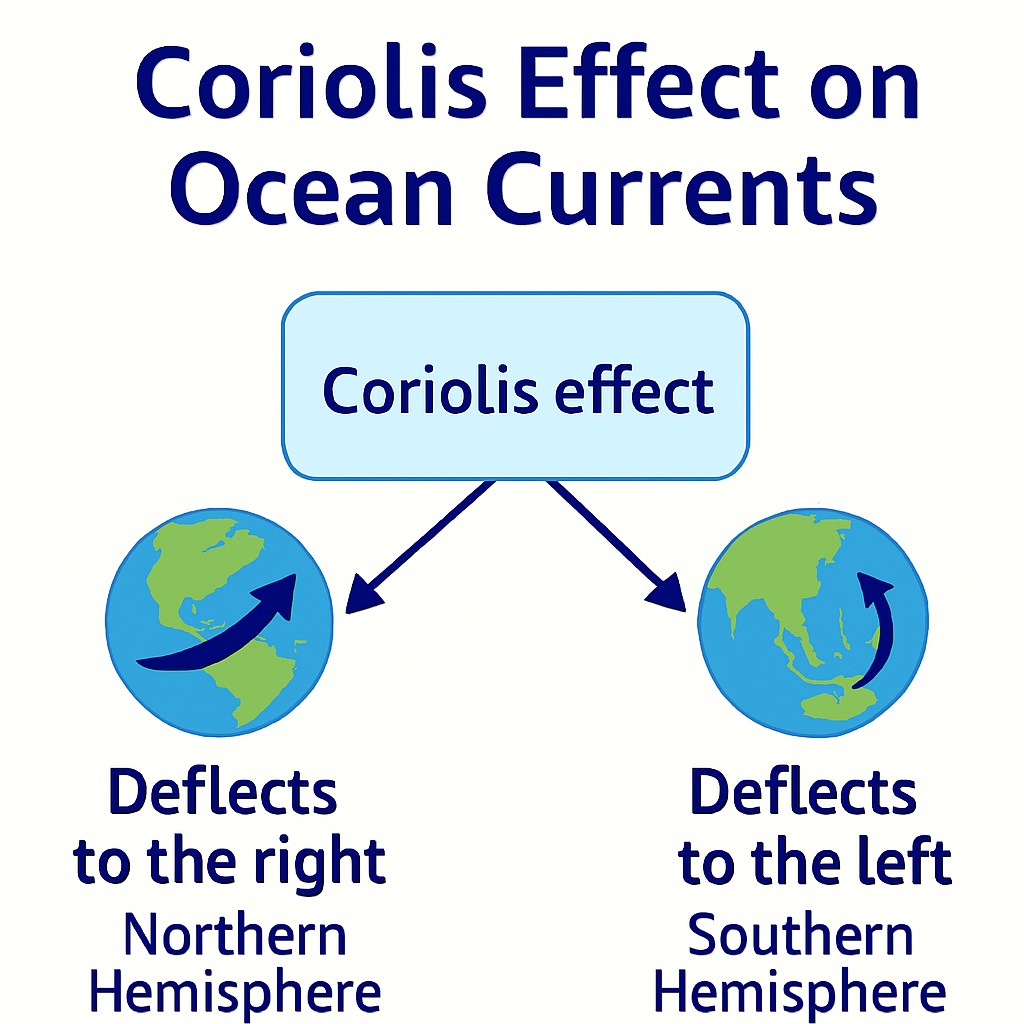
The Earth's rotation causes a phenomenon known as the Coriolis effect, which deflects moving water. In the Northern Hemisphere, currents are deflected to the right, while in the Southern Hemisphere, they are deflected to the left. This effect, combined with wind, helps form the circular patterns of surface currents in major ocean basins. Without the Coriolis effect, currents would follow straight paths instead of curved ones.
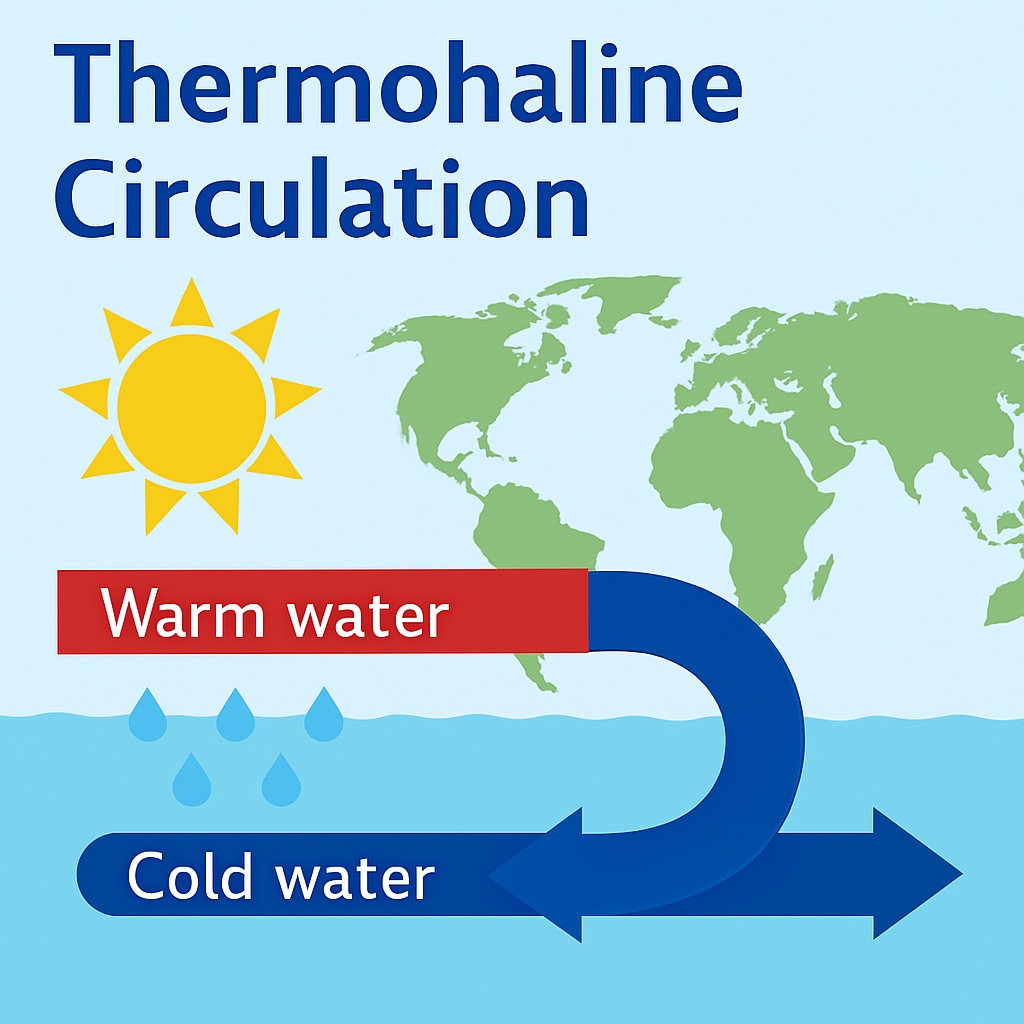
The thermohaline circulation refers to deep ocean currents driven by differences in temperature and salinity. Cold, salty water is denser and tends to sink, while warmer, less salty water rises. This vertical movement of water forms a global conveyor belt of deep-sea currents that circulate slowly but steadily throughout the world’s oceans, playing a major role in redistributing heat and regulating Earth's climate.
The gravitational forces of the Moon and Sun create tides, which lead to tidal currents. These currents are most noticeable along coastlines, estuaries, and shallow seas. Unlike surface currents driven mostly by wind, tidal currents change direction and strength regularly based on the lunar cycle.
The physical shape of the ocean floor and surrounding landmasses greatly influences the direction and behavior of currents. Continental margins, underwater ridges, islands, and seafloor features can deflect, block, or guide ocean currents.
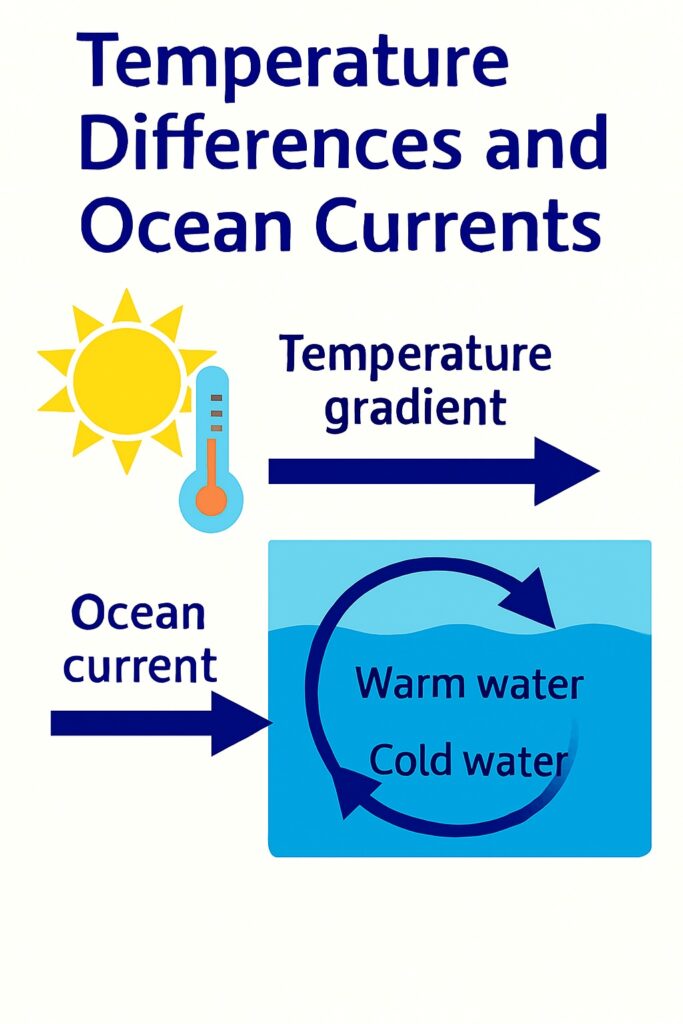
The Sun heats different parts of the ocean unequally. Equatorial waters receive more direct sunlight and become warmer, while polar regions receive less sunlight and stay colder. Warm water tends to flow toward the poles, and cold water moves toward the equator.

Gravity helps maintain the ocean's slope and causes water to move from regions of higher pressure to lower pressure, contributing to overall ocean circulation.
Types of Oceanic Currents
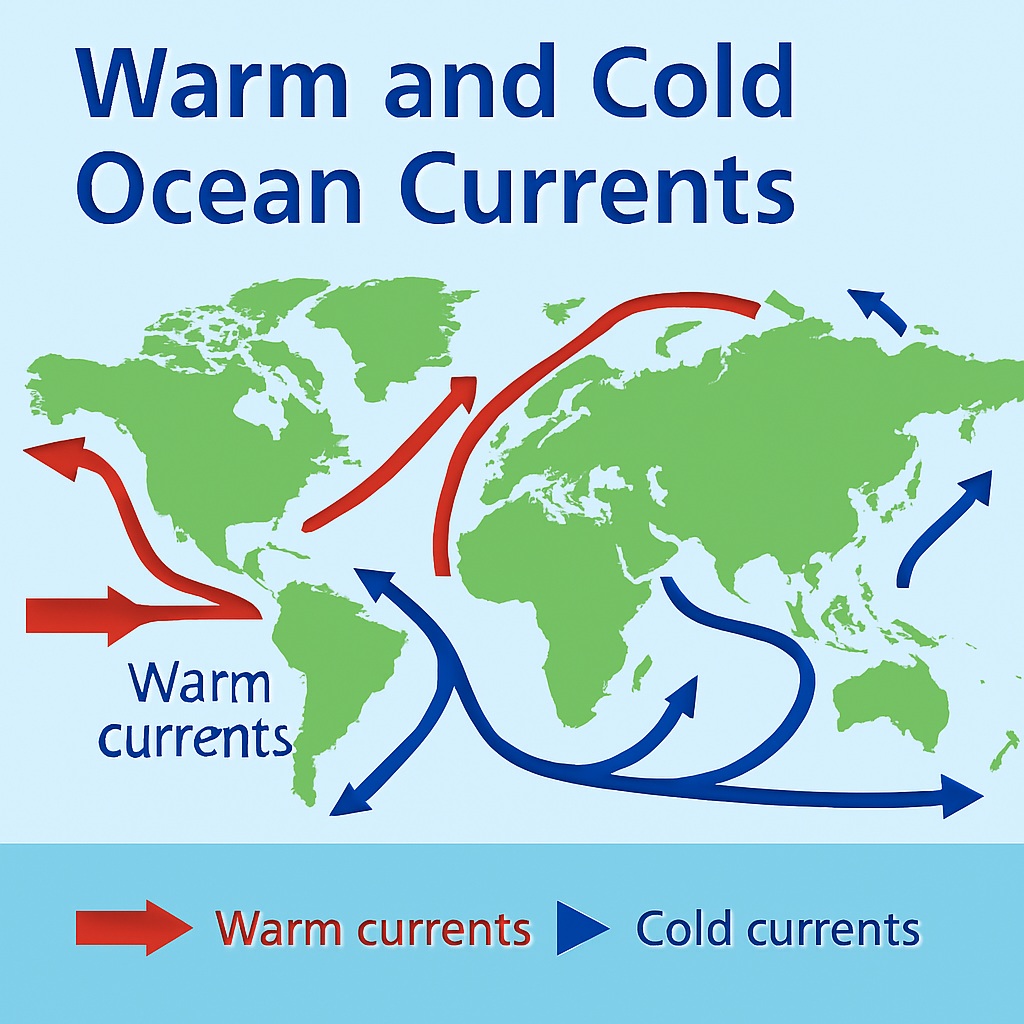
Oceanic currents can be classified into two main types based on their direction of flow and temperature:
Currents that flow from the equator towards the poles, transporting warm water from tropical regions towards colder regions. They are generally slower and broader, playing a crucial role in distributing heat. Examples include the Gulf Stream, North Atlantic Drift, Agulhas Current, and Kuroshio Current.
Currents that flow from the poles towards the equator, transporting cold water from polar regions towards warmer regions. They are generally faster and narrower. Examples include the California Current, Humboldt Current, and Antarctic Circumpolar Current.
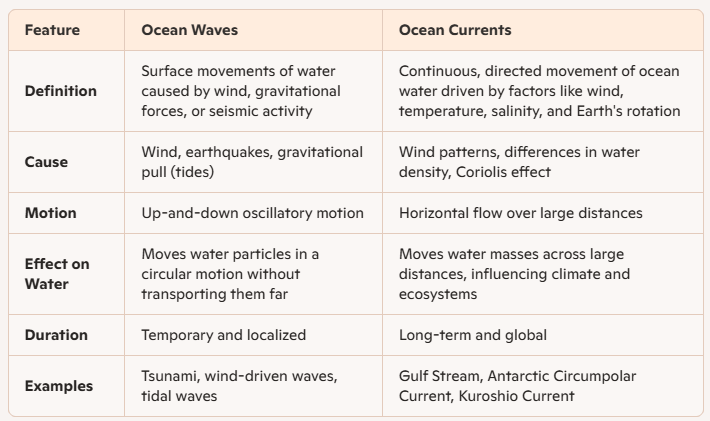
Ocean Current Vs. Ocean Wave
Important World Ocean Currents
- Gulf Stream: A warm ocean current flowing from the Gulf of Mexico towards the North Atlantic, keeping western Europe relatively mild in winter.
- North Atlantic Drift: A continuation of the Gulf Stream flowing towards northwest Europe, responsible for mild climates in western and northern Europe.
- California Current: A cold ocean current flowing south along the west coast of North America, supporting rich marine fisheries.
- Humboldt Current (Peru Current): A cold ocean current flowing along the west coast of South America, supporting major fish stocks and creating the arid Atacama Desert climate.
- Agulhas Current: A warm ocean current flowing along the southeast coast of Africa, bringing moisture to southern Africa.
- Antarctic Circumpolar Current: The largest ocean current in the world, flowing from west to east around Antarctica, distributing heat across the Southern Ocean.
- Kuroshio Current: A warm ocean current flowing along the east coast of Japan, supporting marine life and mild climates.
- Equatorial Currents: Currents flowing from east to west along the equator, connecting major ocean basins.
| Oceanic Current | Associated Region / Continent | Type |
|---|---|---|
| Gulf Stream | Europe / North Atlantic | Warm |
| North Atlantic Drift | Europe | Warm |
| California Current | North America | Cold |
| Humboldt Current | South America | Cold |
| Agulhas Current | Africa | Warm |
| Antarctic Circumpolar Current | Antarctica | Cold |
| Kuroshio Current | Asia | Warm |
Effects and Importance of Ocean Currents
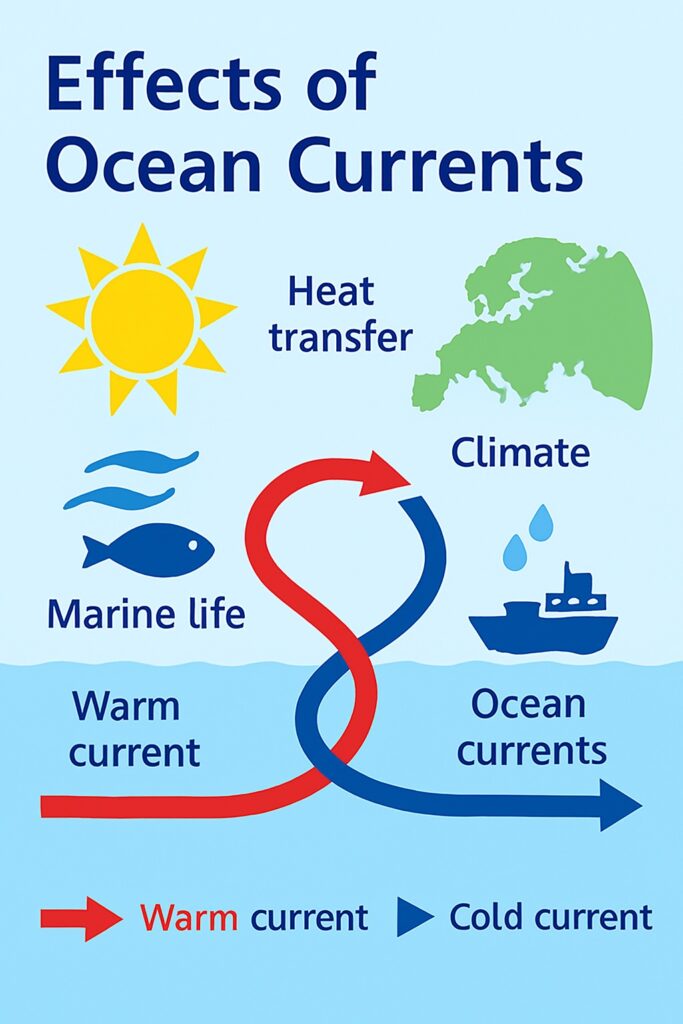
Oceanic currents have far-reaching effects on Earth's climate, coastal ecosystems, shipping, and fishing industries. They transport heat from the equator to the poles, regulate global temperatures, and distribute nutrients essential for marine life.
Conclusion
Oceanic currents are a powerful and vital aspect of Earth's natural systems, playing an indispensable role in climate regulation, marine biodiversity, and global weather patterns. Understanding their dynamics is crucial for navigation, climate science, and resource management.