The atmosphere is a vital component of our planet, regulating climate and weather patterns while supporting life on Earth. Acting like a protective blanket of air around Earth, it comprises five primary layers stacked sequentially from the surface outward.
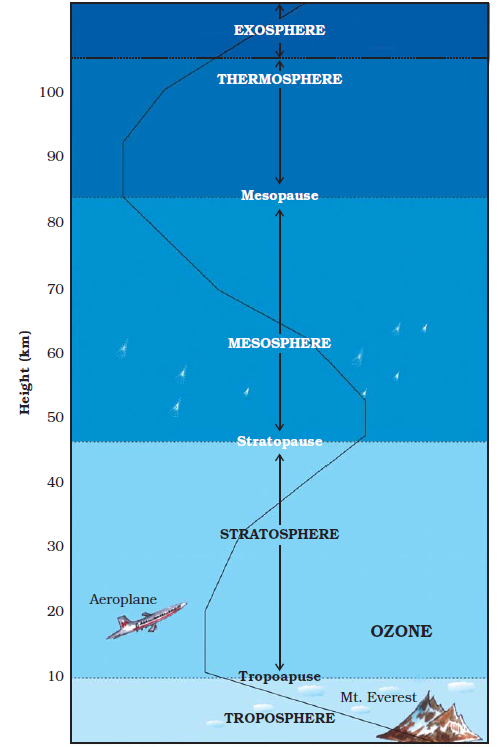
The Five Layers of the Atmosphere
- Troposphere
- Stratosphere
- Mesosphere
- Ionosphere
- Exosphere
1. Troposphere
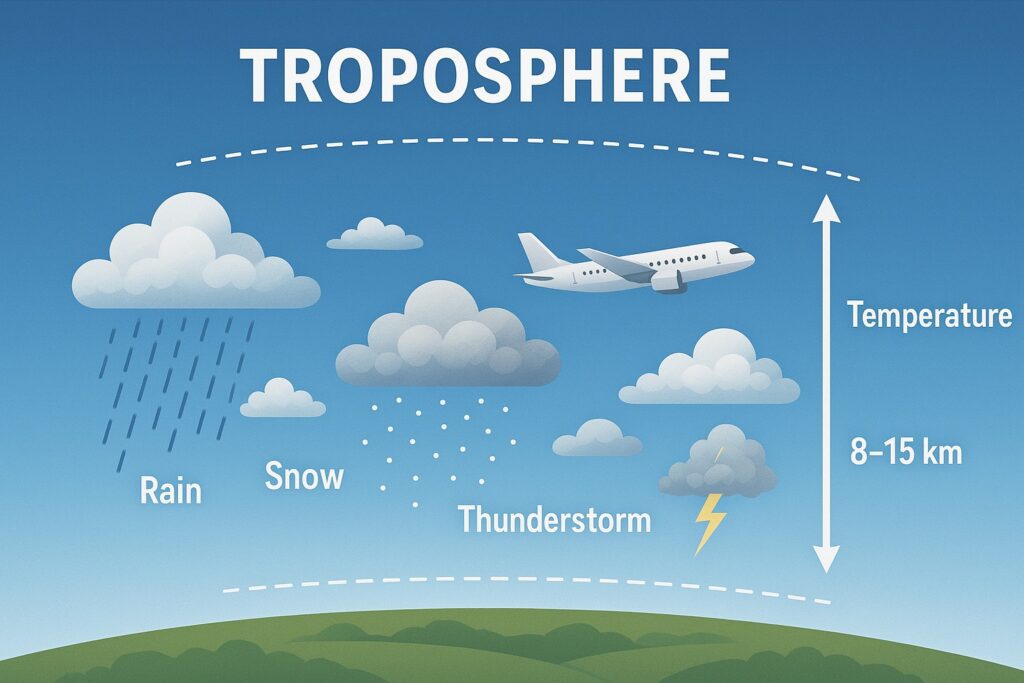
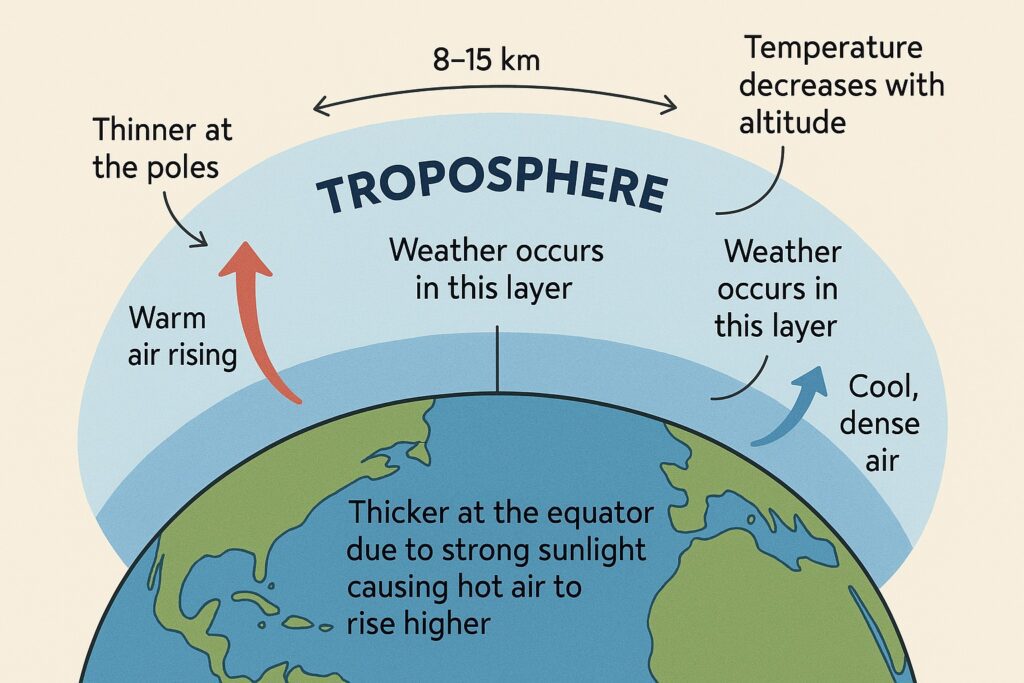
The lowest layer of the atmosphere, extending from the Earth's surface up to an altitude of about 8–15 kilometers. It contains almost all of the Earth's weather, water vapor, dust, and atmospheric mass.
- Thickness: About 8 km thick at the poles and 18 km at the equator.
- Temperature Trend: Decreases with height (approx. 1°C for every 165 meters).
- Weather Phenomena: All meteorological events like rain, snow, and storms occur here.
2. Stratosphere
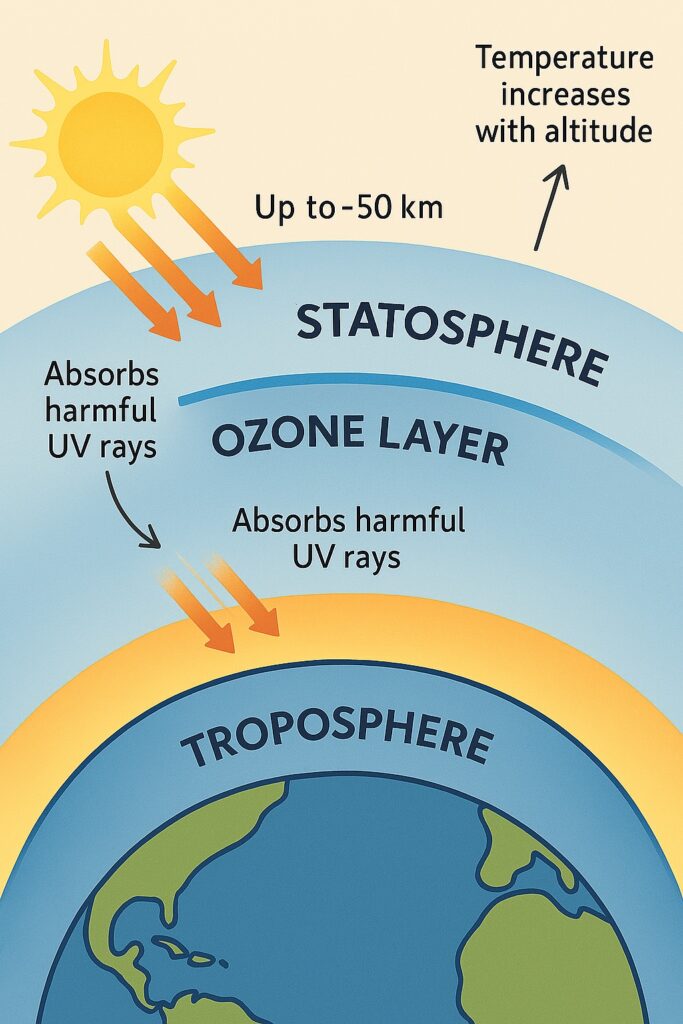
Located above the troposphere (separated by the tropopause) and extending up to 50 km. It houses the ozone layer, which absorbs harmful ultraviolet (UV) radiation from the Sun.
- Temperature Trend: Stays steady up to 20 km, then increases with altitude due to UV absorption by ozone.
- Aviation: Free from weather disturbances, making it ideal for flying commercial airplanes.
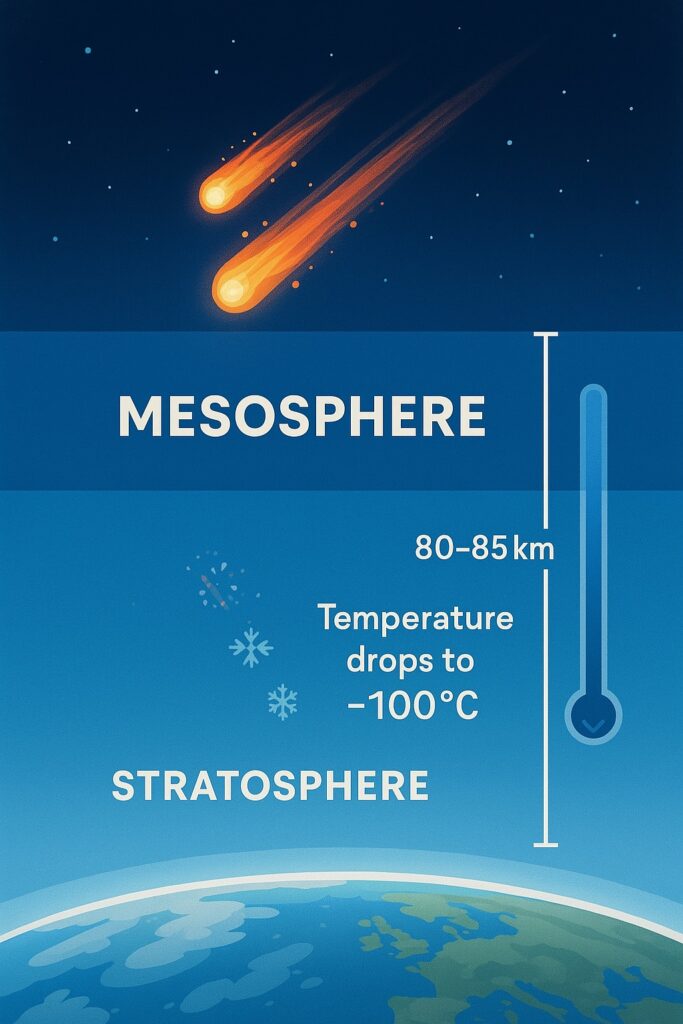
3. Mesosphere
Extending above the stratosphere up to about 85 km, this is the coldest atmospheric layer.
- Temperature: Drops drastically, reaching down to around –100°C.
- Significance: Burns up incoming meteors before they can strike Earth's surface.
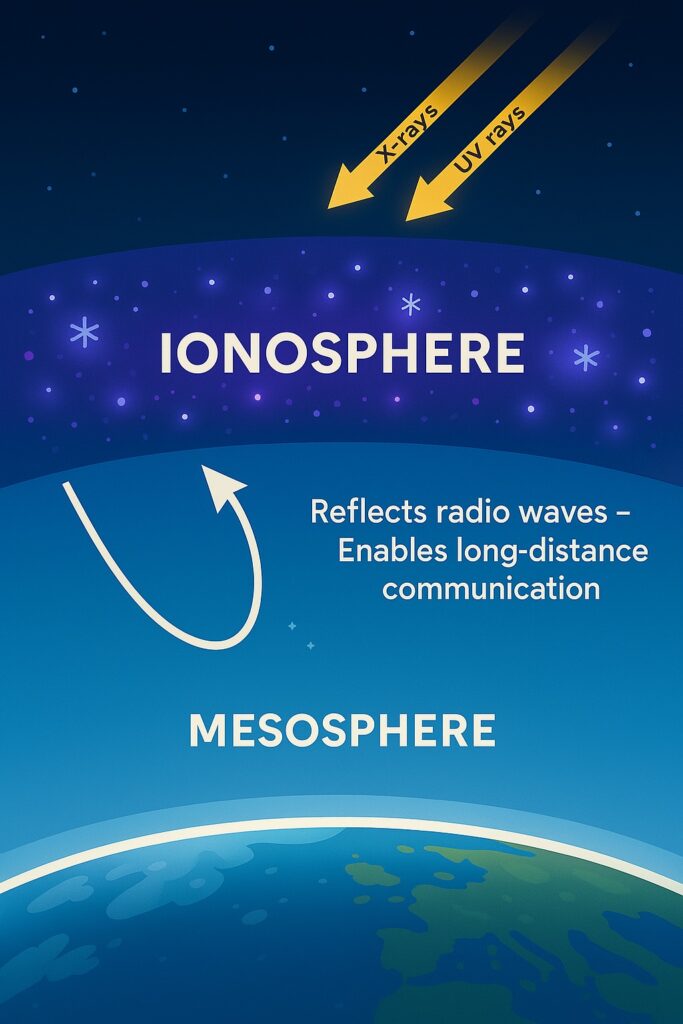
4. Ionosphere
Situated above the mesosphere, this layer contains electrically charged particles (ions).
- Communication: Reflects radio waves back to Earth, facilitating long-distance wireless communication.
- Protection: Absorbs harmful solar X-rays and UV radiation.
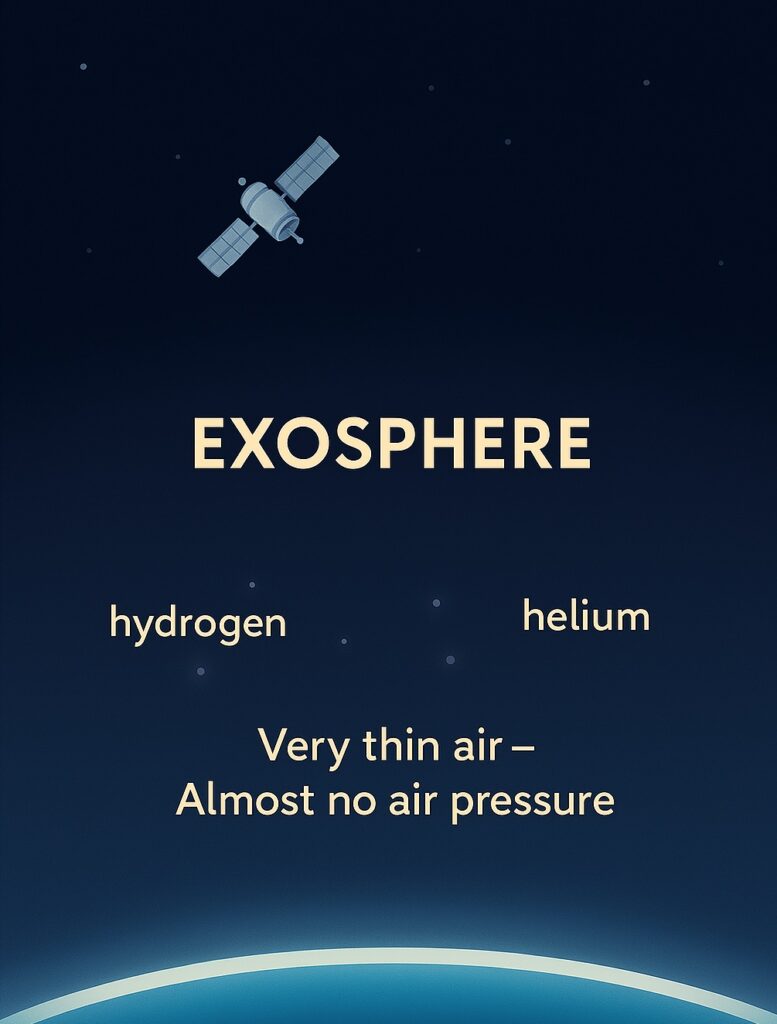
5. Exosphere
The outermost layer of the atmosphere merging into outer space, characterized by extremely thin air composed mostly of hydrogen and helium with negligible air pressure. Artificial satellites orbit Earth within this layer.
Conclusion
The atmosphere is a complex system of gases and particles critical for climate regulation and life support. Understanding its distinct layers—from the troposphere to the exosphere—is essential for evaluating planetary processes and anthropogenic environmental impacts.