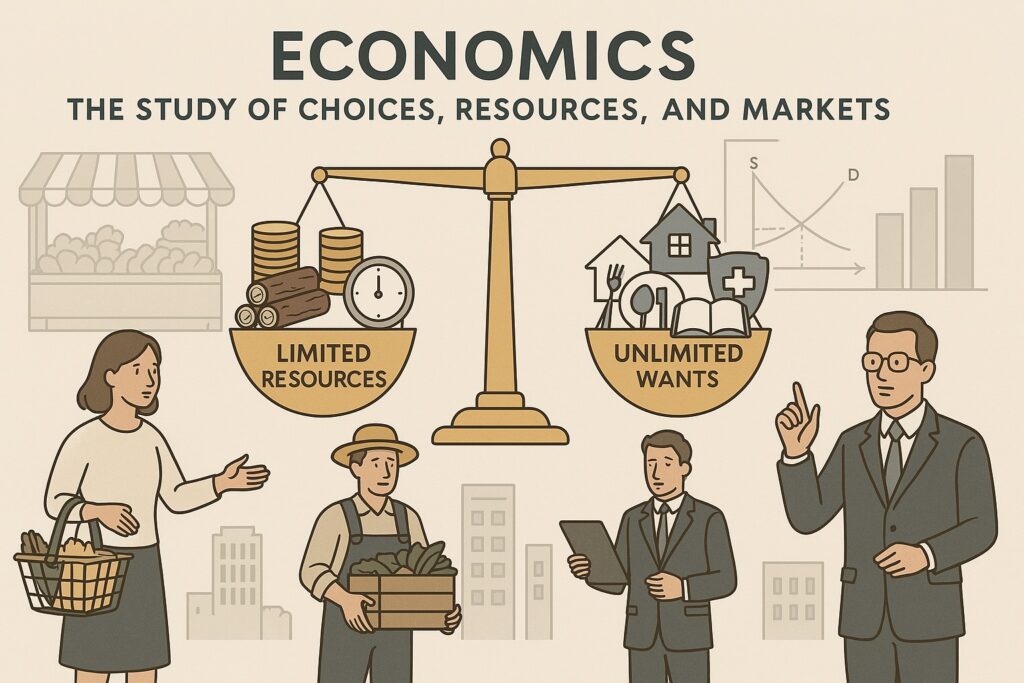
 What is Economics
What is Economics?
Economics is the study of how societies allocate resources to satisfy unlimited wants and needs. It is a social science that explores how people make choices, how those choices interact, and how they affect markets.
Branches of Economics
There are two main branches of economics: microeconomics and macroeconomics. Microeconomics examines the behavior of individuals and firms in specific markets, such as the market for housing or the market for labor. Macroeconomics, on the other hand, studies the economy as a whole, including topics such as economic growth, inflation, and the role of government in managing the economy.
Microeconomics
Microeconomics is a branch of economics that studies the behavior and decision-making of individual economic units such as consumers, households, firms, and industries. It focuses on how these entities interact within specific markets to allocate scarce resources effectively.
Examples of Microeconomic Decisions:
A consumer choosing between a bus ride and a cab based on cost.
A company deciding the number of workers to hire to increase output.
A farmer choosing between growing wheat or rice based on market prices.
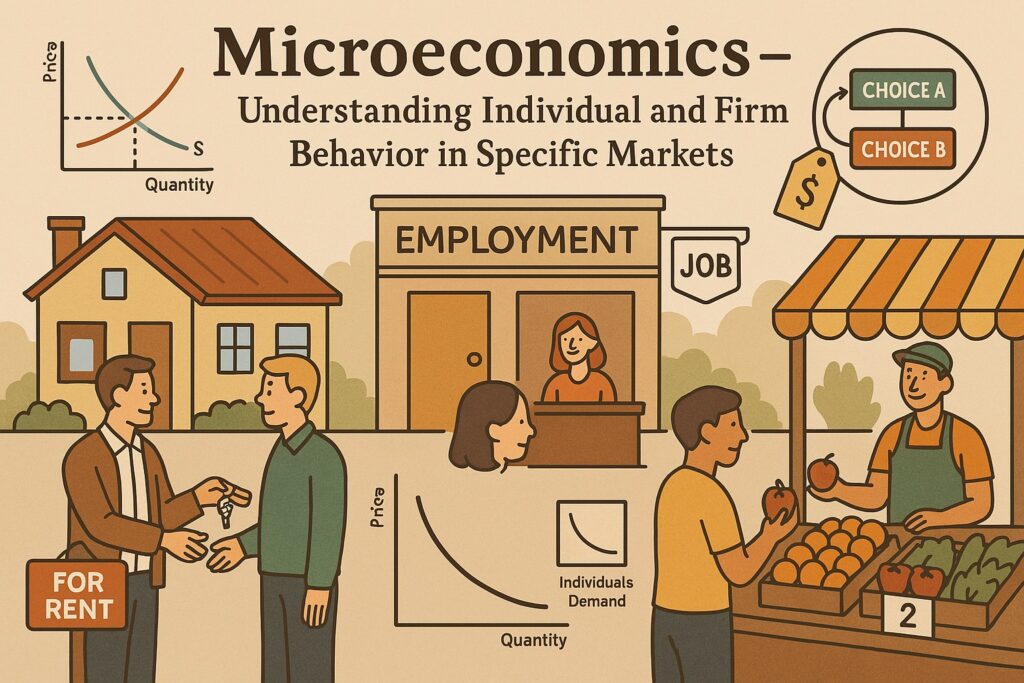 Microeconomics
Macroeconomics
Macroeconomics is a major branch of economics that studies the overall functioning and structure of an economy. It deals with large-scale economic factors and aggregates such as national income, total employment, inflation, economic growth, and monetary and fiscal policies.
Examples of Macroeconomic Issues:
The government implementing a stimulus package to boost economic growth.
The central bank reducing interest rates to control a slowdown.
Rising inflation causing a decrease in purchasing power.
A country's GDP growth rate being used to assess its development.
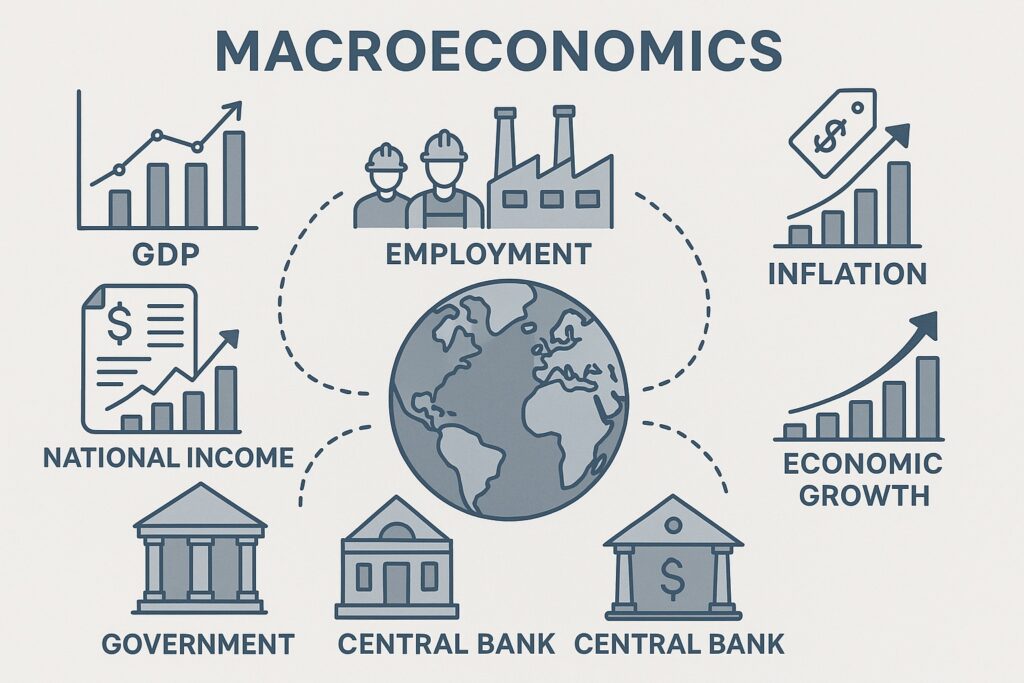 Macroeconomy
Comparison between Macroeconomics and Microeconomics
| Category | Microeconomics | Macroeconomics |
|---|---|---|
| Definition | The study of individual economic agents | The study of the economy as a whole |
| Focus | Small-scale economic phenomena | Large-scale economic phenomena |
| Units of Analysis | Individuals, firms, and markets | Aggregate measures such as GDP, inflation, etc. |
| Approach | Bottom-up | Top-down |
| Variables | Prices, supply and demand, production | National income, employment, inflation, growth |
| Policy | Market-level policies | Government-level policies and interventions |
| Examples | Consumer behavior, market equilibrium | Fiscal policy, monetary policy, business cycles |
Read: Economy Notes