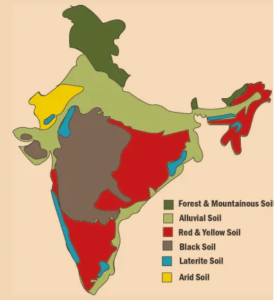
Black Soil, widely known as Regur soil, develops under semi-arid conditions and is exceptionally well-suited for cultivating deep-rooted crops and cotton due to its high water-retentive capacity.
Characteristics and Chemical Composition
Black soils are predominantly found in the Deccan Plateau region of India. They possess distinct physical and chemical properties:
- High Moisture Retention: Retains water efficiently, making it ideal for cotton cultivation and sugarcane (when supported by irrigation facilities).
- Mineral Richness: Abundant in lime, iron, magnesia, alumina, and potash.
- Nutrient Deficiencies: Lacks adequate phosphorus, nitrogen, and humus/organic matter.
Black Soil and Climate Change Mitigation
Black soil plays an important role in climate change mitigation through carbon sequestration—removing carbon dioxide from the atmosphere and locking it securely within soil organic matter.
Conclusion
Regur or black soil is an agricultural asset of immense value, driving India's cotton and sugarcane production while actively contributing to carbon sequestration and climate resilience.