The atmosphere is a vital component of the Earth's ecosystem. It's a layer of gases that surrounds the planet, providing essential conditions for life to exist. The atmosphere is made up of different gases that have unique properties, and their composition plays a crucial role in regulating the Earth's climate and weather patterns.

Composition of Atmosphere
The atmosphere is primarily made up of nitrogen, oxygen, and argon, with small traces of other gases. Nitrogen accounts for approximately 78% of the atmosphere, followed by oxygen at 21%, and argon at around 0.9%. The remaining 0.1% is composed of trace gases such as carbon dioxide, neon, helium, methane, and ozone.
- Nitrogen and oxygen together make up 99% of the air.
- The remaining 1% includes gases like argon, carbon dioxide, hydrogen, helium, and ozone.
- Air also contains water vapor, dust, smoke, and salt particles.
- The amount of these gases stays mostly the same up to 80 km above sea level, but dust and smoke can vary depending on location (cities vs. villages).
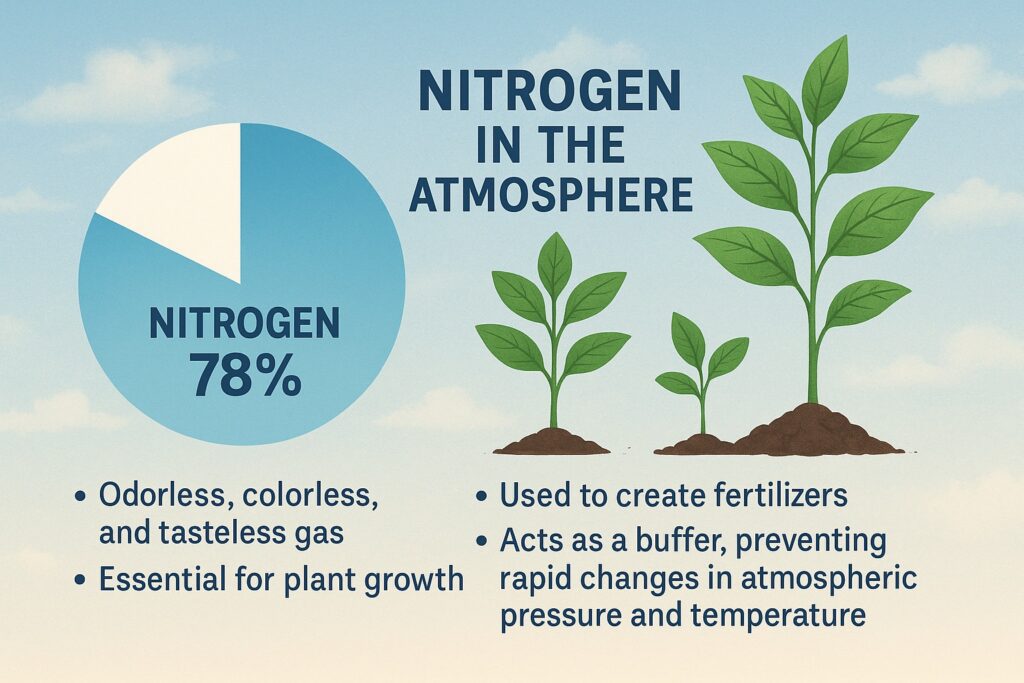
Nitrogen (N₂) — 78%
Nitrogen is the most abundant gas in the atmosphere, accounting for 78% of its composition. It is an odorless, colorless, and tasteless gas that plays a vital role in many biological processes.
- Biological role: Essential for plant growth; a key component of amino acids, proteins, and DNA.
- Agricultural use: Used to create fertilizers (ammonia, urea, nitrates) through the Haber-Bosch process.
- Atmospheric function: Acts as a buffer to prevent rapid changes in atmospheric pressure and temperature.
- Nitrogen cycle: Continuously cycled between the atmosphere, soil, and living organisms through fixation, nitrification, and denitrification.
Oxygen (O₂) — 21%
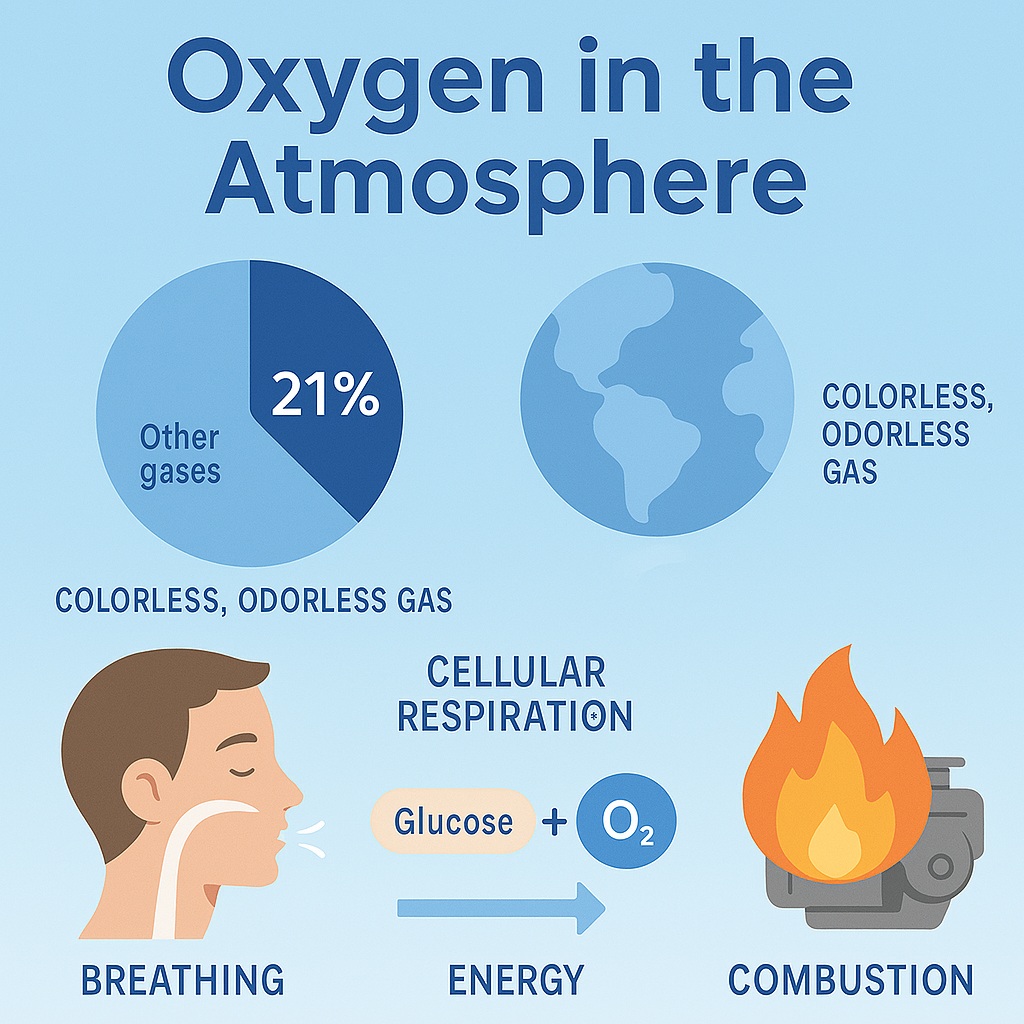
Oxygen accounts for 21% of the atmosphere's composition. It is a colorless, odorless, and tasteless gas that is essential for the survival of most living organisms.
- Cellular respiration: The process by which living organisms convert glucose into energy — oxygen is indispensable for this.
- Combustion: Essential for burning fuels such as gasoline, natural gas, and coal.
- Ozone formation: Oxygen atoms combine to form ozone (O₃) in the stratosphere, shielding Earth from UV radiation.
- Decomposition: Aerobic decomposition of organic matter depends on oxygen, recycling nutrients back into ecosystems.
Argon (Ar) — 0.9%
Argon is the third most abundant gas in the atmosphere, accounting for approximately 0.9% of its composition. It is an inert (noble) gas that does not react with other elements under normal conditions.
- Light bulbs: Used in incandescent and fluorescent lamps to prevent oxidation of the filament.
- Welding: Creates an inert atmosphere that prevents oxidation of materials during arc welding.
- Insulation: Used in double-glazed windows for better thermal insulation.
- Scientific applications: Provides inert environments in laboratories and industrial processes.
Trace Gases — 0.1%
Although trace gases make up a very small percentage of the atmosphere, they play a significant role in regulating the Earth's climate and weather patterns.
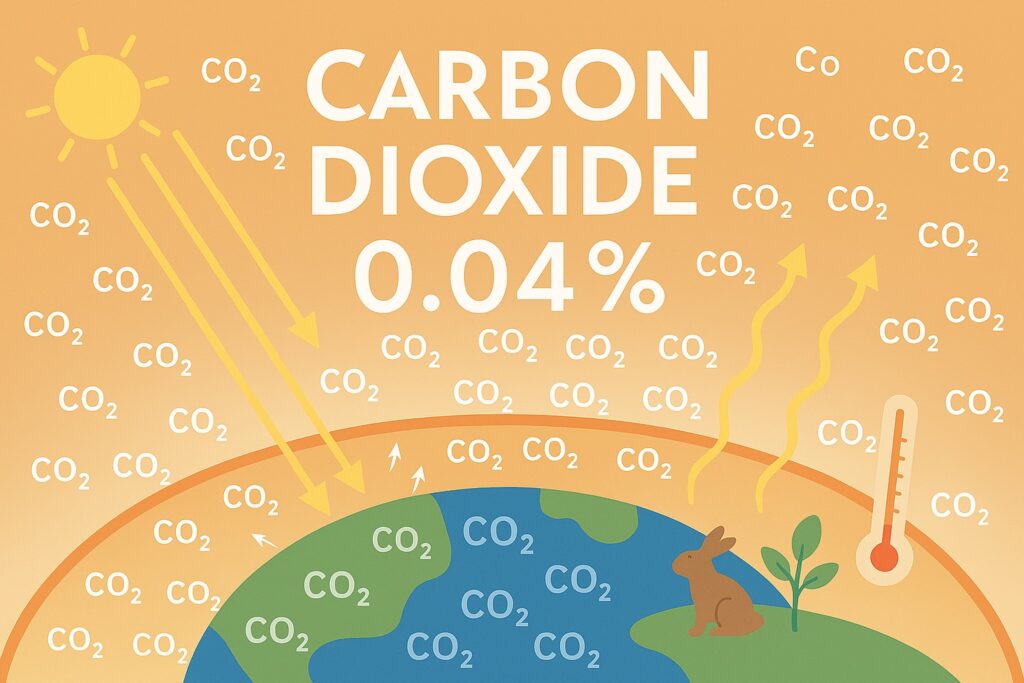
Carbon dioxide accounts for around 0.04% of the atmosphere's composition, but it plays a crucial role in regulating the Earth's temperature. CO₂ is a greenhouse gas, which means it traps heat from the Sun and prevents it from escaping into space. This helps keep the Earth's temperature within a range suitable for life.
- Greenhouse effect: Traps outgoing infrared radiation, warming the Earth's surface.
- Photosynthesis: Absorbed by plants to produce glucose and oxygen — the foundation of the food chain.
- Ocean absorption: Oceans absorb CO₂, forming carbonic acid; excess CO₂ leads to ocean acidification.
- Rising levels: CO₂ concentration has risen from ~280 ppm (pre-industrial) to over ~420 ppm today, driving climate change.
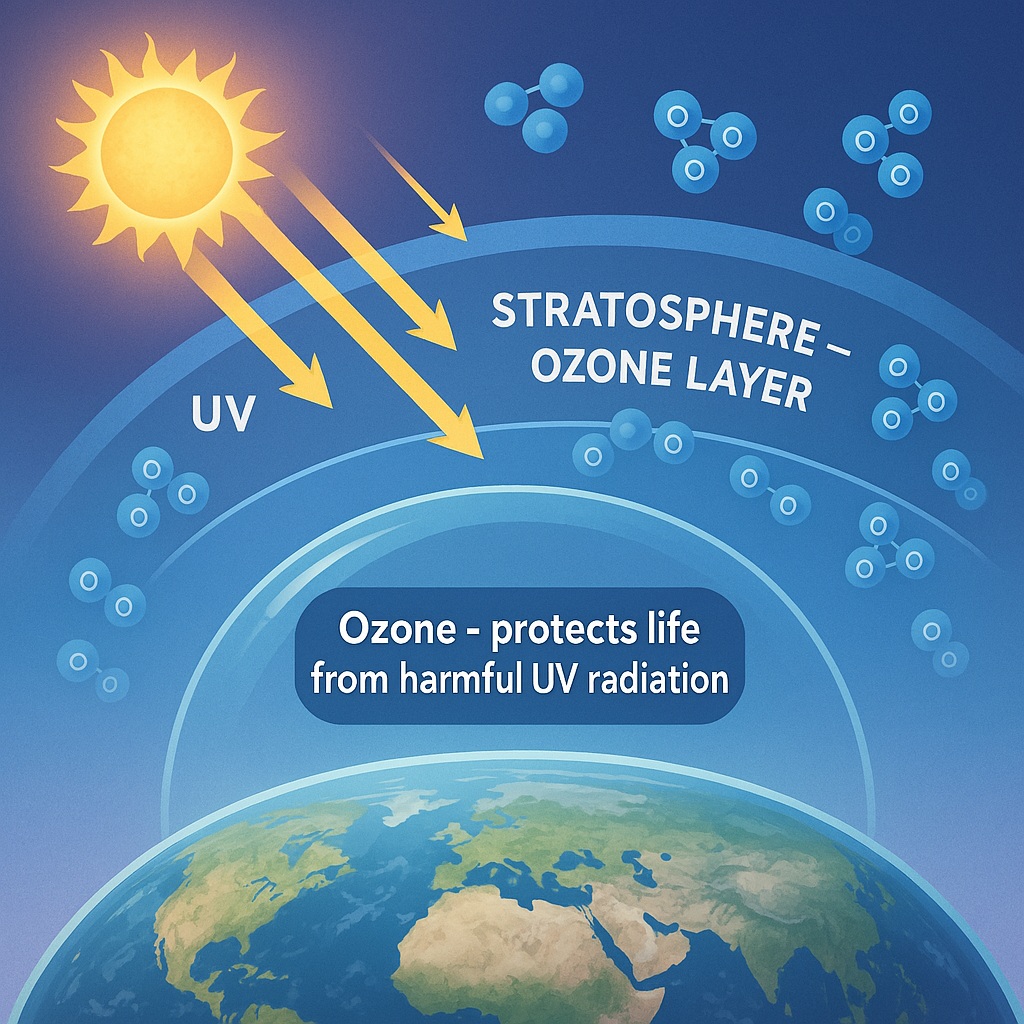
Ozone is a molecule made up of three oxygen atoms. It plays a crucial role in protecting the Earth from the harmful effects of ultraviolet (UV) radiation. Ozone is found in the Earth's stratosphere, where it forms a protective layer that absorbs UV radiation from the Sun.
- UV absorption: Absorbs 97–99% of the Sun's harmful UV-B and UV-C radiation.
- Stratospheric location: Concentrated in the ozone layer, approximately 15–35 km above the Earth's surface.
- Health protection: Prevents skin cancer, cataracts, and immune system damage in humans.
- Ozone depletion: CFCs and other chemicals have thinned the ozone layer, particularly over Antarctica (the "ozone hole").
- Neon (Ne): ~0.0018% — used in neon signs and lasers.
- Helium (He): ~0.0005% — used in balloons, cryogenics, and deep-sea diving.
- Methane (CH₄): ~0.00017% — a potent greenhouse gas (84× more warming potential than CO₂ over 20 years); emitted from wetlands, rice paddies, and livestock.
- Water Vapor (H₂O): Variable (0–4%) — the most abundant greenhouse gas; essential for clouds, precipitation, and the water cycle.
Atmospheric Gases at a Glance
| Gas | Percentage | Key Role | Classification |
|---|---|---|---|
| Nitrogen (N₂) | 78% | Biological processes, atmospheric buffer | Major gas |
| Oxygen (O₂) | 21% | Respiration, combustion, ozone formation | Major gas |
| Argon (Ar) | 0.9% | Inert atmosphere for welding & lighting | Major gas |
| CO₂ | ~0.04% | Greenhouse effect, photosynthesis | Trace / Greenhouse |
| Ozone (O₃) | ~0.00006% | UV radiation absorption | Trace / Protective |
| Water Vapor | 0–4% (variable) | Clouds, precipitation, greenhouse effect | Variable / Greenhouse |
| Methane (CH₄) | ~0.00017% | Potent greenhouse gas | Trace / Greenhouse |
Importance of the Atmosphere
The atmosphere is the blanket of air that surrounds Earth. It stretches up to about 1,600 km above the ground, but most of the air (about 97%) is found within the first 30 km.
- Blocks harmful UV rays: The ozone layer absorbs the Sun's dangerous ultraviolet radiation.
- Regulates temperature: The greenhouse effect keeps Earth's temperature just right — not too hot and not too cold (average ~15°C).
- Protects from meteors: Most meteoroids burn up upon entering the atmosphere due to friction.
- Carries sound: Air molecules transmit sound waves, allowing us to hear.
- Enables flight: Provides the aerodynamic lift that allows airplanes and birds to fly.
- Drives weather: Atmospheric circulation creates winds, clouds, and precipitation — the entire weather system.
Conclusion
The composition of the atmosphere is essential for regulating the Earth's climate and weather patterns. Nitrogen, oxygen, and argon are the most abundant gases, while trace gases such as carbon dioxide and ozone play a crucial role in regulating temperature and protecting life from harmful UV radiation. Understanding the composition of the atmosphere is essential for understanding the Earth's ecosystem and the role that humans play in it — especially as rising greenhouse gas concentrations drive climate change and ozone depletion.