Marine pollution is a major environmental issue that affects the health of our oceans and the life they support. It is caused by a variety of sources, including ships, oil spills, land-based sources, and plastic waste. The impacts of marine pollution are widespread and include the death of marine life, the destruction of habitats, and the contamination of seafood and other food sources. In this article, we will discuss the causes and impacts of marine pollution and the strategies for prevention.
Causes of Marine Pollution
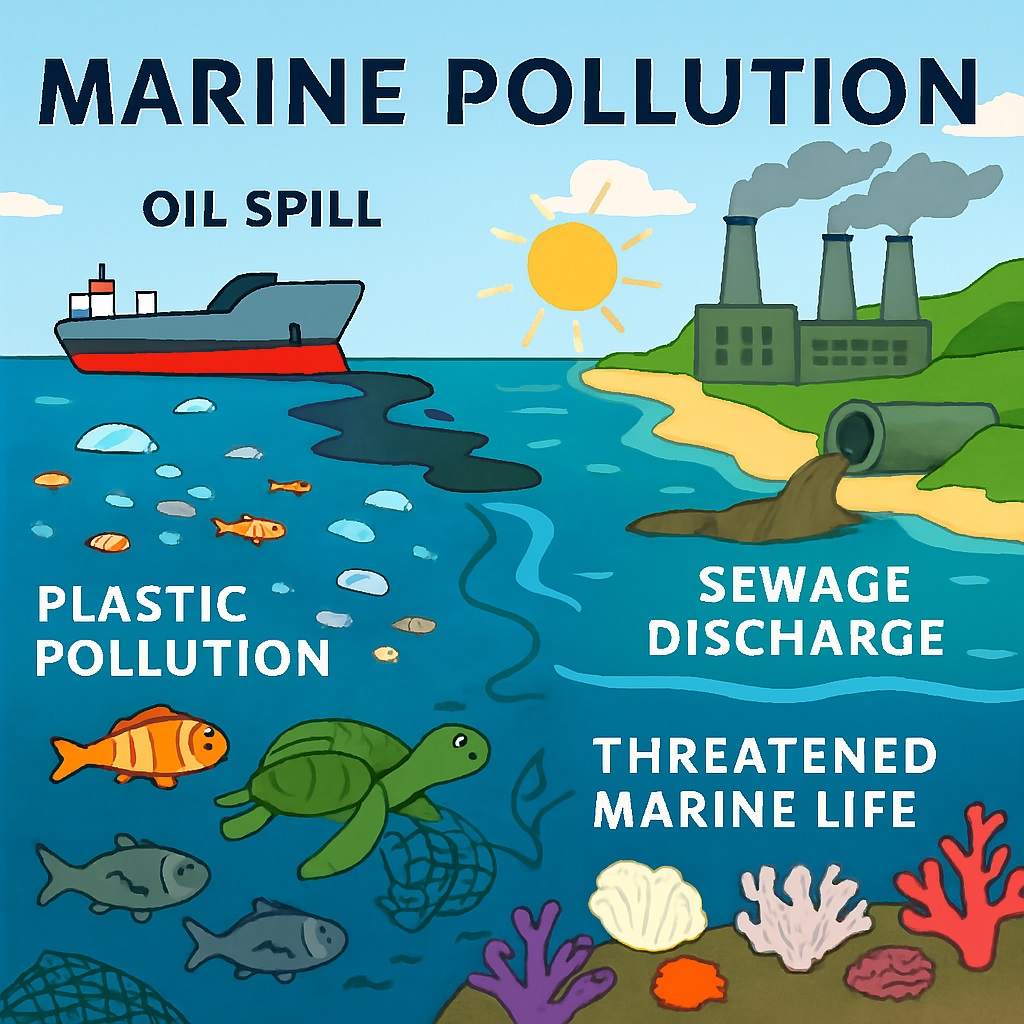
Marine pollution is caused by a variety of sources:
Ships are a major source of marine pollution, releasing oil, sewage, and chemicals directly into the ocean, which severely impacts marine life and fragile marine habitats.
Oil spills are a significant cause of marine pollution, releasing massive quantities of petroleum into marine environments with devastating immediate and long-term consequences for wildlife.
Agricultural runoff, sewage, and industrial discharge release harmful pollutants into coastal waters, severely harming marine organisms and the marine environment.
Non-biodegradable plastic waste persists in oceans for hundreds of years. It endangers marine life through entanglement and ingestion, while fragmenting into microplastics that contaminate the entire food chain.
Impacts of Marine Pollution
The impacts of marine pollution are widespread:
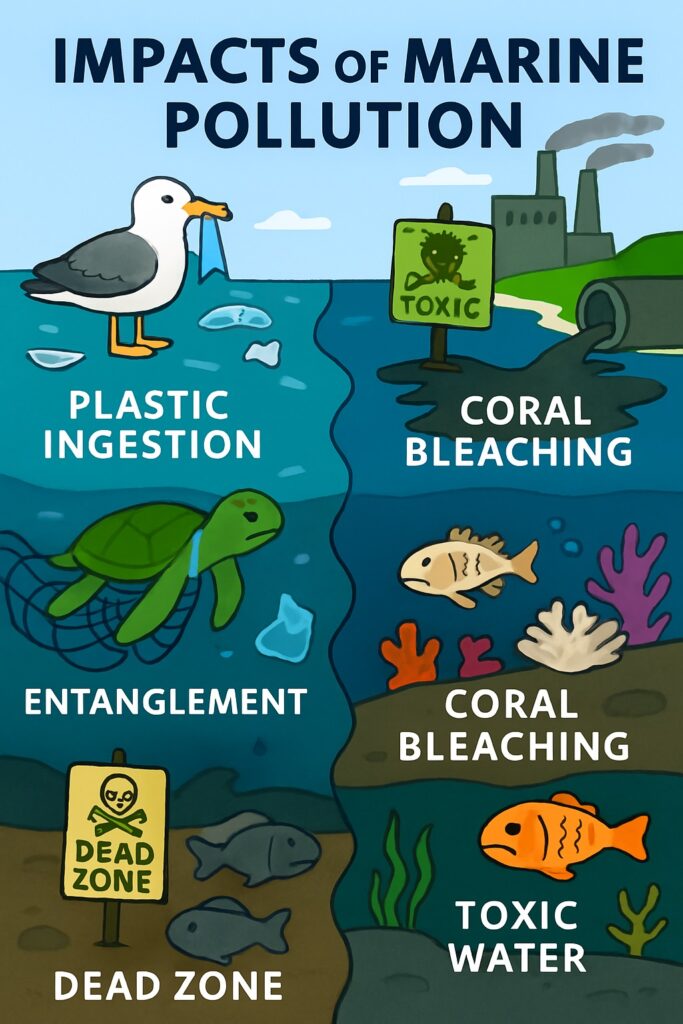
- Death of Marine Life: Harm and mortality among fish, marine mammals, and sea turtles, disrupting marine ecosystems and the food chain.
- Destruction of Habitats: Degradation and destruction of vital habitats such as coral reefs and seagrass beds essential for marine survival.
- Contamination of Seafood: Accumulation of toxins in seafood and other food sources, posing serious health risks to humans.
- Economic Impacts: Negative repercussions on commercial and recreational fishing, coastal tourism, and dependent industries.
Strategies for Prevention
There are a number of strategies for preventing marine pollution:
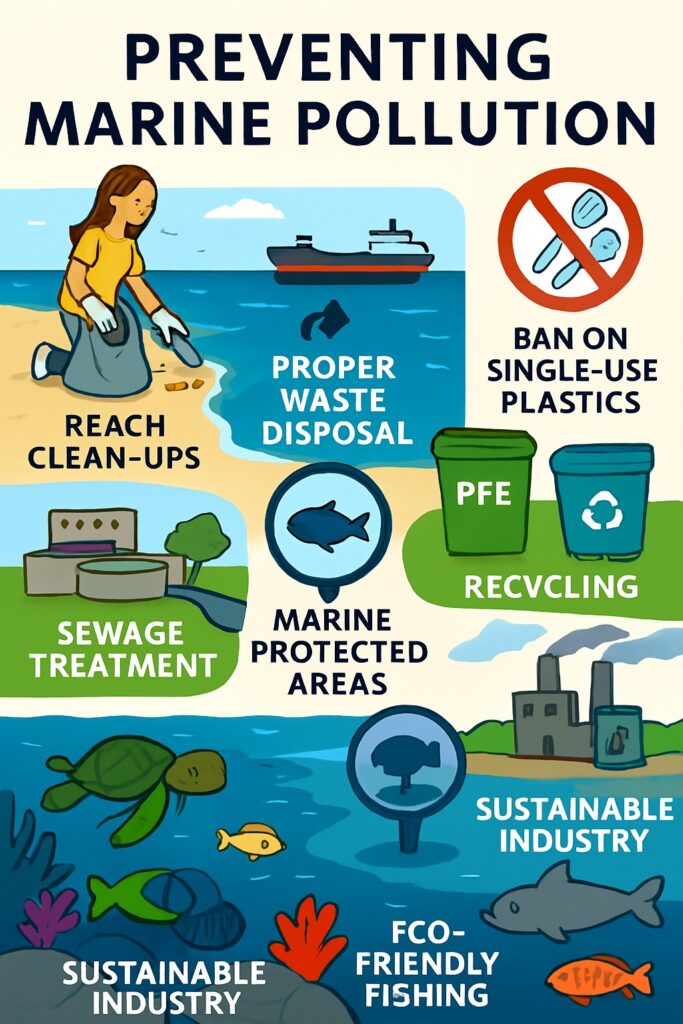
- International Agreements: Frameworks such as MARPOL (International Convention for the Prevention of Pollution from Ships) and the London Convention and Protocol regulate vessel operations and waste disposal at sea.
- Pollution Prevention: Utilizing environmentally friendly products and implementing best management practices to curb pollutant runoff.
- Monitoring and Enforcement: Strict enforcement of international regulations and reporting systems to ensure compliance.
- Public Education and Outreach: Educational campaigns and community involvement to raise awareness and foster individual responsibility.
Conclusion
Marine pollution is a major environmental crisis threatening ocean health and marine life worldwide. Through international agreements, pollution prevention, strict enforcement, and public education, we can safeguard our oceans for future generations.