Soil erosion, degradation, and conservation are critical issues in modern agriculture and land management. Soil erosion is the removal of topsoil by natural forces such as wind and water, while soil degradation refers to the decline in soil quality due to human activities such as deforestation, overgrazing, and overuse of chemicals. Conservation of soil involves protecting and preserving soil resources for future generations.
Soil Erosion
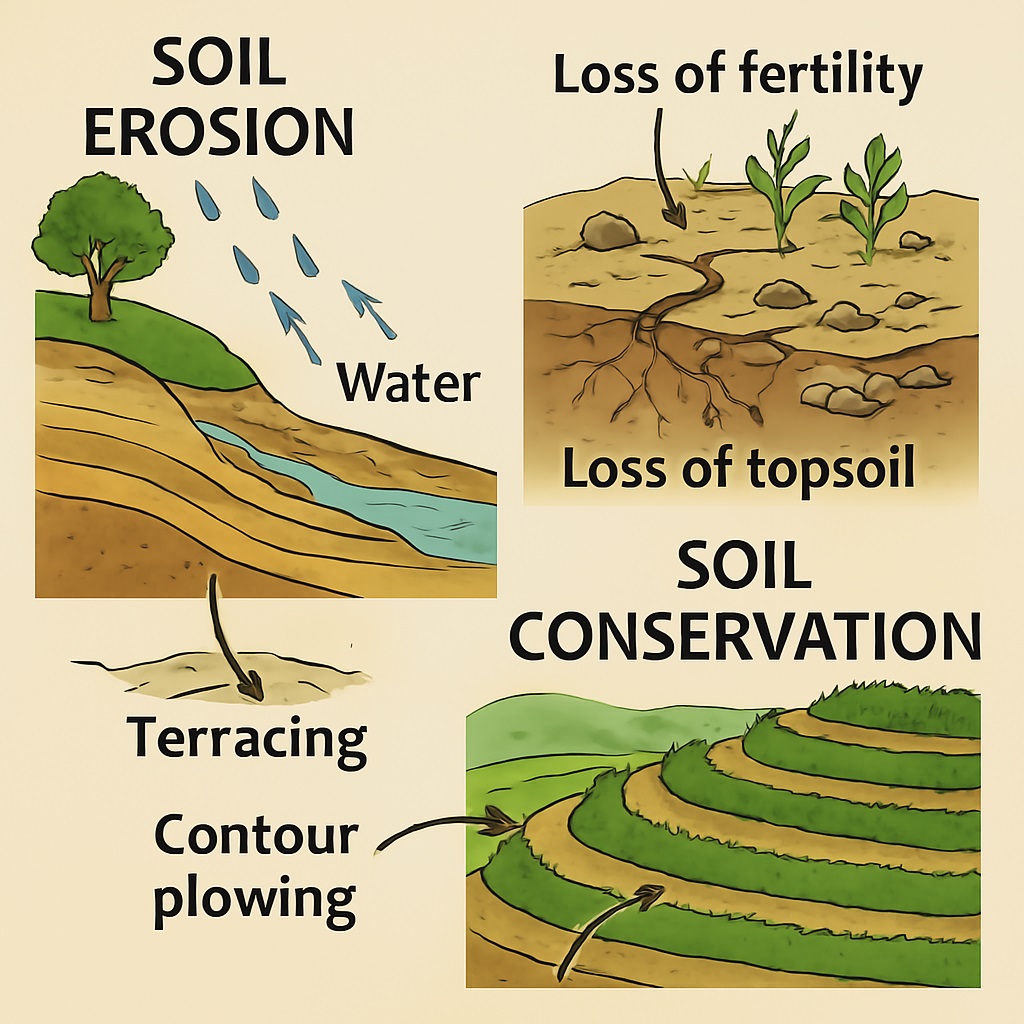
Soil erosion means the removal or wearing away of the topsoil, which is the most fertile part. It happens naturally due to rain, wind, frost, and human activities, but when it becomes too fast or extreme, it leads to damage and loss of soil fertility. What takes nature thousands of years to form can be washed away in just a few years if erosion is not controlled.
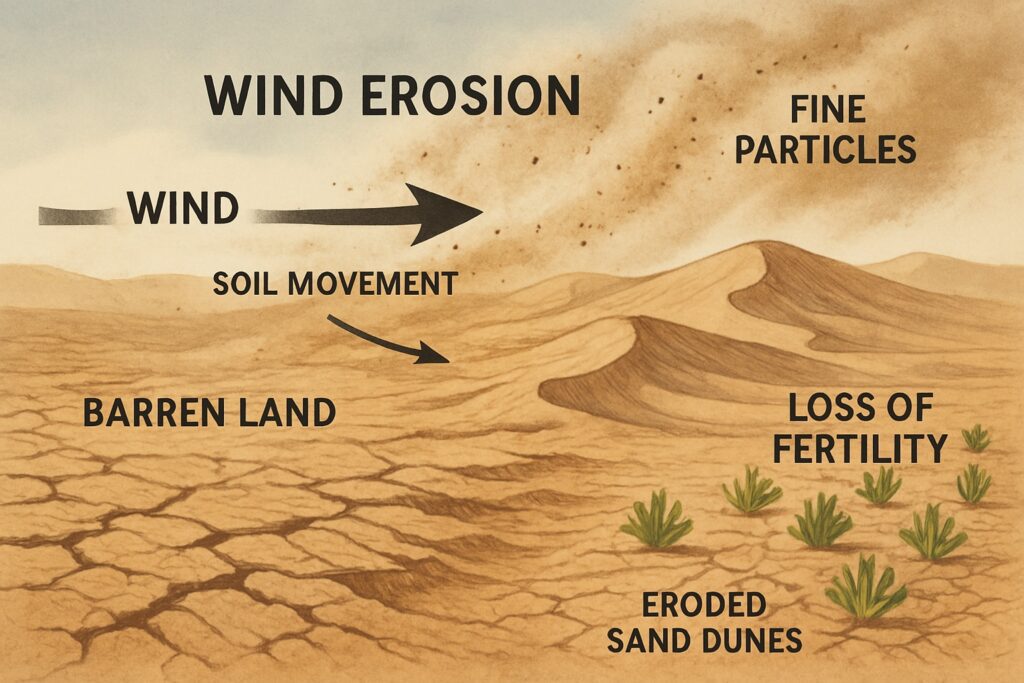
1. Wind Erosion
- Happens in deserts and dry areas.
- Strong winds blow away fine soil particles, especially where there is no vegetation.
- Makes nearby farms and land less fertile.
- Example: The Thar Desert in India spreads into Gujarat, Rajasthan, Punjab, and Haryana.
2. Sheet Erosion
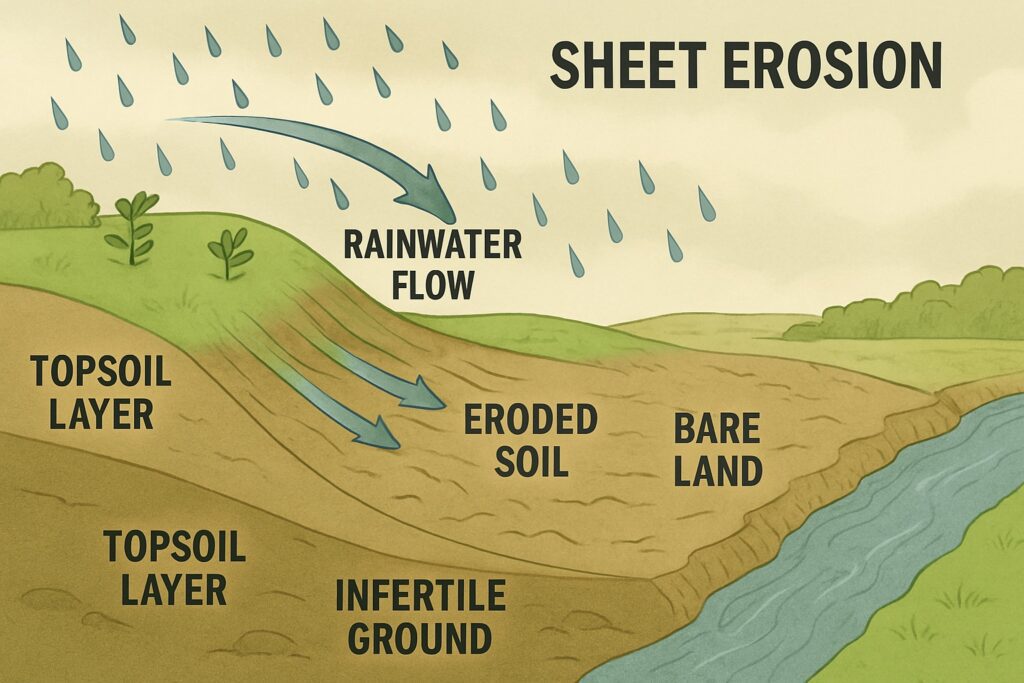
- Happens when rainwater flows over land like a sheet and washes away thin layers of soil.
- Common along riverbanks and flood-prone areas.
- Over time, topsoil disappears, leading to infertile land.
3. Gully Erosion
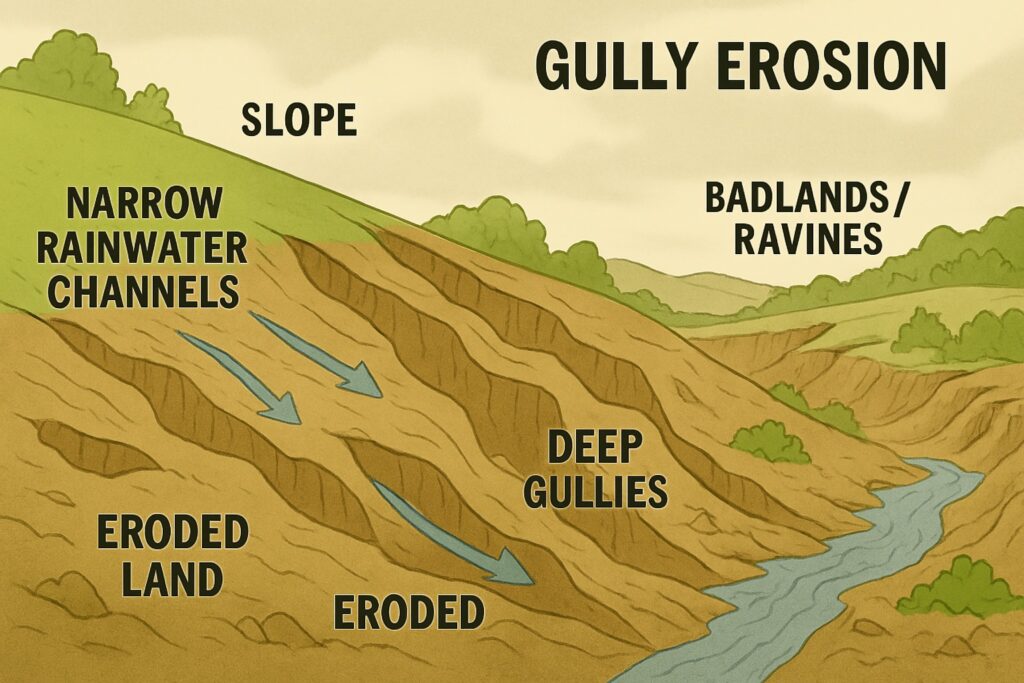
- Caused when rainwater flows down slopes in narrow channels, cutting deep gullies into the soil.
- Over time, many gullies form, turning land into badlands or ravines.
- Example: Ravines along the Chambal and Yamuna Rivers in Uttar Pradesh and Madhya Pradesh.
Other Causes of Erosion
- Seawaves erode coastlines.
- Melting snow and changing river paths, especially in hilly regions.
- Human actions — deforestation, overgrazing, bad farming methods, and mining accelerate erosion dramatically.
Types of Soil Erosion: Comparative Overview
| Parameter | Wind Erosion | Sheet Erosion | Gully Erosion |
|---|---|---|---|
| Agent | Wind | Rainwater (sheet flow) | Rainwater (channel flow) |
| Region | Deserts & dry areas | Riverbanks & flood areas | Slopes & ravines |
| Effect | Fine soil blown away | Thin topsoil layer removed | Deep channels/gullies formed |
| Result | Land becomes less fertile | Infertile land | Badlands / ravines |
| Example | Thar Desert | Flood plains | Chambal & Yamuna ravines |
Soil Degradation
Soil degradation refers to the decline in soil quality due to human activities such as deforestation, overgrazing, and the overuse of chemicals. It results in:
- Loss of fertile soil and reduced crop yields.
- Increased soil erosion — degradation and erosion reinforce each other.
- Contamination of water resources due to chemical runoff.
- Loss of biodiversity — soil organisms, plants, and animals dependent on healthy soil decline.
- Salinization & waterlogging from excessive irrigation.
Soil Conservation
Soil conservation means using methods to prevent the loss of soil and protect its fertility. This is vital because soil takes thousands of years to form, but erosion can destroy it very quickly. Erosion also causes floods, damaged roads and bridges, and clogged rivers due to sediment buildup.
Major Soil Conservation Methods
- Trees hold soil together with their roots and help prevent erosion.
- Cutting forests (deforestation) increases erosion drastically.
- Protecting forests by declaring them reserved areas is a key conservation method.
- Planting new trees in barren or empty areas prevents soil from being blown or washed away.
- Very effective in desert and hilly areas.
- Building dams helps stop floods that cause soil erosion.
- Water from rivers can be diverted to dry areas through canals.
- Too much grazing removes plant cover and loosens the soil.
- Limiting grazing keeps vegetation healthy, which protects the soil.
- Building walls or ridges across land to stop water from flowing too fast.
- Helps save water, reduce erosion, and keep soil fertile.
- On mountain slopes, land is shaped into flat steps or terraces.
- Slows down water, prevents soil loss, and makes farming possible in hilly regions.
- Instead of ploughing up and down slopes, farmers plough along the curves or contours.
- Slows water flow and reduces erosion.
- Land is divided into strips — crops in one strip, grass cover on the other to protect soil.
- Next year, strips are switched. This keeps land fertile and prevents erosion.
- Growing different crops each year prevents nutrient loss and protects soil fertility.
- Gives the soil a chance to recover naturally.
- Areas damaged by erosion, like gullies or ravines, can be leveled and improved.
- Used in places like the Chambal and Yamuna valleys in India.
Conclusion
Soil erosion, degradation, and conservation are critical issues in modern agriculture and land management. Soil erosion results in the loss of fertile topsoil, while soil degradation causes a decline in soil quality. Conservation of soil involves protecting and preserving soil resources for future generations through methods like afforestation, terracing, contour ploughing, strip farming, crop rotation, bunding, and reclamation. By using sustainable land management practices and soil conservation technologies, we can ensure the health and productivity of our soil resources for generations to come.