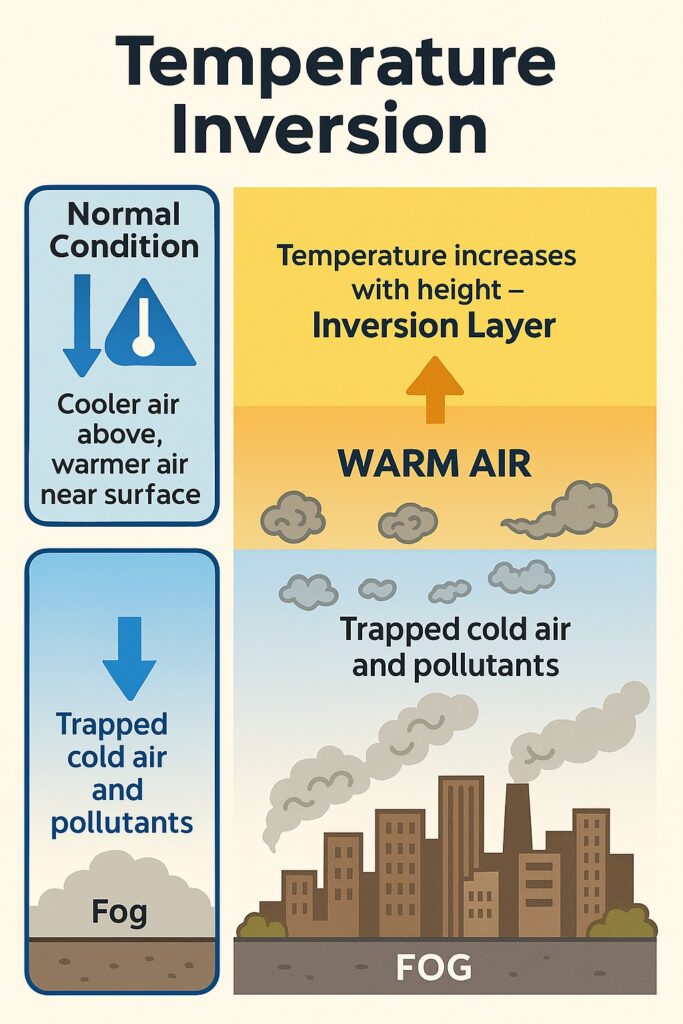
Temperature inversion is a fascinating weather phenomenon that occurs when atmospheric temperature increases with height, reversing the normal lapse rate. This atmospheric condition creates a stabilizing lid that traps pollutants near the surface and facilitates the formation of dense fog.

Causes of Temperature Inversion
Temperature inversions develop when air close to the Earth's surface becomes cooler than the air aloft, driven by several atmospheric mechanisms:
- Radiative Cooling: Rapid loss of surface heat on clear nights cools the adjacent air layer.
- Advection: Colder air masses flow horizontally into a region, undercutting warmer air above.
- Subsidence: Sinking air from higher altitudes undergoes adiabatic compression and warming, overriding cooler surface air.
Environmental and Health Effects
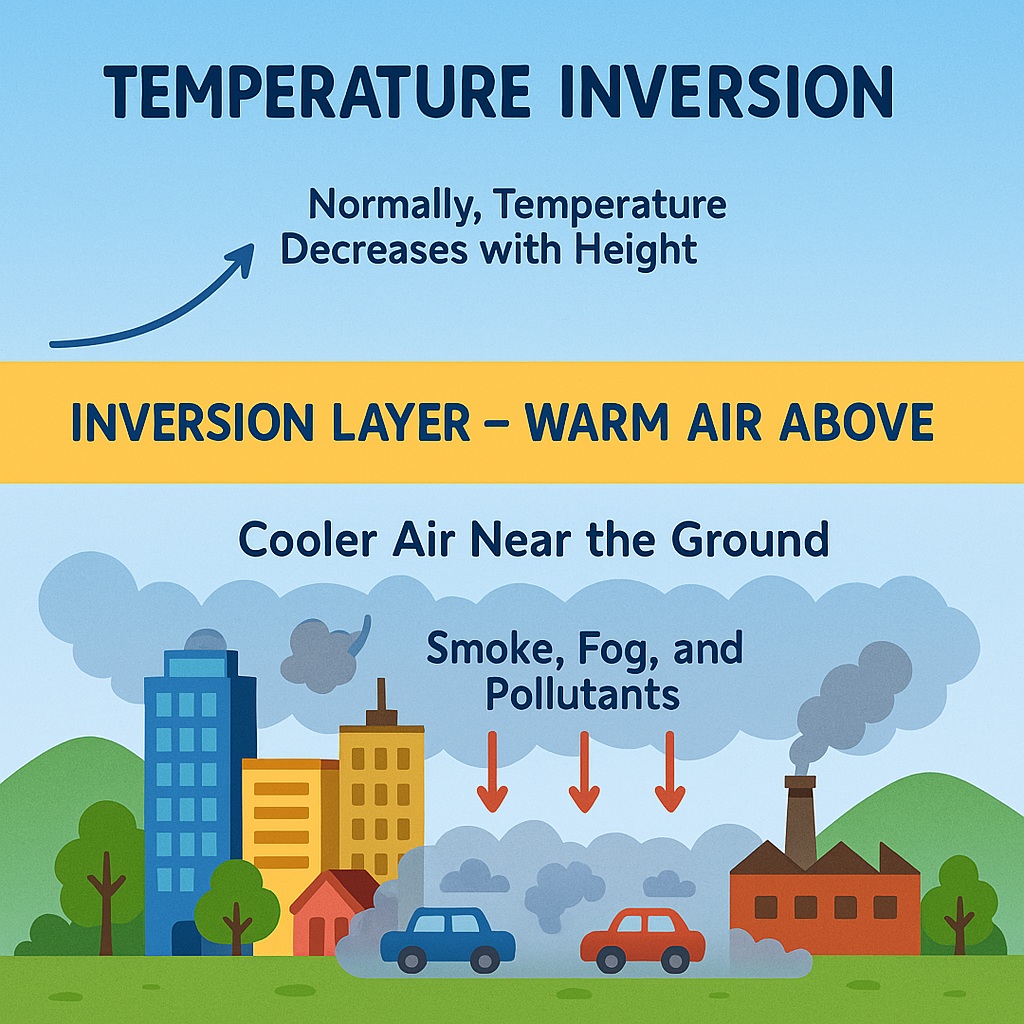
- Trapping of Pollutants: Ground-level emissions are confined beneath the stable inversion layer, severely degrading urban air quality.
- Formation of Fog: Surface air reaches saturation as moisture condenses in the cool boundary layer, producing dense fog.
- Inversion Lid: Suppresses vertical air mixing, exacerbating the accumulation of smog and industrial pollutants.
Types of Temperature Inversion
- Radiation Inversion: Occurs due to rapid nocturnal surface cooling.
- Advection Inversion: Results from horizontal influx of cold air beneath warm air.
- Frontal Inversion: Forms when warm air masses glide up and over a wedge of dense, cold air along a frontal boundary.
- Subsidence Inversion: Caused by sinking, compressing upper-level air masses.
Mitigating the Effects of Temperature Inversion
Proactive measures to minimize pollution accumulation during inversion episodes include:
- Reducing Emissions: Curbing industrial smoke and vehicular exhaust.
- Alternative Transit: Promoting public transport, carpooling, and cycling.
- Renewable Energy: Transitioning toward wind and solar power generation.
- Air Quality Monitoring: Tracking pollutant concentrations to issue timely health advisories.
Conclusion
Temperature inversion is a critical meteorological phenomenon with profound environmental and public health implications. Understanding its triggers and types allows cities and communities to implement effective emission controls and safeguard air quality.