Tourism in India is a dynamic and fast-growing sector that significantly contributes to the national economy, cultural exchange, and employment generation. Blessed with diverse geography, a rich cultural heritage, historical landmarks, and spiritual traditions, India offers a wide range of experiences—from heritage tourism and adventure travel to spiritual pilgrimages and sustainable ecotourism.
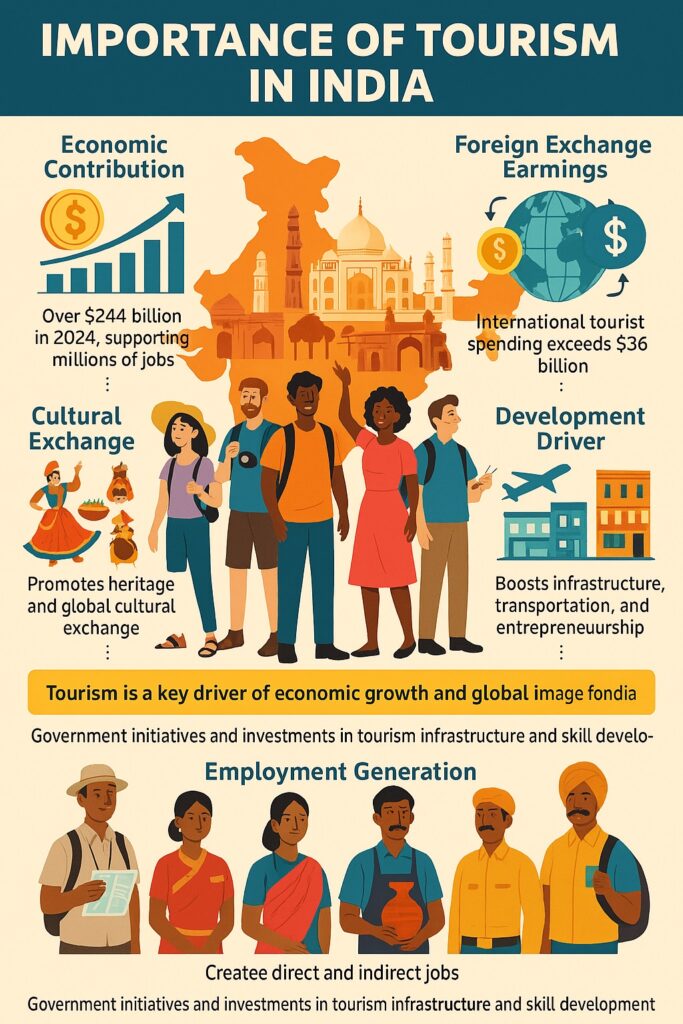
Importance of Tourism in India
- Economic Contribution: Contributes approximately 9% to India’s GDP and supports millions of direct and indirect jobs.
- Foreign Exchange Earnings: Serves as a vital source of foreign exchange through international tourist arrivals.
- Cultural Exchange: Promotes India’s rich heritage, traditions, and cultural values on the global stage.
- Development Driver: Accelerates infrastructure modernization, transport networks, hospitality, and local entrepreneurship.
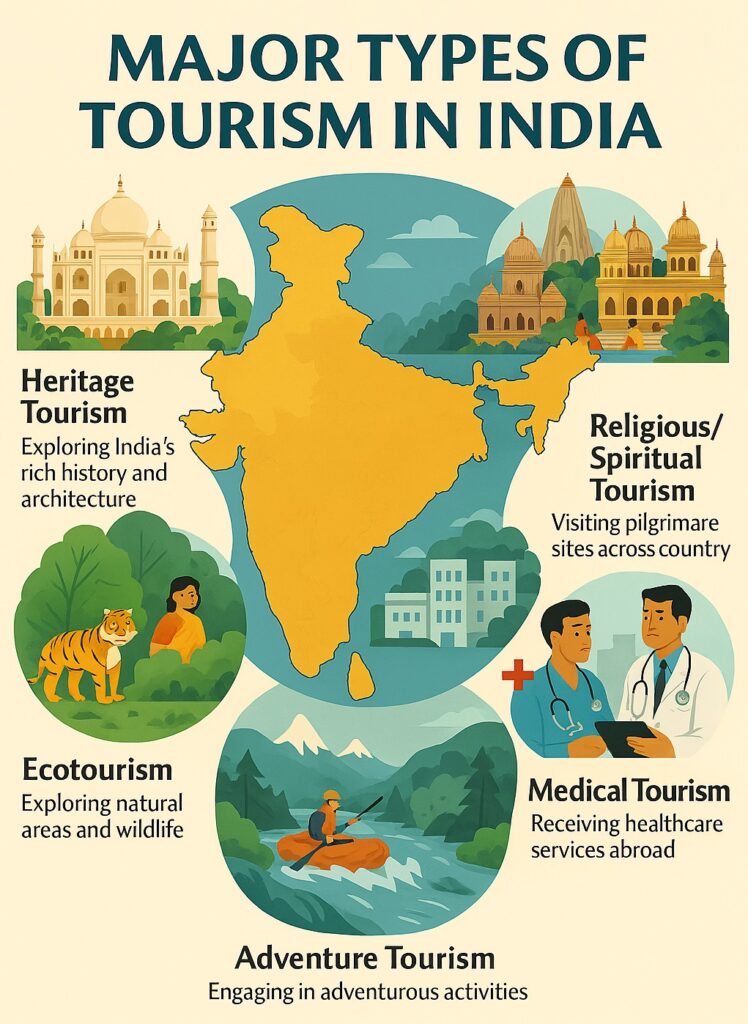
Major Types of Tourism in India
- Heritage Tourism: Visiting historic forts, palaces, and UNESCO World Heritage sites such as the Taj Mahal, Hampi, and Jaipur.
- Religious and Spiritual Tourism: Sacred destinations like Varanasi, Rishikesh, Amritsar, Tirupati, and Bodh Gaya attracting global pilgrims.
- Medical Tourism: Affordable, high-quality healthcare attracting patients from Asia, Africa, and the Middle East.
- Adventure Tourism: Himalayan trekking, river rafting in Rishikesh, and scuba diving in the Andaman Islands.
- Ecotourism: Responsible travel centered on environmental sustainability and wildlife conservation.
Ecotourism in India
Ecotourism is a sustainable form of travel aiming to conserve natural environments, respect local traditions, and promote ecological awareness through low-impact travel.
Core Goals of Ecotourism:
- Biodiversity and habitat conservation
- Empowerment of local communities
- Environmental education for travelers
- Mitigating the negative environmental footprints of tourism
Key Ecotourism Destinations:
- Kaziranga National Park (Assam): Renowned for the one-horned rhinoceros and rich avian fauna.
- Sundarbans (West Bengal): Home to Royal Bengal tigers and the world's largest mangrove forest.
- Periyar Wildlife Sanctuary (Kerala): Famous for guided nature walks, bamboo rafting, and conservation programs.
- Great Himalayan National Park (Himachal Pradesh): A UNESCO World Heritage Site rich in alpine flora and fauna.
- Silent Valley National Park (Kerala): A critical biodiversity hotspot protecting rare and endangered species.
- Spiti Valley (Himachal Pradesh): Promotes community-based tourism through local homestays and eco-guides.
Government Initiatives for Promoting Tourism
- Incredible India Campaign: Global destination branding strategy to attract international visitors.
- Dekho Apna Desh: Domestic tourism campaign encouraging citizens to explore India.
- Swadesh Darshan Scheme: Developing thematic tourist circuits (e.g., Buddhist Circuit, Coastal Circuit).
- PRASAD Scheme: Focused on the development and promotion of pilgrimage and spiritual sites.
- Eco-Tourism Policy Guidelines: Issued by the Ministry of Environment, Forest and Climate Change (MoEFCC) to regulate sustainable travel.
Challenges in Tourism Development
- Environmental degradation and waste accumulation caused by unregulated tourist footfall.
- Cultural erosion and excessive commercialization of fragile heritage sites.
- Inadequate infrastructure in remote rural and natural destinations.
- Safety and security concerns across certain tourist circuits.
- Critical need for skilled manpower in the hospitality and tourism sectors.
Conclusion
Tourism and ecotourism hold immense potential in India for driving sustainable development, conserving biodiversity, and uplifting rural communities. With rigorous planning, education, and effective regulation, tourism can serve as a powerful engine for economic growth, cultural preservation, and ecological harmony.