Floods are among the most frequent and devastating natural disasters in India, occurring almost annually across various regions and causing extensive damage to life, property, and agriculture. Driven by diverse geographical and climatic conditions, floods stem from heavy monsoons, river overflows, cyclones, dam failures, and urban waterlogging.
What is a Flood?
A flood is an overflow of water onto normally dry land. It can result from sustained rainfall, river overflow, cyclonic storm surges, melting snow, or structural failures of dams. Floods can develop suddenly as flash floods or slowly as riverine floods, both capable of immense destruction.
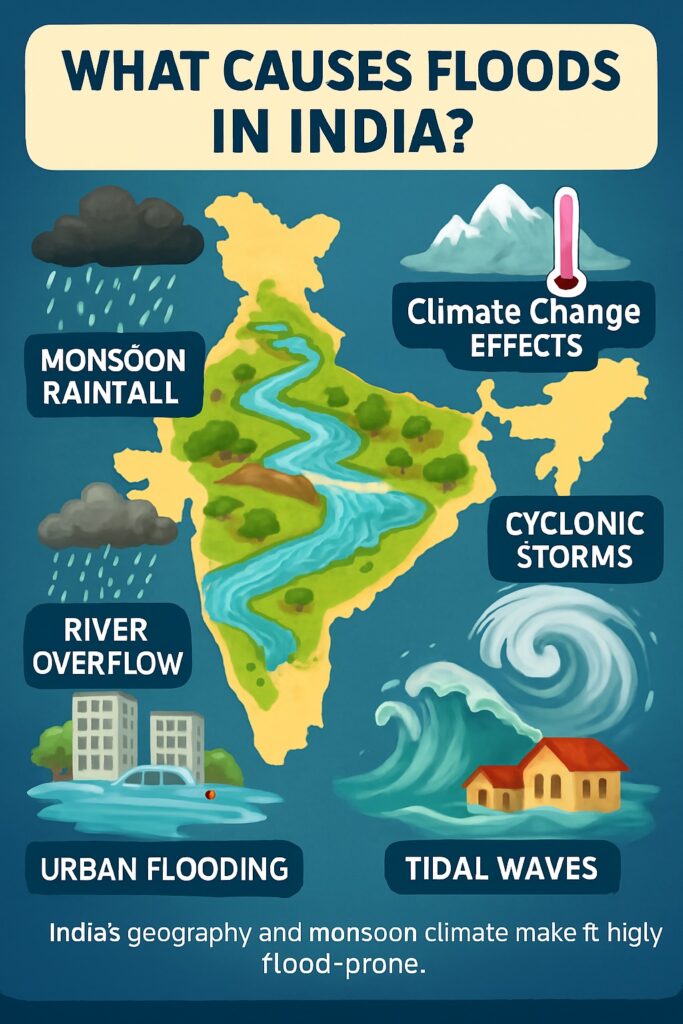
Major Causes of Floods in India
- Monsoon Rains: India receives 75%–90% of its annual precipitation during the southwest monsoon (June–September). Intense or prolonged downpours quickly overwhelm river channels.
- River Overflow: Major Himalayan and peninsular river systems—such as the Ganga, Brahmaputra, Mahanadi, and Godavari—frequently breach their banks during peak monsoon periods.
- Cyclones and Storm Surges: Coastal states including Odisha, West Bengal, Andhra Pradesh, and Tamil Nadu face severe coastal flooding driven by cyclonic rainfall and high storm surges.
- Glacial Lake Outburst Floods (GLOFs): Sudden breaches of high-altitude glacial lakes formed by rapid ice melt in Himalayan regions.
- Urban Flooding: Rapid urbanization, compromised drainage networks, and wetland encroachment cause severe waterlogging in metropolitan centers like Mumbai, Chennai, and Bengaluru.
- Dam Failures: Structural failures or emergency reservoir releases can unleash catastrophic downstream flooding.
- Deforestation and Soil Erosion: Depleting forest cover reduces soil infiltration capacity, accelerating surface runoff and amplifying flood risks.
Impacts of Floods in India
Floods inflict severe socio-economic tolls by destroying homes, public utilities, agricultural crops, and livestock. Beyond immediate loss of life and human displacement, stagnant floodwaters frequently trigger waterborne disease outbreaks, food shortages, and long-term economic contraction.
Mitigation Strategies for Floods
Managing flood risks requires a comprehensive framework combining structural and non-structural interventions:
- Structural Measures: Construction of flood control dams, embankments, reservoirs, and modernized urban drainage systems.
- Non-Structural Measures: Upgrading early warning meteorological systems, expanding public awareness campaigns on flood safety, and formulating strict zoning and emergency contingency plans.
Conclusion
Floods remain a recurrent natural calamity in India. By integrating robust structural infrastructure, advanced early warning systems, and sustainable water management practices, India can enhance national resilience and protect citizen lives and livelihoods.