The universe is the whole of everything — all that we can see, and even what we cannot. The universe is everything that exists — all of space, time, matter, and energy. It includes galaxies (like the Milky Way), stars (like our Sun), planets (like Earth), moons, asteroids, comets, black holes, and even light, radiation, and the empty space between things.
The universe began with the Big Bang around 13.8 billion years ago and has been expanding ever since. All matter, energy, space, and time itself originated from this single event, making it the most widely accepted theory for the origin of the cosmos.
The Milky Way Galaxy
There are groups of millions of stars in space called galaxies. Out of all the stars in the sky, our Sun is just one. It belongs to a galaxy called the Milky Way.
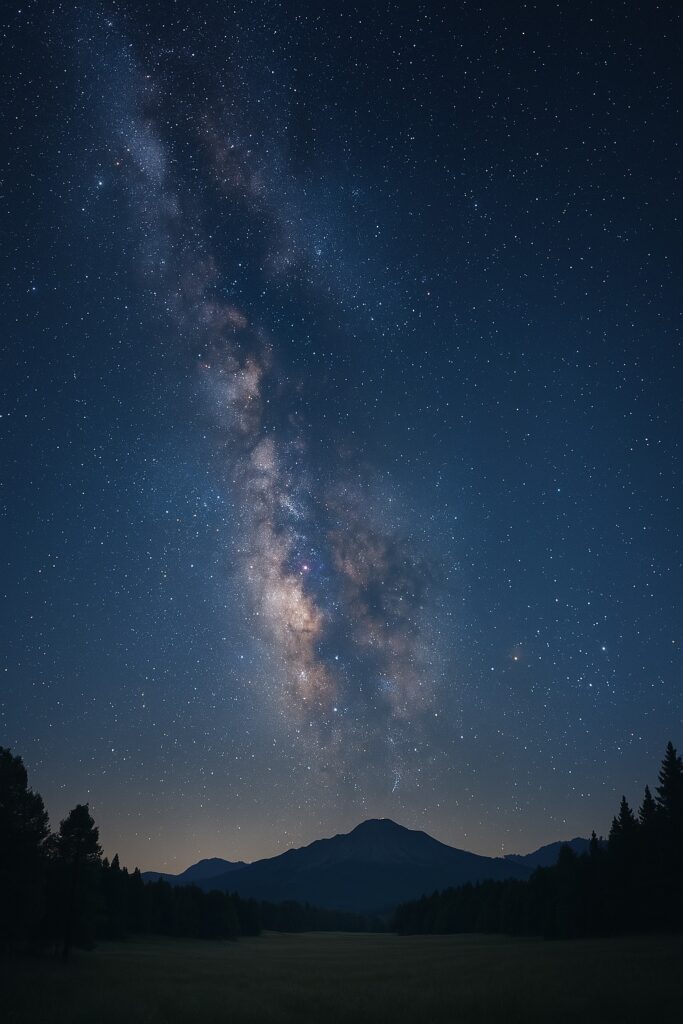
On a clear, dark night, you may see a band of cloudy light across the sky — this is the Milky Way. What we see is only its outer edge. People call it Akashganga, meaning "white river of light." The Milky Way is shaped like a disc and its center is very far away from us.
- Width: About 100,000 light years
- Thickness at center: Around 20,000 light years
- Sun's position: About 30,000 light years from the galactic center
Measuring Space: Light Years & Proxima Centauri
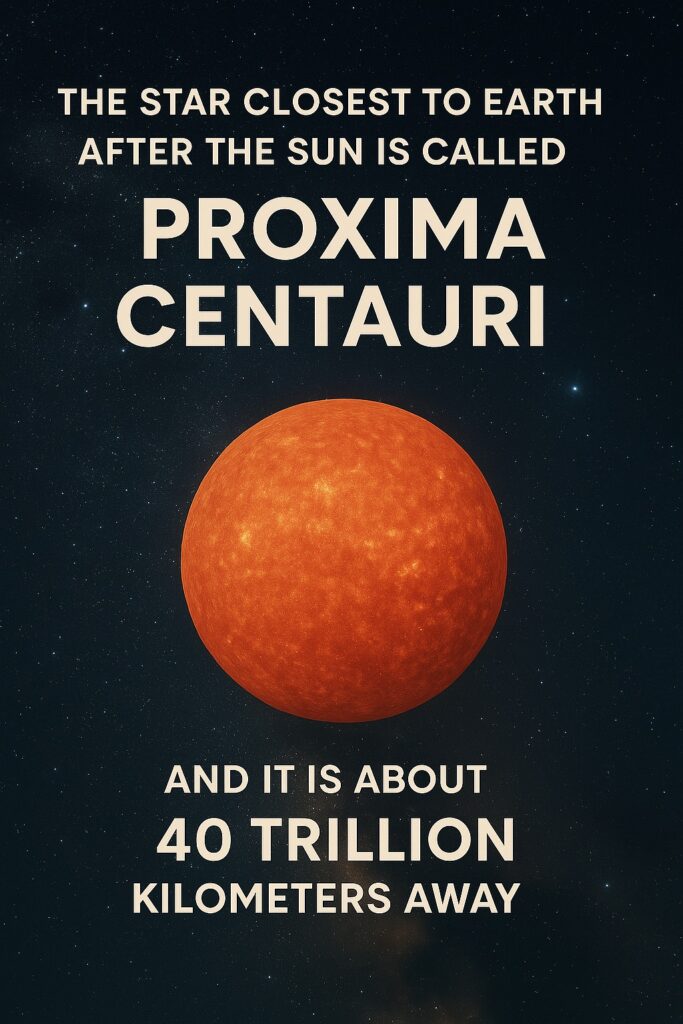
The star closest to Earth after the Sun is called Proxima Centauri, and it is about 40 trillion kilometers away. Since this is such a huge number, scientists use a unit called a light year to measure space distances.
- Light year: The distance light travels in one year.
- Speed of light: About 300,000 kilometers every second.
- One light year: Almost 9.5 trillion kilometers (95 lakh crore km).
Other Galaxies & the Expanding Universe
The Milky Way isn't the only galaxy — scientists have found millions of others. About 20 to 25 galaxies are close to ours. Each one contains billions of stars.
- Closest galaxy: Andromeda — about 20 million light years away from Earth. With a telescope, it looks like a glowing cloud, and you can even see individual stars.
- Local Group: The Milky Way and Andromeda are part of a cluster of about 20–25 galaxies called the Local Group.
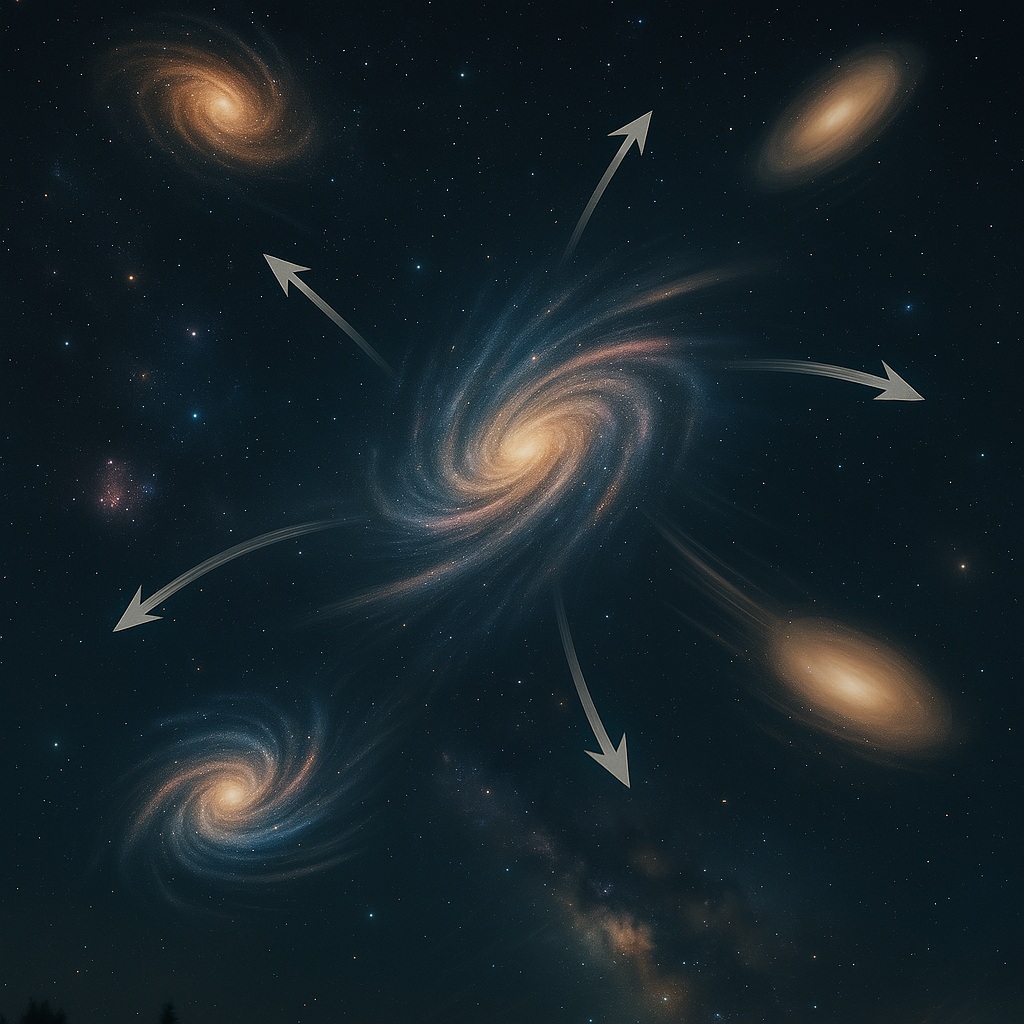
All galaxies are moving away from each other very fast. So, scientists believe the universe is expanding — it keeps getting bigger and changing. Stars have lifespans: they are born, live, grow old, and die. This is why we say that the universe is endless in time and space.
The Sun
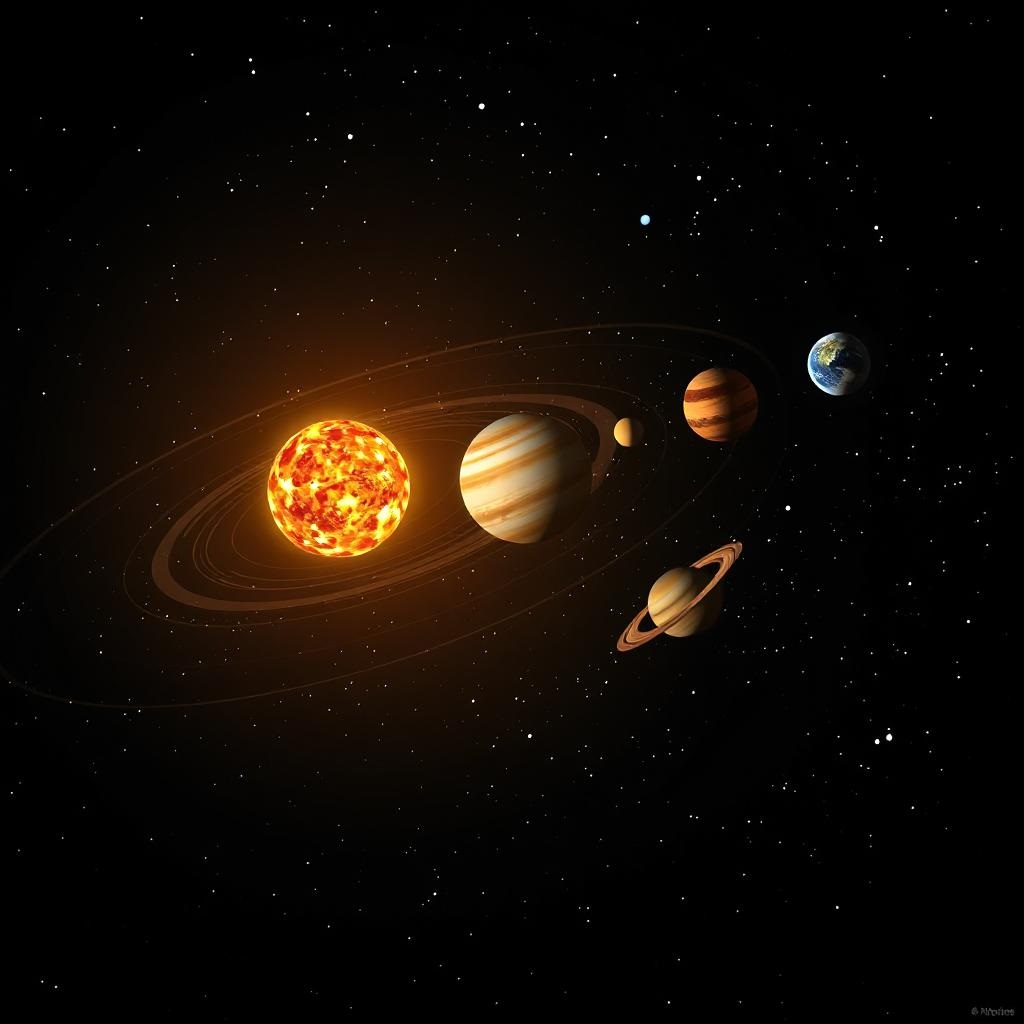
The Sun is the center of our solar system. All the planets, their moons, and even objects like meteoroids and comets move around the Sun.
- Size: The Sun is 1.3 million times bigger than Earth by volume.
- Mass: It contains 99% of all the matter in the solar system.
- Gravity: Because it's so massive, its strong gravity keeps all the planets in their orbits.
- Distance from Earth: About 150 million kilometers — much closer than any other star.
- Light travel time: It takes only about 8 minutes for sunlight to reach Earth.
Source of Energy of the Sun
The Sun is the main source of energy on Earth. Things like coal, oil, and hydroelectricity are all indirect forms of solar energy.
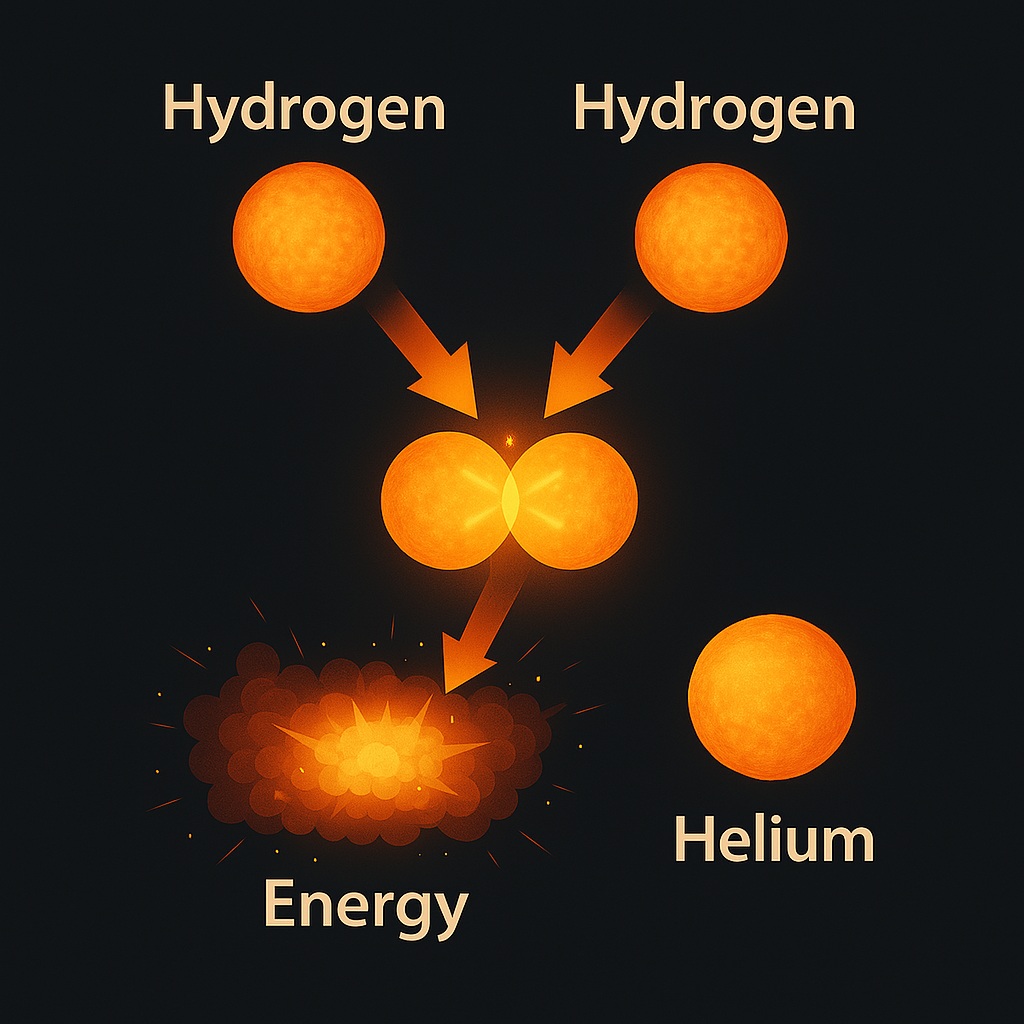
The Sun works like a huge nuclear furnace. It is mostly made of hydrogen and helium gases. The center of the Sun is extremely hot — around 15 million degrees Celsius! Due to this intense heat, hydrogen atoms collide and combine to form helium (nuclear fusion), releasing a huge amount of energy in the process.
- Process: Nuclear fusion — hydrogen → helium + energy
- Core temperature: ~15 million °C
- Surface temperature: ~5,500 °C
- Composition: ~73% hydrogen, ~25% helium, ~2% heavier elements
Key Cosmic Facts at a Glance
| Entity | Key Fact | Measurement |
|---|---|---|
| Universe | Age (Big Bang) | ~13.8 billion years |
| Milky Way | Width | ~100,000 light years |
| Sun | Distance from Earth | ~150 million km (8 min light travel) |
| Proxima Centauri | Distance from Earth | ~40 trillion km (~4.24 light years) |
| Andromeda | Distance from Milky Way | ~20 million light years |
| Light Year | Distance | ~9.5 trillion km |
| Sun (Core) | Temperature | ~15 million °C |
Key Takeaways
The universe is vast, ancient, and constantly expanding — born from the Big Bang 13.8 billion years ago. Our solar system sits within the Milky Way galaxy, which is just one of millions of galaxies in the cosmos. The Sun, powered by nuclear fusion, is the centre of our solar system and the primary source of all energy on Earth. Understanding these cosmic fundamentals helps us appreciate our place in the universe and the extraordinary forces that sustain life on our planet.