Cultural regions refer to geographical areas that have a shared cultural heritage or cultural identity. Characterized by common customs, traditions, languages, religions, and history, these regions highlight the incredible diversity of human civilization across the globe.
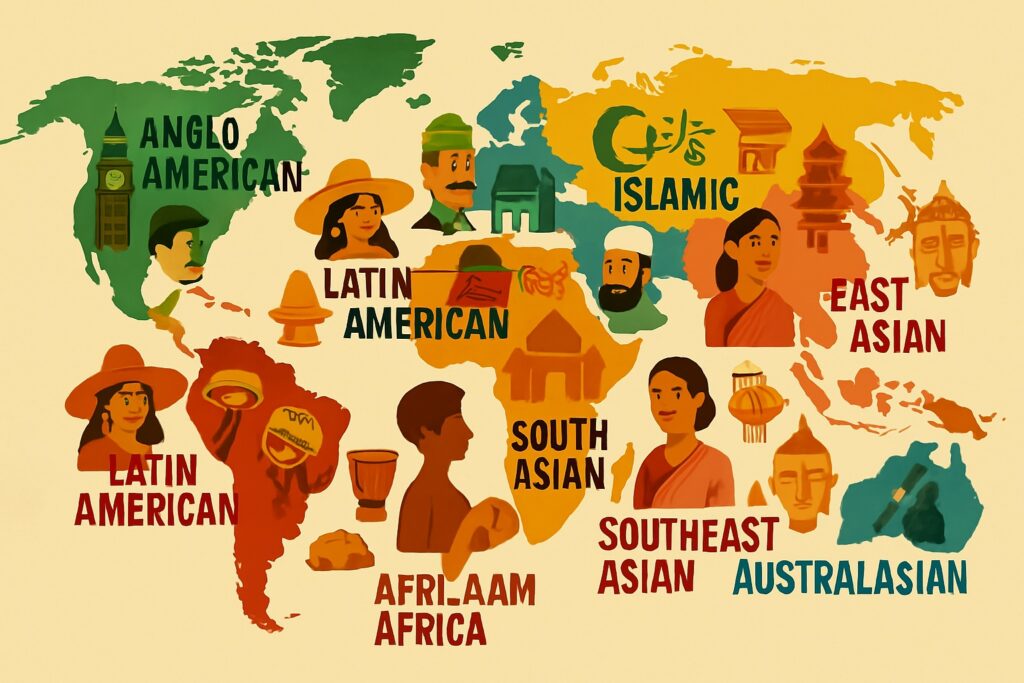
Major Cultural Regions of the World
1. North America
A diverse continent featuring prominent cultural groups such as Native American culture (known for unique language, art, music, and spirituality with a multi-millennial history) and African American culture (characterized by influential music, dance, food, and language that have deeply shaped broader American culture).
2. Latin America
Rich in cultural diversity resulting from a blend of indigenous peoples, Europeans, and Africans. Key sub-regions include the Mesoamerican culture (noted for architecture, art, and literature) and the Andean culture (famous for traditional music, dance, textile art, and indigenous agricultural practices).
3. Europe
Home to a rich mosaic of cultural heritage and historical traditions. Prominent regions include the Mediterranean culture (distinguished by unique cuisine, art, music, and architecture) and the Slavic culture (characterized by distinct languages, literature, and deep historical roots across Eastern and Central Europe).
4. Asia
A vast continent encompassing profound cultural diversity. Major cultural spheres include Indian culture (renowned for ancient heritage, cuisine, art, and spirituality) and East Asian culture (characterized by distinct languages, philosophies, traditional medicine, and martial arts).
5. Africa
Characterized by immense cultural vibrancy across varied landscapes. Key regions include Sub-Saharan African culture (known for rich traditions in music, dance, art, and spirituality) and North African culture (featuring distinctive cuisine, architecture, and millennia of historical exchange).
6. Middle East
Deeply influenced by its rich Islamic heritage, shaping language, religion, and social structures. While Arabic is the dominant language, Persian, Turkish, and Hebrew are also widely spoken across this culturally interconnected region.
Conclusion
Understanding the world's cultural regions is essential for fostering global awareness, empathy, and cross-cultural appreciation. Exploring these unique regions deepens our understanding of the richness of human history and society.