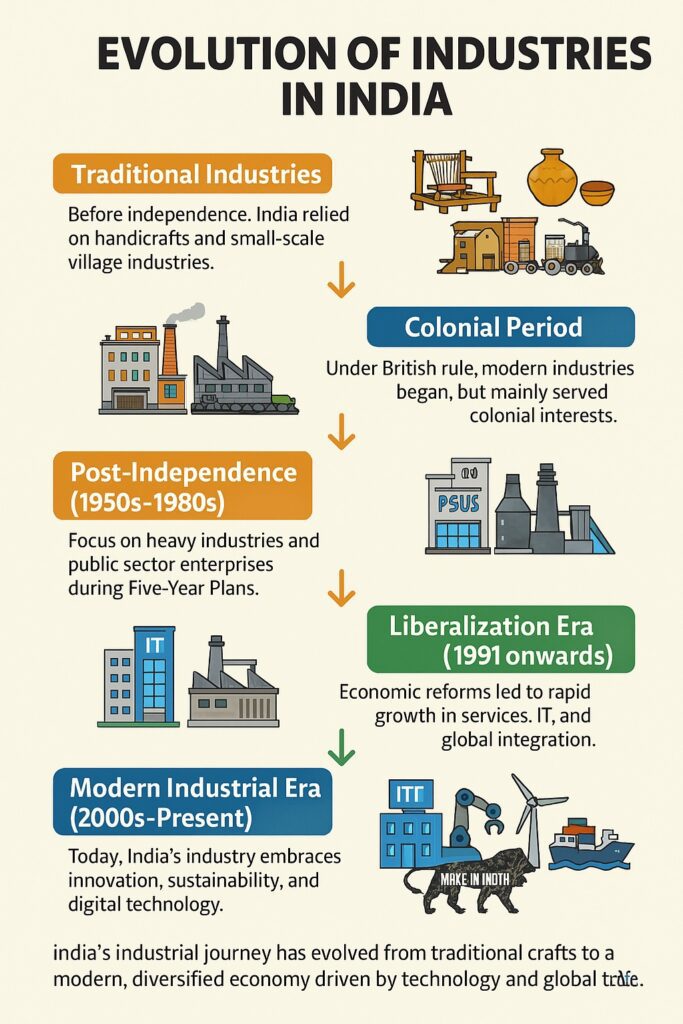
India has undergone a significant transformation in its industrial sector over the years. The country, which was once known for its traditional and cottage industries, has now become a hub of modern and high-tech industries. This evolution has been made possible by various factors, such as globalization, economic liberalization, and technological advancements. In this article, we will take a look at the evolution of industries in India and the factors that have driven this change.
Traditional Industries
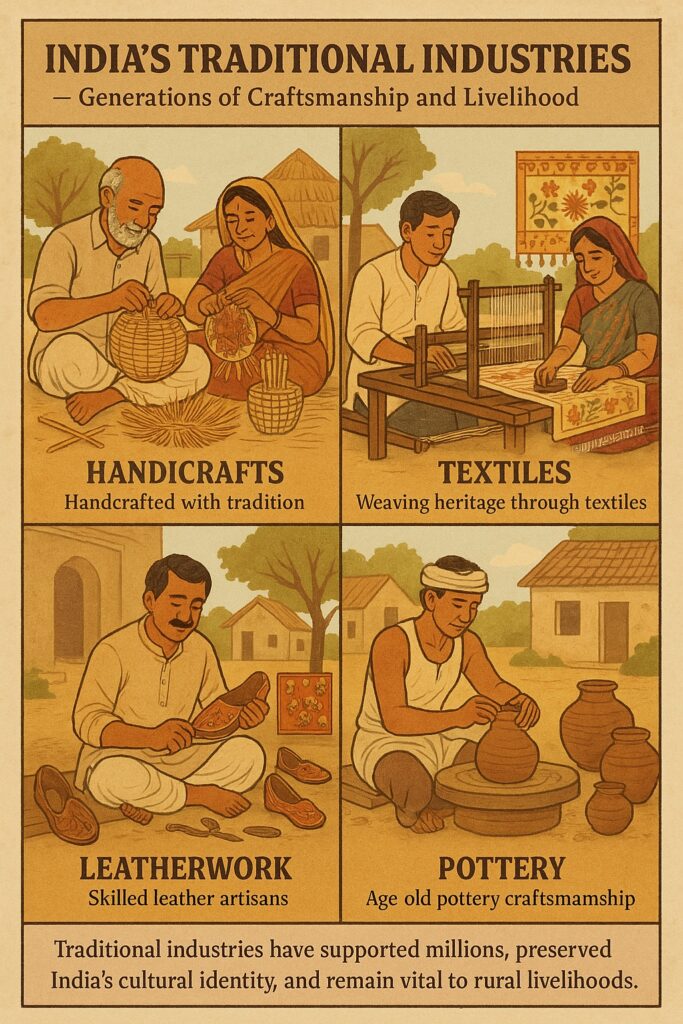
India's traditional industries have been a part of the Indian economy for centuries and have played a significant role in the country's growth. These industries have been passed down from generation to generation and have provided employment to millions of people.
- Handicrafts: Woodwork, metalcraft, jewelry, and carpet weaving — known globally for artistry and cultural heritage.
- Textiles: Handloom weaving, spinning, and dyeing — India's oldest industry employing the largest workforce after agriculture.
- Leather: Tanning and leather goods — India is among the top leather exporters globally.
- Pottery: Terracotta and ceramic crafts — a rural livelihood mainstay with deep cultural roots.
- Key Characteristics: Labour-intensive, low capital investment, artisan skills, decentralized production, and significant export earnings.
Modern Industries
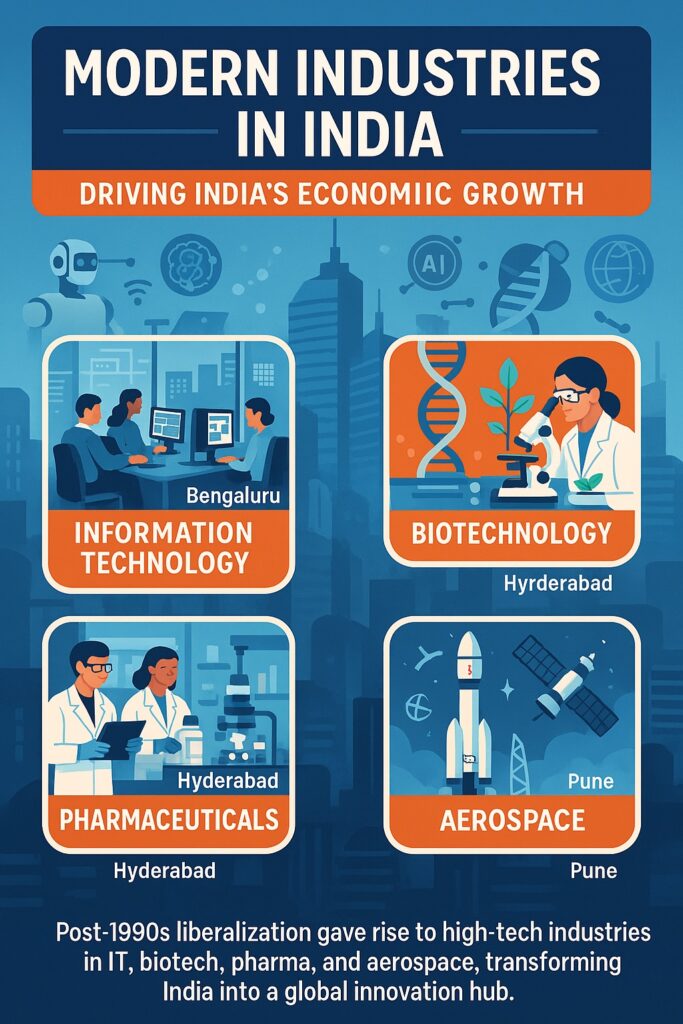
India's modern industries emerged as a result of the economic liberalization policies of the 1990s. These industries are characterized by their use of high technology and skilled labor. They have contributed significantly to the country's growth and have opened up new avenues for employment and investment.
- Information Technology (IT): India is a global IT powerhouse — Bangalore, Hyderabad, and Pune are major tech hubs.
- Biotechnology: Emerging sector with applications in healthcare, agriculture, and industrial processes.
- Pharmaceuticals: India is the "pharmacy of the world" — a leading producer of generic drugs and vaccines.
- Aerospace: Growing capabilities in satellite launch, defence manufacturing, and commercial aviation components.
- Automobile: India is among the top auto manufacturers globally, with a thriving EV transition underway.
Service Industries
The service sector is a dominant part of India's economy, contributing over 50% of India's GDP. It has grown significantly in recent years and has become a major source of employment and revenue for the country. With the rise of the digital economy, new service industries have also emerged.
- Banking & Finance: One of the world's largest banking systems; fintech revolution driving financial inclusion.
- Insurance: Rapidly expanding market with both life and non-life segments growing steadily.
- Healthcare: Medical tourism hub; telemedicine and health-tech transforming service delivery.
- Education: EdTech boom, online learning platforms, and India's emergence as a global education destination.
- Digital Economy: E-commerce, social media, digital marketing, and SaaS platforms — India's fastest-growing service verticals.

Green Industries
India has witnessed the growth of green industries in recent years. These industries are focused on sustainable development and aim to reduce the environmental impact of industrial activities. They have not only helped in conserving the environment but have also provided employment opportunities for many.
- Renewable Energy: India is the 4th largest in renewable energy capacity — solar, wind, and hydro power driving the energy transition.
- Waste Management: Recycling, composting, and waste-to-energy projects addressing the growing urban waste crisis.
- Organic Farming: Chemical-free, eco-friendly agriculture gaining momentum with rising consumer awareness and export demand.
- Electric Vehicles (EVs): Emerging ecosystem of EV manufacturing, battery technology, and charging infrastructure.
- Green Building: Sustainable construction practices, energy-efficient designs, and green certification (IGBC/LEED).
Industrial Categories: Comparative Overview
| Parameter | Traditional | Modern | Service | Green |
|---|---|---|---|---|
| Era of Origin | Ancient / Pre-independence | Post-1991 liberalization | Post-2000 digital boom | Post-2010 sustainability push |
| Capital Intensity | Low | High | Medium | Medium to High |
| Labour Type | Unskilled / Artisan | Highly skilled | Skilled / Semi-skilled | Skilled / Technical |
| Key Examples | Textiles, handicrafts, leather | IT, pharma, aerospace | Banking, healthcare, e-com | Solar, EVs, organic farming |
| Export Orientation | Moderate | High | High (IT/BPO) | Growing |
Factors Driving Industrial Evolution
- Globalization: Integration with the world economy opened access to global markets, technology, and capital flows.
- Economic Liberalization (1991): Deregulation, FDI allowance, and privatization unleashed entrepreneurial energy and competition.
- Technological Advancements: Digital revolution, automation, AI, and IoT transforming production and service delivery.
- Demographic Dividend: A young, educated workforce driving both manufacturing and knowledge-based sectors.
- Government Policies: Make in India, Startup India, Production-Linked Incentive (PLI) schemes, and SEZs catalyzing industrial growth.
Challenges
- Infrastructure Bottlenecks: Inadequate transport, power, and logistics infrastructure increasing costs and delays.
- Regulatory Complexity: Multiple compliances, labour law rigidities, and bureaucratic hurdles impeding ease of doing business.
- Skills Gap: Mismatch between industry requirements and available workforce skills, especially in emerging sectors.
- Regional Disparities: Industrial concentration in western and southern states; eastern and northeastern regions lag behind.
- Environmental Concerns: Industrial pollution, water stress, and carbon emissions posing sustainability challenges.
The Way Forward
- Strengthen Manufacturing Base: Leverage PLI schemes and Make in India to increase manufacturing's share in GDP to 25%.
- Accelerate Green Transition: Invest in renewable energy, circular economy, and sustainable industrial practices.
- Bridge the Skills Gap: Align education and vocational training with Industry 4.0 requirements.
- Promote Inclusive Industrialization: Spread industrial development to tier-2 and tier-3 cities and aspirational districts.
- Embrace Digital Transformation: Adopt AI, IoT, and automation across traditional and modern industries for competitive advantage.
Conclusion
The evolution of industries in India has been a result of various factors, including globalization, economic liberalization, and technological advancements. The country's traditional industries have been the backbone of its economy, while modern and service industries have emerged as new growth drivers. The growth of green industries is a positive sign for the future, and India's economy is expected to continue to diversify and grow in the coming years.