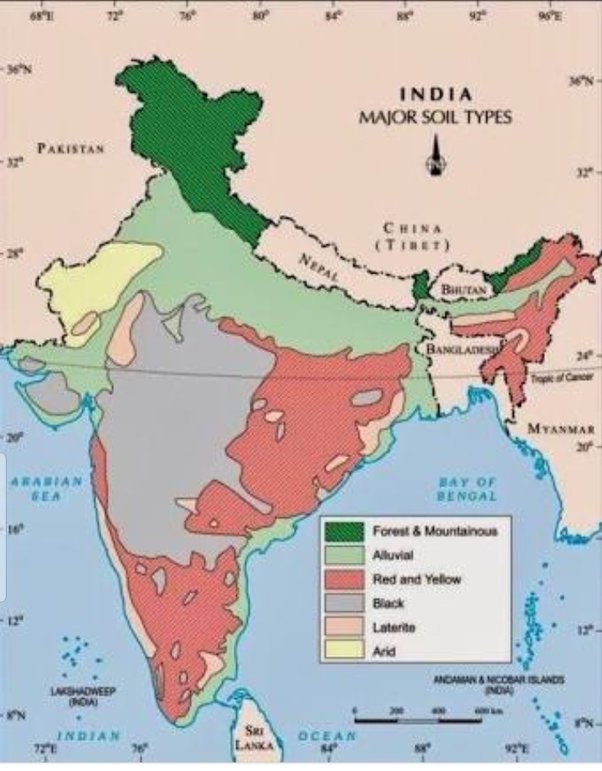
India possesses diverse Soil Types whose Distribution is non-uniform across the subcontinent. Identified by the Indian Council of Agricultural Research (ICAR) into eight major soil classifications, these soils dictate agricultural productivity, crop selection, and regional ecosystems.
1. Alluvial Soil
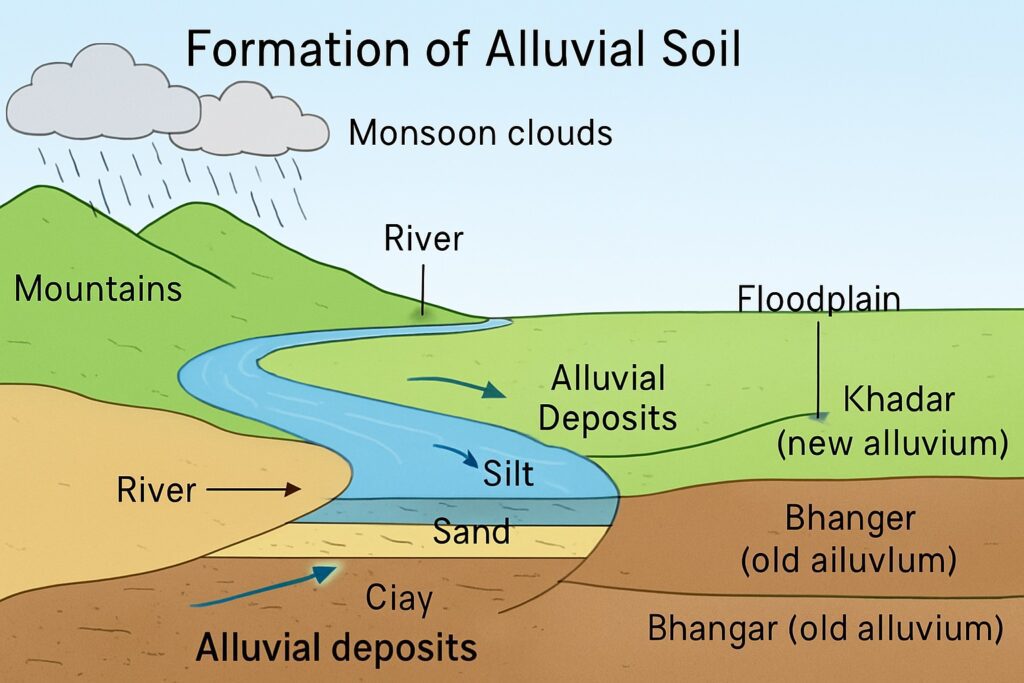
Alluvial soil is the most common soil type in India, covering the Indo-Gangetic plains, the Brahmaputra valley, and coastal plains. Formed by river silt and clay deposition, it is exceptionally nutrient-rich and ideal for agriculture.
Formation & Distribution
- Formation: Deposited by rivers flowing from mountains and plateaus, continuously replenished by seasonal monsoon floods.
- Distribution: Northern Plains (Punjab, Haryana, UP, Bihar, West Bengal), eastern coastal river deltas (Mahanadi, Godavari, Krishna, Cauvery), and valley floors.
Characteristics & Crops Grown
- Texture & Color: Sandy loam to clay; light grey to ash grey.
- Nutrient Profile: Rich in potash, phosphoric acid, and lime; deficient in nitrogen and organic matter.
- Subtypes: Khadar (new, highly fertile floodplains) and Bhangar (older elevated alluvial soils containing calcareous nodules called kankar).
- Crops Grown: Rice, wheat, sugarcane, cotton, pulses, oilseeds, and jute.
2. Black Soil (Regur Soil)
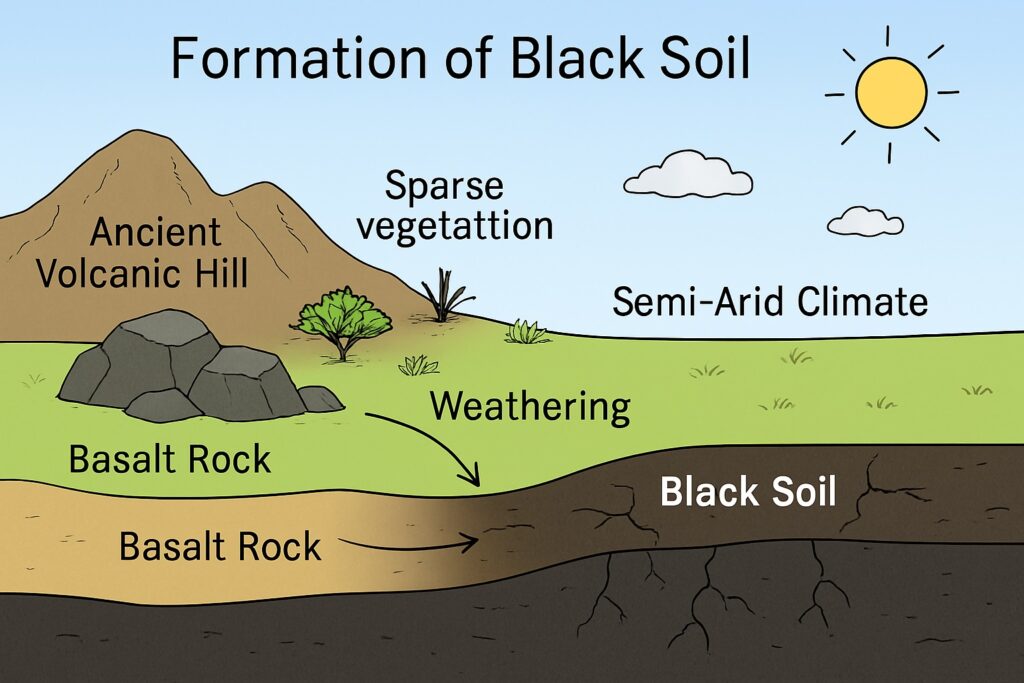
Black soil is rich in clay and possesses a high moisture-retaining capacity. It swells when wet and contracts when dry, forming deep structural cracks that facilitate natural aeration. Known as regur soil, it is predominantly found across the Deccan Plateau.
Origin, Distribution & Characteristics
- Origin: Formed through the weathering of ancient basaltic lava flows in the Deccan Trap region.
- Distribution: Maharashtra, Madhya Pradesh, Gujarat, Karnataka, Telangana, Andhra Pradesh, and Tamil Nadu.
- Characteristics: Deep black to grey color, fine clayey texture, highly sticky when wet, and rich in iron, lime, calcium, and magnesium (deficient in nitrogen, phosphorus, and humus).
- Crops Grown: Cotton (hence called cotton soil), jowar, bajra, pulses, oilseeds, sugarcane, and wheat.
3. Red Soil
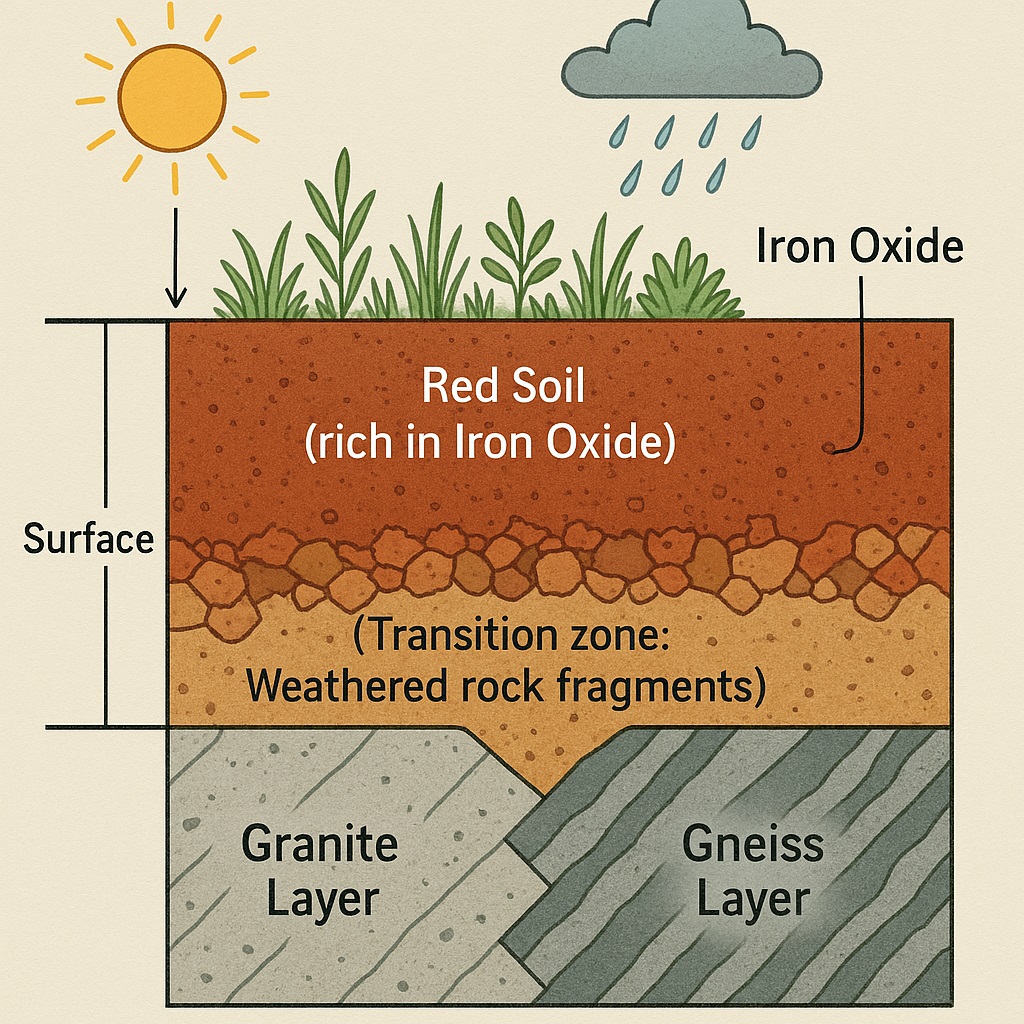
Red soil is one of the oldest and most widespread soil groups in India, formed over crystalline and metamorphic rocks under warm, moist conditions.
Distribution, Characteristics & Crops
- Distribution: Tamil Nadu, Karnataka, Andhra Pradesh, Telangana, Odisha, Chhattisgarh, Jharkhand, and parts of the southeastern peninsular plateau.
- Characteristics: Reddish hue due to ferric oxide (iron content), sandy-to-loamy porous texture, slightly acidic, well-drained, rich in potassium and iron, but poor in nitrogen, phosphorus, and humus.
- Crops Grown: Millets, pulses, groundnut, tobacco, potato, and oilseeds (with irrigation and fertilizers).
4. Laterite Soil
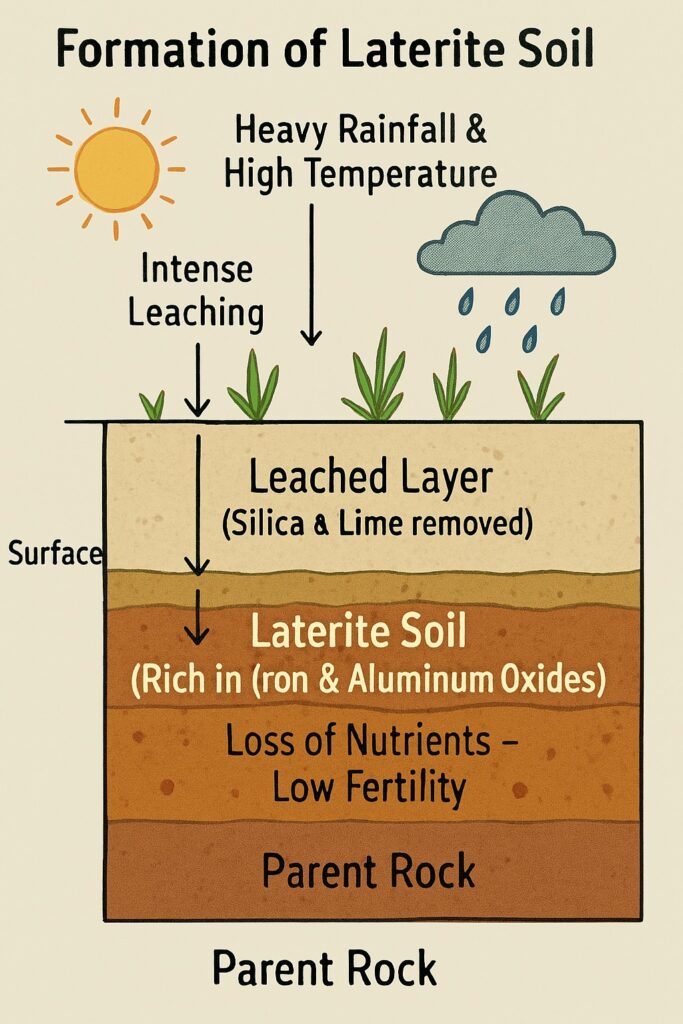
Laterite soil develops in tropical regions experiencing high temperatures and heavy rainfall through intensive leaching (washing away of silica and lime). The term derives from the Latin later meaning brick, as dried blocks harden into durable building material.
Characteristics & Use
- Characteristics: Rich in iron and aluminum oxides, reddish-yellow color, highly porous, and severely deficient in nitrogen, potassium, and lime.
- Distribution: Hilly tracts of the Western Ghats, Eastern Ghats, Kerala, Karnataka, Maharashtra, Odisha, and Assam.
- Agricultural Use: Poor natural fertility, but suitable for plantation crops like tea, coffee, rubber, and cashew when heavily fertilized. Extensively utilized as rural building blocks.
5. Desert Soil
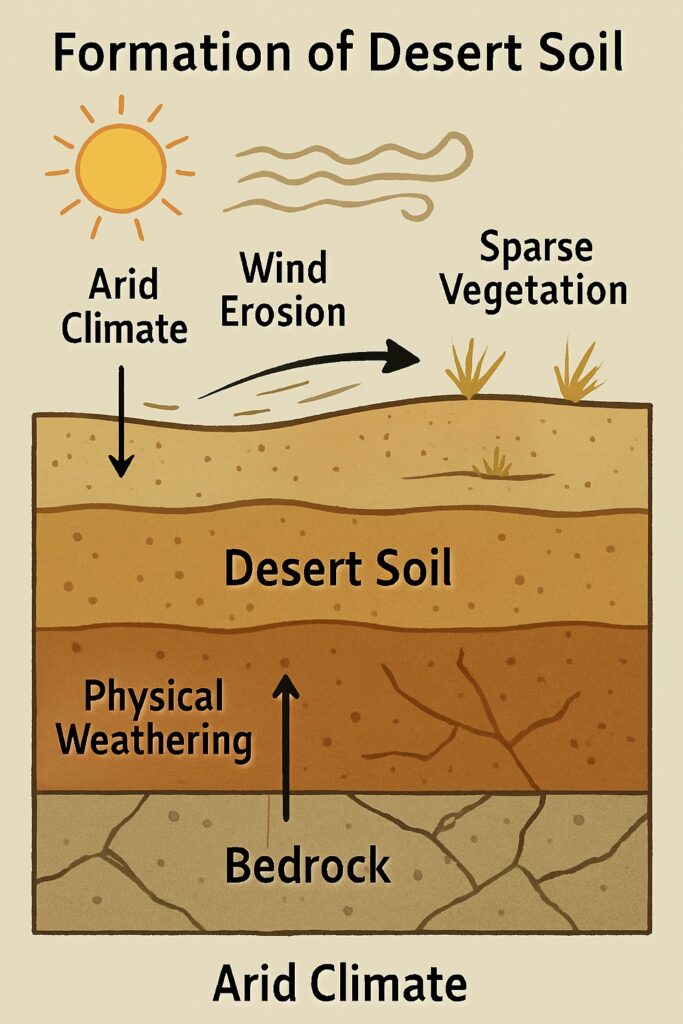
Found in arid and semi-arid tracts like the Thar Desert of Rajasthan and parts of Gujarat, Haryana, and Punjab.
Characteristics & Cultivation
- Characteristics: Sandy to gravelly texture, light brown to reddish-brown color, low moisture retention, rich in soluble salts, and very low organic matter.
- Cultivation: Naturally unsuited for farming, but productive for drought-resistant crops (millets, barley, maize) when supported by canal irrigation (e.g., Indira Gandhi Canal).
6. Mountain Soil (Forest Soil)
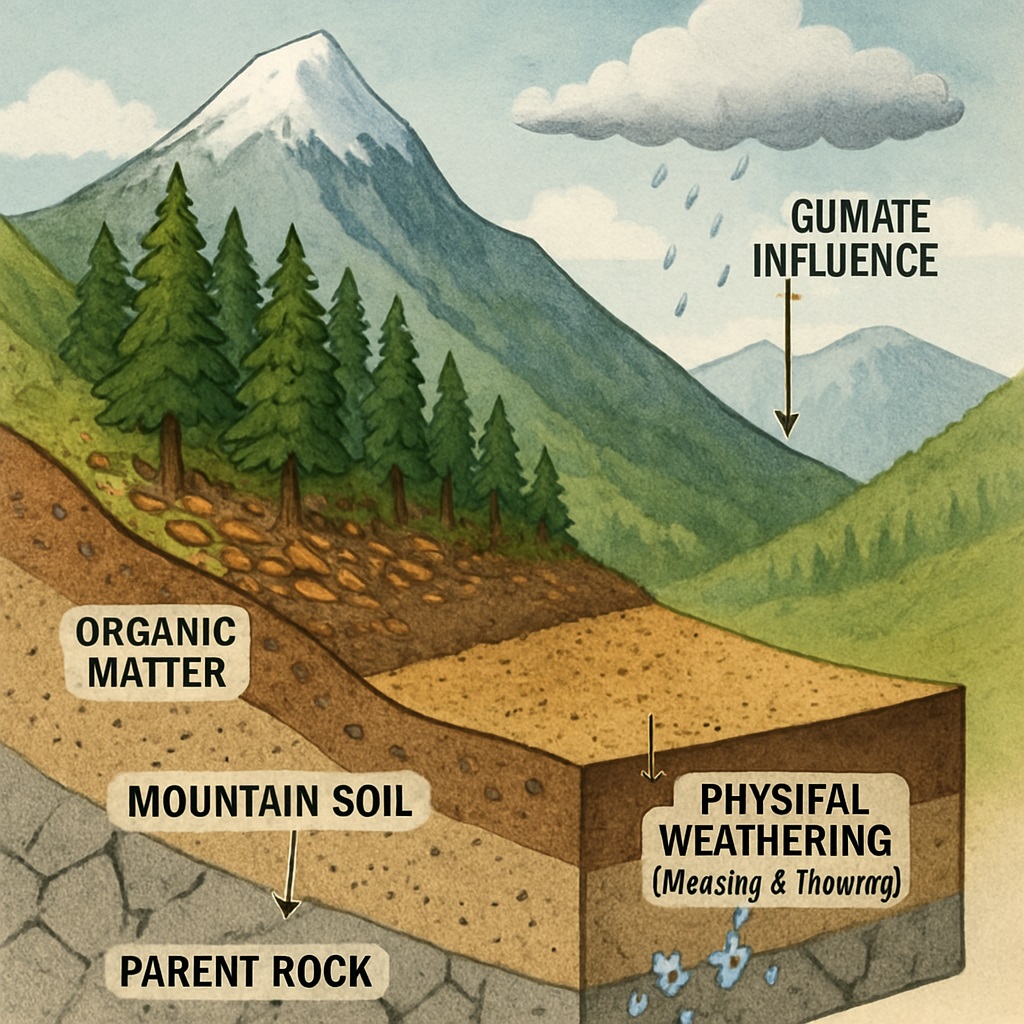
Found across Himalayan mountain slopes and highland regions of the Western and Eastern Ghats, formed through mechanical weathering and forest organic matter accumulation.
Characteristics & Utilization
- Characteristics: Varies significantly by altitude and slope; generally shallow, stony, and coarse at high elevations, while richer in organic humus beneath dense forest covers at lower levels.
- Crops Grown: Plantation and horticulture crops including tea, coffee, spices, and orchard fruits (apples), frequently cultivated via terrace farming.
Conclusion
India’s rich tapestry of soil types—from fertile alluvial plains and moisture-retaining black regur soils to mineral-rich red and specialized mountain soils—forms the foundational bedrock of the nation's agricultural economy and ecological health.