A monsoon is a seasonal wind system that brings heavy rainfall to certain regions of the world. Monsoons are the result of the movement of large masses of air from land to sea, driven by differences in temperature and pressure. The term monsoon is derived from the Arabic word "mausim," which means season.
What is a Monsoon?
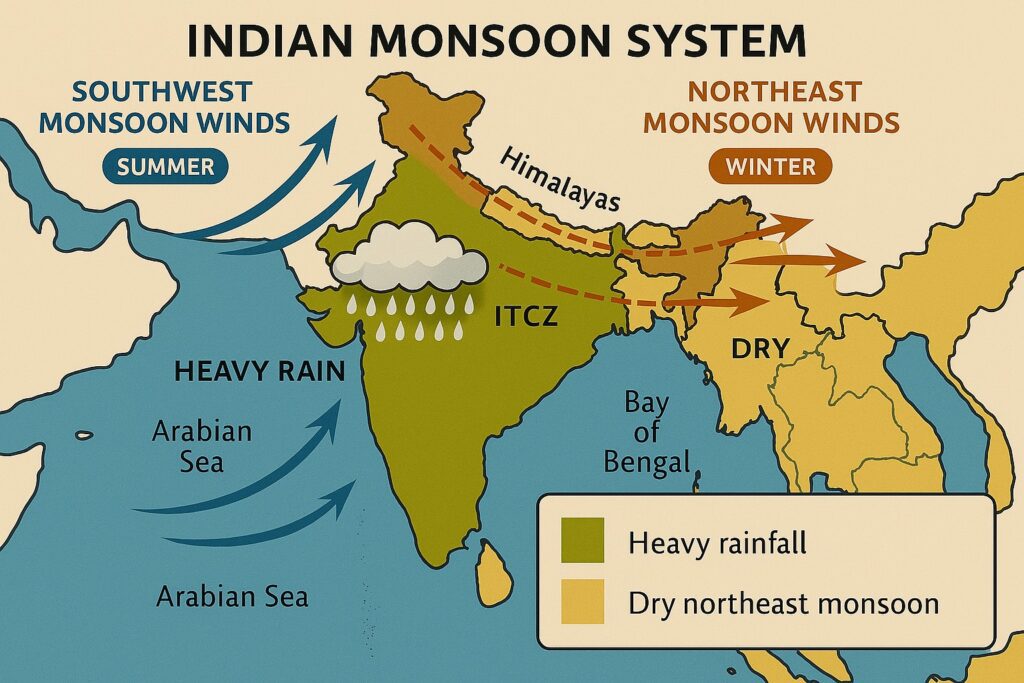
A monsoon is a seasonal change in wind direction that brings heavy rains to certain regions during specific times of the year. It is evident in specific parts of the world, such as Southeast Asia, East Africa, and parts of Australia and America. There are two main phases of monsoons:
- Southwest Monsoon (Wet Season): Summer monsoon bringing heavy rainfall.
- Northeast Monsoon (Dry or Retreating Monsoon): Winter monsoon causing light rain in some regions.
Mechanism of Monsoon
The origin of monsoons can be attributed to several interacting meteorological and geographical factors:
Monsoons are primarily caused by the differential heating of land and water surfaces. During summer, the landmass of the Indian subcontinent heats up faster than surrounding oceans, creating a low-pressure zone over land and a high-pressure zone over the Indian Ocean, forcing winds to move toward the land.
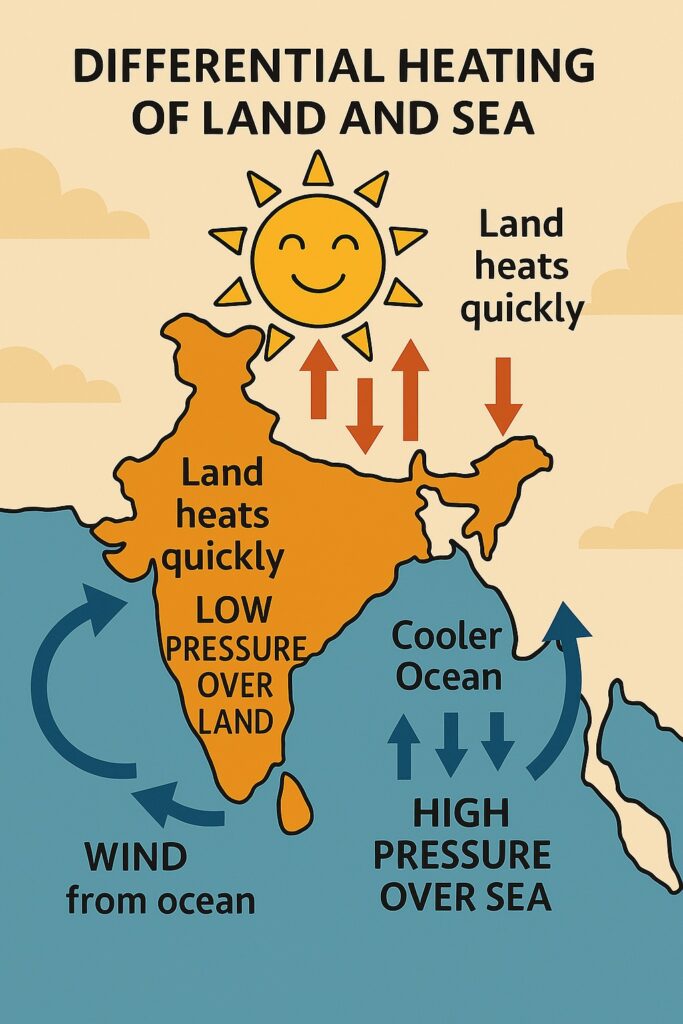
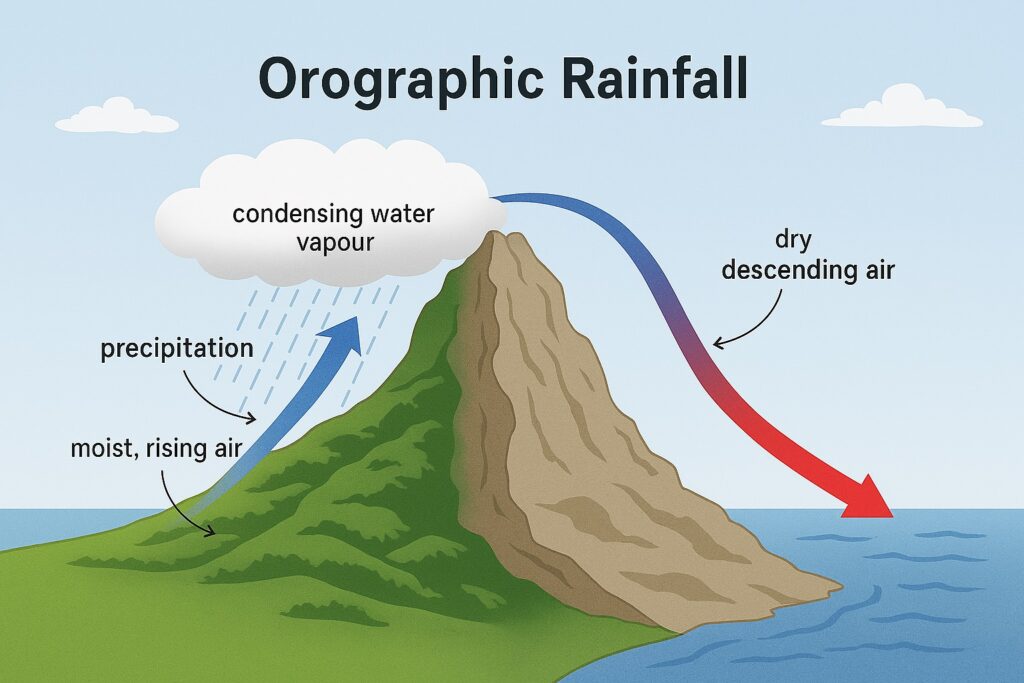
As warm air rises over the heated landmass, cooler moist air from the Indian Ocean and Arabian Sea flows inward as Southwest Monsoon Winds. When these moist winds hit obstacles like the Western Ghats and Himalayas, orographic uplift causes cooling and heavy rainfall.
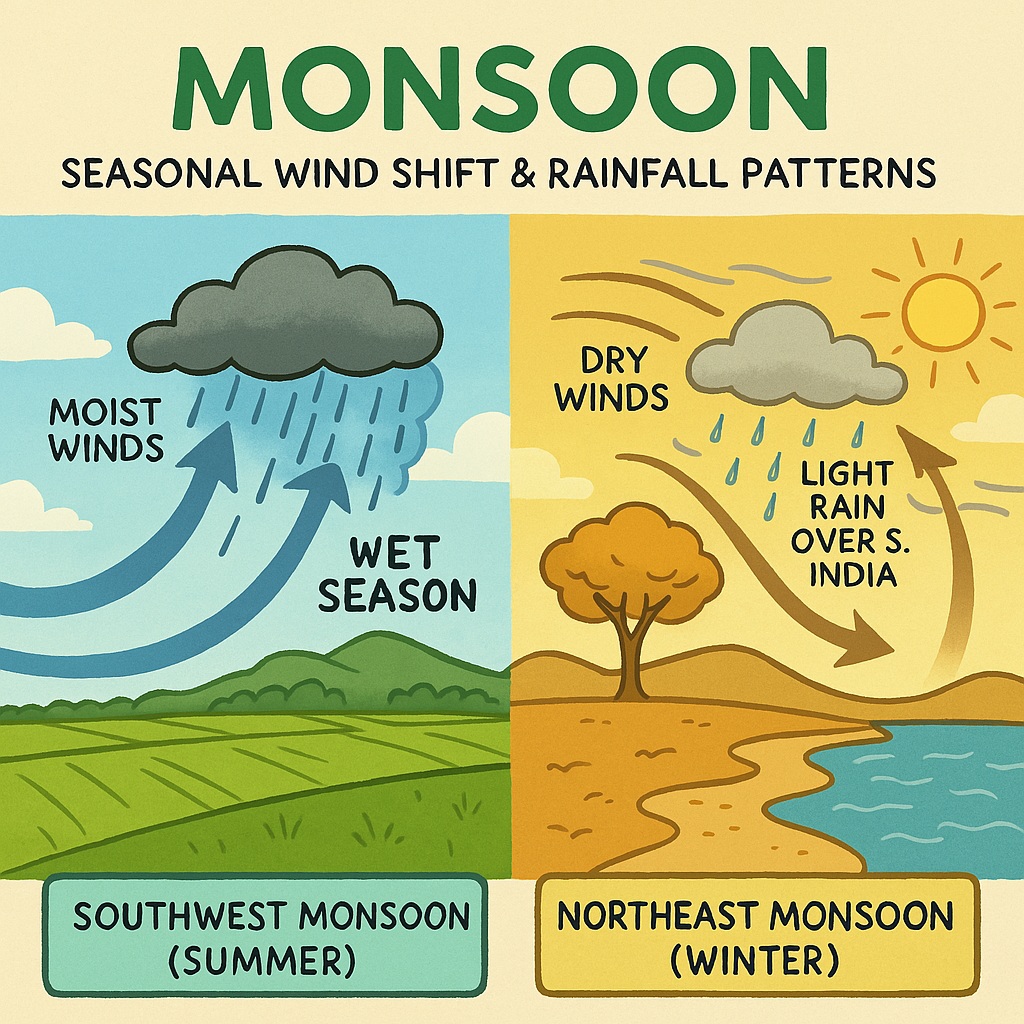
In winter, land cools down faster than the ocean, creating a high-pressure area over land and a low-pressure area over the ocean. Cool, dry winds blow from land to sea (northeast direction), keeping most of India dry except for the Tamil Nadu coast, which picks up moisture from the Bay of Bengal.
The Inter-Tropical Convergence Zone (ITCZ) is a low-pressure belt formed by converging trade winds. During summer, the ITCZ shifts northward over northern India, aligning with the monsoon trough and drawing in moist southwesterly winds that trigger intense rainfall.
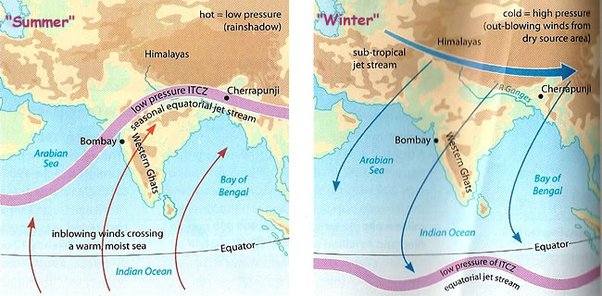
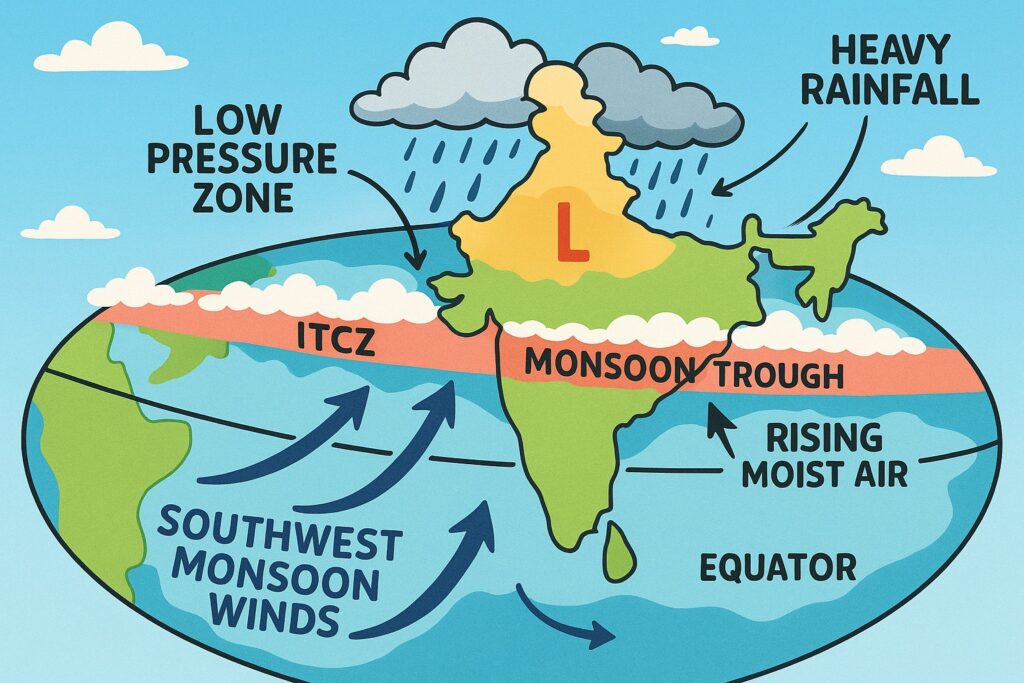
Upper-atmosphere fast-flowing jet streams retreat northward in summer beyond the Himalayas, establishing a low-pressure zone over northern India. Furthermore, geographical barriers like the Himalayas enhance upward lifting, producing extensive orographic rainfall.
Warm currents like the North Equatorial Current and Mozambique Current raise sea surface temperatures in the Indian Ocean, increasing evaporation and moisture content to fuel heavier rainfall over the subcontinent.
Impacts of Monsoons
- Agriculture: Monsoons provide essential rainfall for crop cycles, directly sustaining the livelihoods of millions and driving harvest success.
- Economy: In countries like India, successful monsoons act as key drivers of economic growth by boosting agricultural productivity.
- Natural Disasters: Excessive rainfall and severe winds can trigger flooding and landslides, while stagnant water can increase the risk of water-borne diseases.
Conclusion
Monsoons are complex seasonal wind systems driven by differential heating, atmospheric pressure shifts, ITCZ migration, and ocean dynamics. They remain a vital lifeblood for agriculture and economies across affected regions while requiring robust disaster management against weather extremes.