Jet stream is a high-altitude air current that flows from west to east. It is found in the middle and upper levels of the Earth's atmosphere. The stream has a profound effect on the weather and climate, as well as on commercial aviation.
What is Jet Stream?
A jet stream is a fast-flowing, narrow band of air that is found at high altitudes in the Earth's atmosphere. These streams of air move from west to east and can reach speeds of over 200 mph. Jet streams are found at altitudes between 30,000 and 40,000 feet. They are an important factor in determining the weather patterns and climate of the regions.
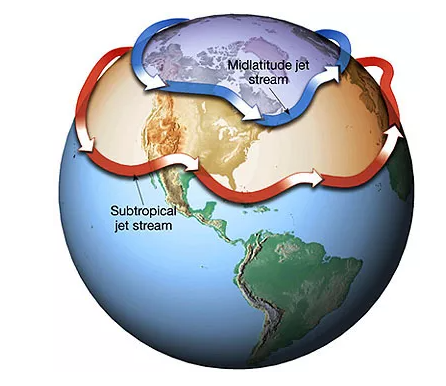
How Jet Streams are Formed?
While reading the explanation below, please assume that you are living in the Northern Hemisphere.
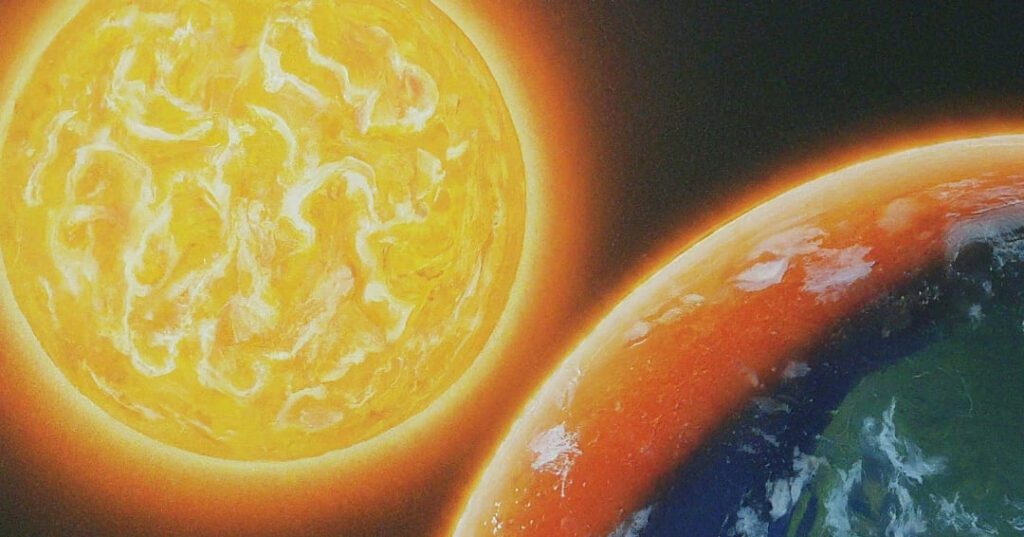
The radiation from the Sun heats the Earth surface. This heating is not uniform across the globe. The equatorial regions receive more direct sunlight and therefore are warmer, whereas the polar regions receive less direct sunlight and are colder. This temperature difference between the equator and the poles creates a temperature gradient in the atmosphere.
The temperature gradient created in Step I leads to the formation of a boundary called the polar front. At the polar front, the warm air masses from the south meet cold air masses from the north. This creates a zone of temperature contrast.
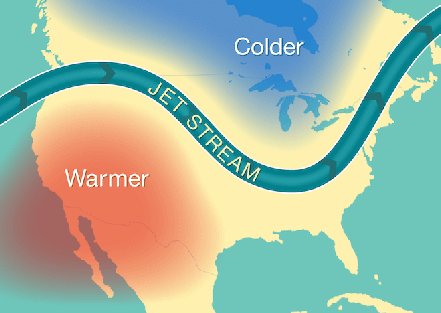
As warm air rises and cold air sinks along the polar front, the upper-level winds are generated. The Coriolis force starts working on this moving wind. Due to this Coriolis force, winds are deflected to the right in the Northern Hemisphere and to the left in the Southern Hemisphere. This deflection results in the formation of a fast-flowing river of air at high altitudes, known as the jet stream.
The combination of the temperature gradient and Coriolis effect results in the formation of a meandering, high-speed current of air in the upper troposphere. We call it the Jet Stream.
Characteristics of Jet Stream
Jet streams flow from west to east at speeds of over 200 mph. The speed depends on the season, topography and other climatic factors.
Jet streams are found at high altitudes between 30,000 and 40,000 feet above sea level. This high altitude makes them difficult to observe directly, but they can be detected using weather radar and satellites.
The strength and location of jet streams can vary depending on the season. During the winter months, the jet stream is stronger and located further south, while in the summer it is weaker and located further north.
Types of Jet Stream
There are two main types of jet stream:
Formation: Formed by the temperature contrast between the cold air over the poles and the warmer air at lower latitudes. Typically forms at latitudes between 50° and 60° north and south.
Characteristics: Strong west-to-east winds and a meandering path. During winter it can bring cold Arctic air to lower latitudes; in summer it can bring warm, moist air from the tropics.
Importance: Helps to transport heat and moisture from one region to another, balancing temperature and precipitation patterns and mitigating extreme weather events.
Formation: Formed by the temperature contrast between the warm air over the subtropics and the colder air at higher latitudes. Typically forms at latitudes between 20° and 30° north and south.
Characteristics: Strong west-to-east winds and a relatively stable path. Unlike the polar jet stream, it does not meander significantly.
Importance: Plays an important role in transporting moisture from the subtropics to higher latitudes, influencing precipitation patterns and mitigating extreme weather events.
Jet Stream and Weather Patterns
The jet stream can have a significant impact on weather patterns, as it helps to steer and influence the development of weather systems. A strong jet stream can steer a weather system quickly across a region, while a weak jet stream can allow a weather system to linger and bring extended periods of rain or snow.
The position and strength of the jet stream play a critical role in determining weather patterns. If the jet stream is located further south, it can bring cold Arctic air to lower latitudes; if further north, it can bring warm, moist air from the tropics.
It also influences extreme weather events such as hurricanes, droughts and heat waves. A strong jet stream can steer a hurricane away from a coastal region or bring relief from a heat wave, while a weak jet stream can allow such events to persist.
Jet Stream and Commercial Aviation
The jet stream can have a significant impact on commercial aviation, as airplanes fly at high altitudes to take advantage of the strong tailwinds that can be found in the jet stream. This can help to reduce fuel consumption and travel time, making air travel more efficient and cost-effective.
For pilots, understanding the jet stream is critical for optimizing flight routes and improving safety. Flying into a strong headwind can significantly slow down a flight, while flying with a strong tailwind can significantly speed it up.
Key Takeaway
Jet streams are fast, narrow bands of west-to-east flowing air at high altitudes (30,000–40,000 feet). They form due to temperature contrasts and the Coriolis effect, and exist mainly as the Polar and Subtropical jet streams. These powerful currents steer weather systems, influence extreme weather, and are crucial for commercial aviation because of the strong tailwinds they provide.