Chinook wind is a warm and dry wind that occurs in regions close to the Rocky Mountains. It is also known as "snow-eater" because of its ability to melt snow rapidly. In this article, we will discuss everything you need to know about Chinook wind, including its characteristics, causes, and effects.
4i class="bi bi-wind"> Characteristics of Chinook Wind
- Origin: Originates from the Pacific Ocean and moves towards the Rocky Mountains.
- Warmth: The wind passes over the mountains and gains heat due to compression on the leeward side.
- Sudden temperature rise: Characterized by a rapid increase in temperature, usually by 20°C or more within a few hours.
- Dryness: Moisture is lost on the windward side as precipitation; the descending air is extremely dry.
- Season: Most common during winter and early spring, when temperature contrasts are most dramatic.
- Nickname: Called "snow-eater" because it can melt snow cover rapidly — sometimes within hours.
Causes of Chinook Wind — The Foehn Effect
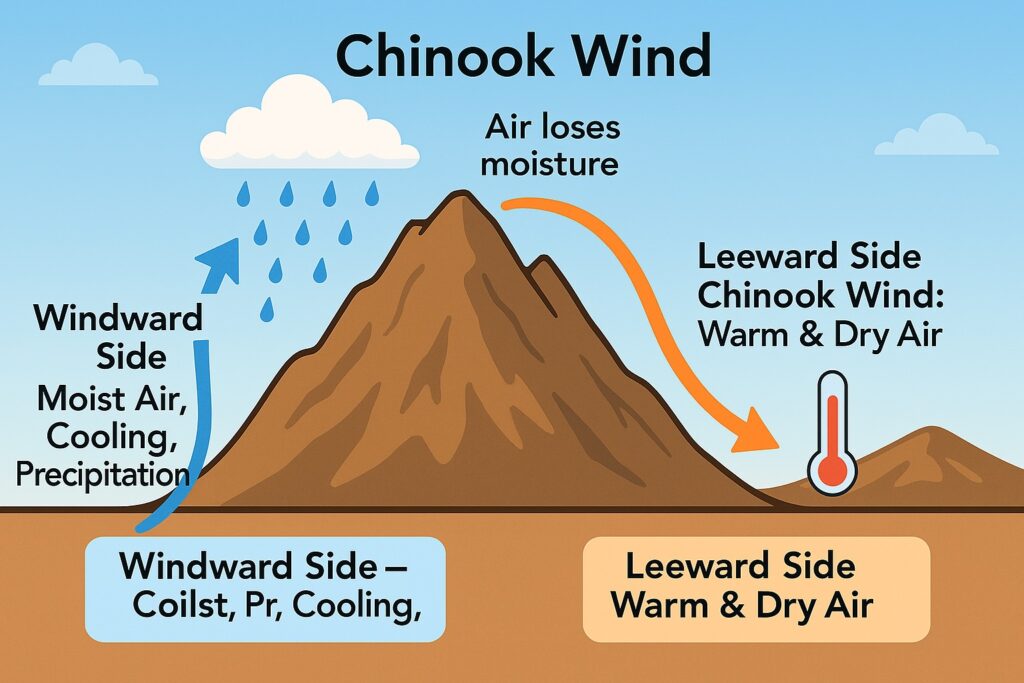
Chinook wind is caused by a meteorological phenomenon called the Foehn effect (also spelled Föhn). The process unfolds in several steps:
- Windward ascent: Moist air from the Pacific Ocean is forced to rise over the Rocky Mountains (orographic lifting).
- Cooling & condensation: As the air rises, it cools adiabatically (at the moist adiabatic lapse rate, ~6°C/km) and releases moisture as rain or snow on the windward side.
- Leeward descent: After crossing the summit, the now-dry air descends on the leeward side of the mountain range.
- Adiabatic compression & warming: The descending air is compressed and heats up rapidly (at the dry adiabatic lapse rate, ~10°C/km) — faster than it cooled on the way up because the latent heat of condensation was released on the windward side.
- Result: The air reaching the leeward valleys is significantly warmer and drier than the original air mass — this is the Chinook wind.
Effects of Chinook Wind
- Relief from extreme cold: Chinook winds can raise winter temperatures dramatically, providing welcome relief from freezing conditions.
- Agricultural benefits: Warmer temperatures can extend the growing season and increase agricultural productivity in the leeward valleys.
- Snow clearance: Rapid melting of snow clears roads and pastures, reducing the need for mechanical snow removal.
- Energy savings: Reduced heating demand during Chinook events lowers energy consumption.
- Rapid snowmelt → flooding & landslides: Sudden melting of snow pack can overwhelm rivers, causing flash floods and destabilizing slopes.
- Wildfire risk: The extremely dry air desiccates vegetation, significantly increasing wildfire danger.
- Soil moisture loss: Rapid evaporation dries out topsoil, harming crops and pastures.
- Infrastructure stress: Extreme temperature swings can damage roads, pipes, and buildings through freeze-thaw cycles.
- Health impacts: Sudden temperature changes can trigger migraines, respiratory issues, and stress on vulnerable populations.
Chinook & Similar Winds Around the World
| Wind Name | Region | Mountain Range | Character |
|---|---|---|---|
| Chinook | Western USA & Canada | Rocky Mountains | Warm, dry; "snow-eater" |
| Föhn (Foehn) | Central Europe | Alps | Warm, dry; similar mechanism |
| Santa Ana | Southern California | Sierra Nevada / Transverse Ranges | Hot, dry; wildfire risk |
| Zonda | Argentina | Andes | Hot, dry; dust storms |
| Bergwind | South Africa | Drakensberg | Hot, dry; coastal warming |
| Foehn (New Zealand) | South Island, NZ | Southern Alps | Warm, dry; Canterbury wind |
Chinook Wind and Culture
Chinook wind has been a significant part of the culture of people living in the Rocky Mountains region.
- Native American legends: Various tribes have stories and legends related to Chinook wind. Some consider the wind as a spiritual force that brings change and renewal.
- Blackfoot Nation: The Chinook is seen as a sacred wind — a bringer of transformation that clears the old and makes way for the new.
- Regional identity: In Alberta and Montana, the Chinook is a defining feature of local identity and weather lore — "If you don't like the weather, wait 15 minutes" is a popular saying.
- Economic folklore: Ranchers celebrate Chinook events for clearing winter snow from grazing lands; the wind is both revered and feared.
Conclusion
Chinook wind is a warm and dry wind that occurs in regions close to the Rocky Mountains. It is caused by the Foehn effect — orographic lifting, moisture loss on the windward side, and adiabatic compression heating on the leeward side. Its effects are dramatic: rapid snowmelt, temperature surges, wildfire risk, and both positive and negative impacts on human life. Understanding Chinook wind and its characteristics can help us prepare and mitigate its effects, while appreciating its deep cultural significance in the Rocky Mountain region.