The formation of soil, or the genesis of soil, is a complex process influenced by geological, climatic, and biological factors over time. Essential for sustaining ecosystems and agriculture, soil formation transforms parent rock material into unique layers composed of minerals, organic matter, water, air, and living organisms.

Factors Influencing Genesis of Soils
- Parent Material: The original rock or mineral weathered and transformed into soil, dictating physical and chemical properties like texture and structure.
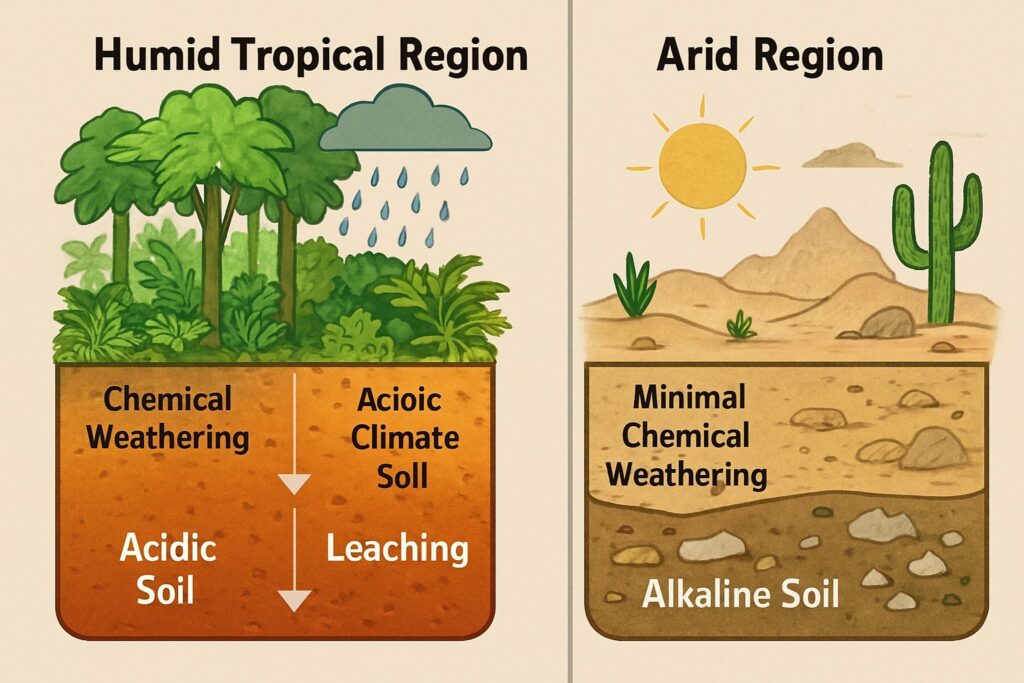
- Climate: Determines the rate and type of weathering. Humid tropical climates promote intense chemical weathering and acidic soils, whereas arid climates lead to slow weathering and alkaline soils.
- Relief: Physical land features (slope, aspect, elevation) that affect drainage, erosion susceptibility, and sunlight exposure.
- Time: Duration allowing physical and chemical weathering processes to mature and develop soil profiles.
Stages in the Genesis of Soils
- Weathering: Physical breakdown (abrasion, root wedging) and chemical transformation (hydrolysis, oxidation, carbonation).
- Leaching: Water movement through soil dissolving and removing minerals/nutrients.
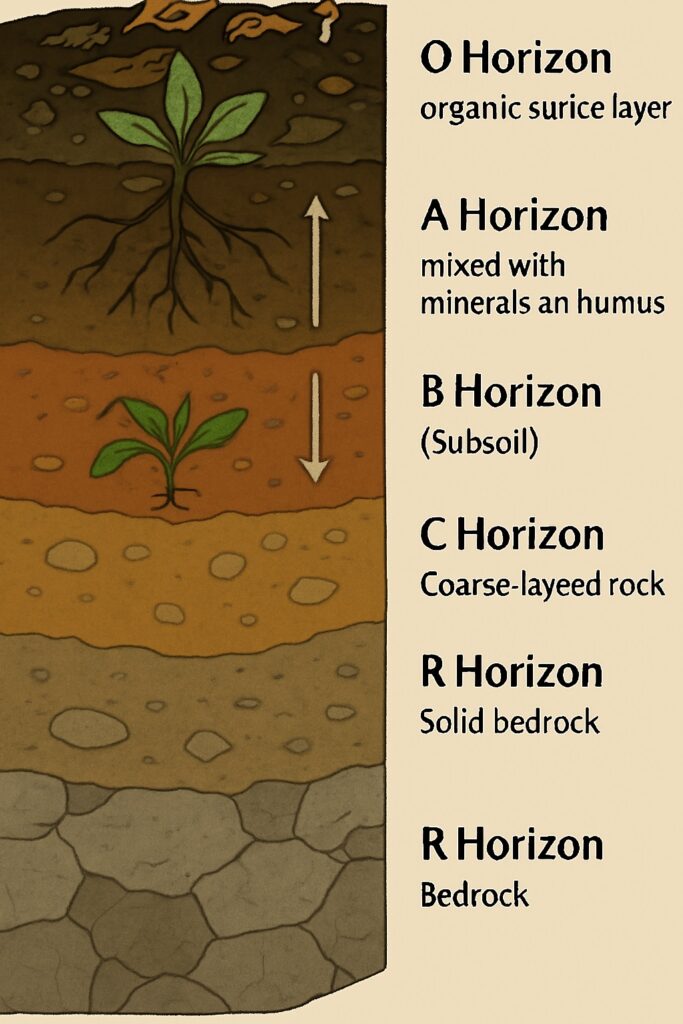
- Horizon Development: Formation of distinct layers (O horizon for organic matter, A horizon for mineral/organic topsoil, B horizon for subsoil, and C horizon for weathered parent material).
- Soil Profile Development: Vertical arrangement and evolution of soil layers.
Classification of Soils
- Based on Origin and Composition: Residual Soils (formed in situ) and Transported Soils (alluvial, aeolian, glacial, colluvial).
- Based on Texture: Sandy (coarse, good drainage), Clayey (fine, high water retention), and Loamy (balanced mix, ideal for cultivation).
- Based on Horizon Development: Zonal, Intrazonal, and Azonal soils.
- Indian Soil Classification (ICAR): Alluvial, Black, Red, Laterite, Mountain, Desert, and Peaty/Marshy soils.
Soil Conservation and Management
Human pressures such as deforestation, intensive farming, and overgrazing threaten soil fertility. Implementing conservation practices like cover cropping, mulching, reduced tillage, crop rotation, and organic fertilizers is critical to safeguard soil structure and productivity for future generations.
Conclusion
Understanding soil genesis is essential for effective environmental management, agricultural planning, and ensuring long-term ecological balance and food security.