The Human Development Index (HDI) is a measure of a country's level of human development, taking into account life expectancy, education, and income. Developed by the United Nations Development Programme (UNDP), it serves as a vital tool for comparing human well-being and progress across countries over time.
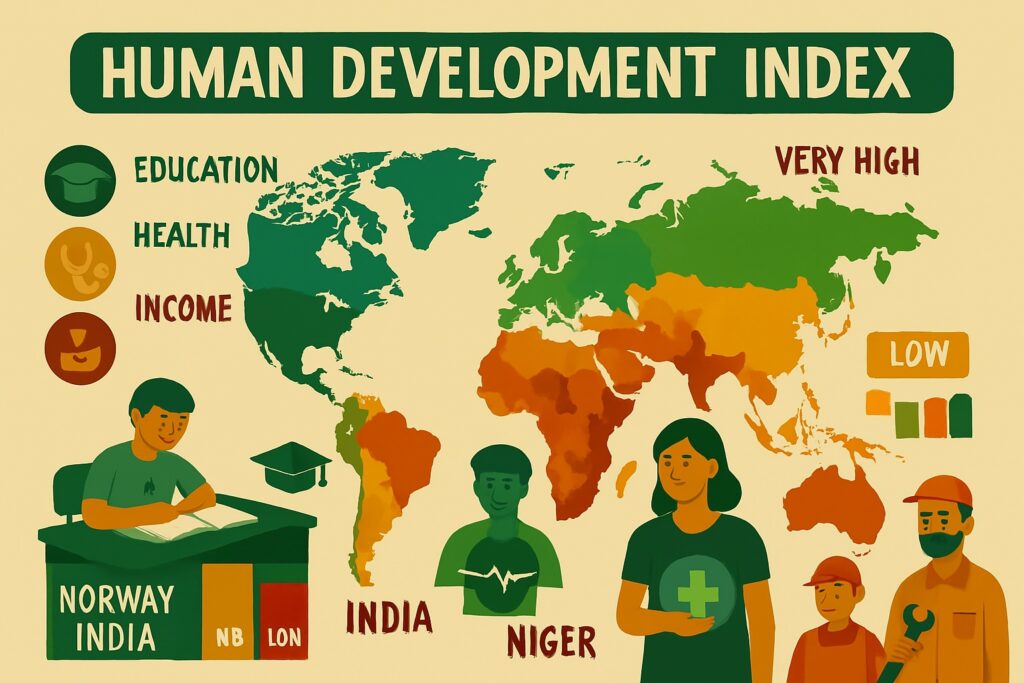
Key Indicators of the HDI
The HDI ranges from 0 to 1 (with higher scores indicating higher development) and is calculated using three key dimensions:
- Life Expectancy at Birth: Reflects population health status, influenced by access to healthcare, sanitation, and nutrition.
- Mean Years of Education: Measures the average educational attainment of individuals aged 25 or older, reflecting educational access and quality.
- Gross National Income (GNI) per Capita: Measures economic development and average citizen income.
Criticisms and Limitations
While valuable, the HDI has been criticized for its narrow focus on a limited set of indicators, omitting critical dimensions like gender equality, political freedom, and environmental sustainability. To address these limitations, the UNDP developed complementary indices such as the Gender Development Index (GDI) and the Multidimensional Poverty Index (MPI).
Conclusion
The Human Development Index provides essential insights into global well-being and national progress. Despite certain limitations, it remains a cornerstone framework for evaluating human development and guiding policy decisions worldwide.