The jute industry is one of the oldest traditional industries in India, renowned for producing eco-friendly and biodegradable fiber products such as bags, sacks, ropes, mats, and carpets. India holds the position of the largest producer of raw jute and jute goods in the world, anchored by specific geographical, economic, and infrastructural locational factors.
Climate Requirements
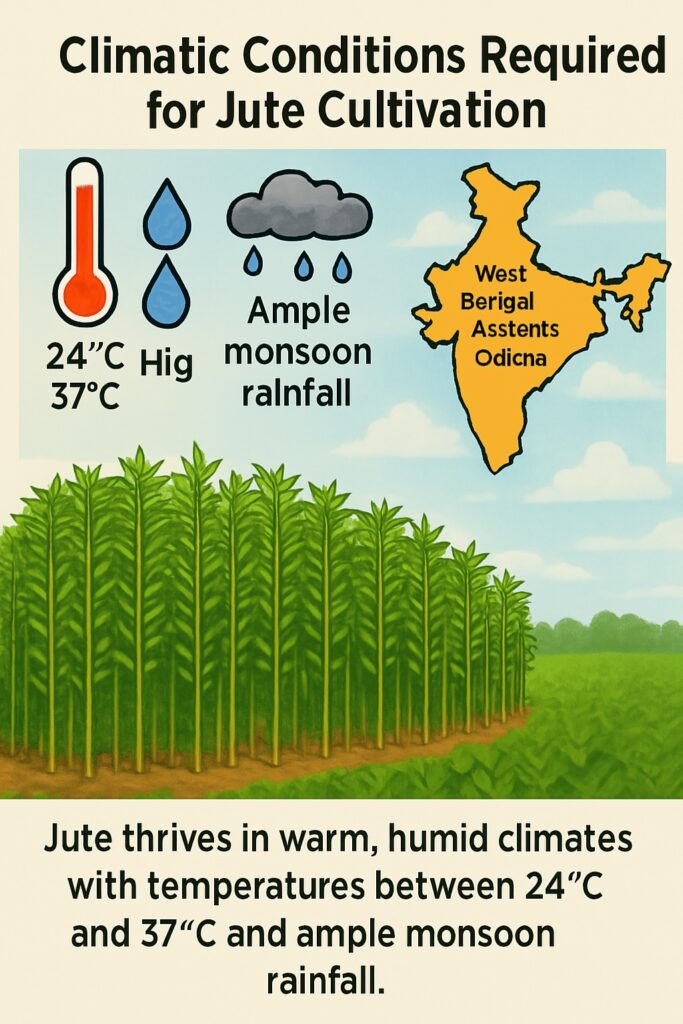
Jute cultivation demands specific climatic conditions. The ideal temperature ranges between 24°C and 37°C, alongside high relative humidity and consistent annual rainfall. States like West Bengal, Bihar, and Assam provide these supportive tropical climatic conditions.
Soil Requirements
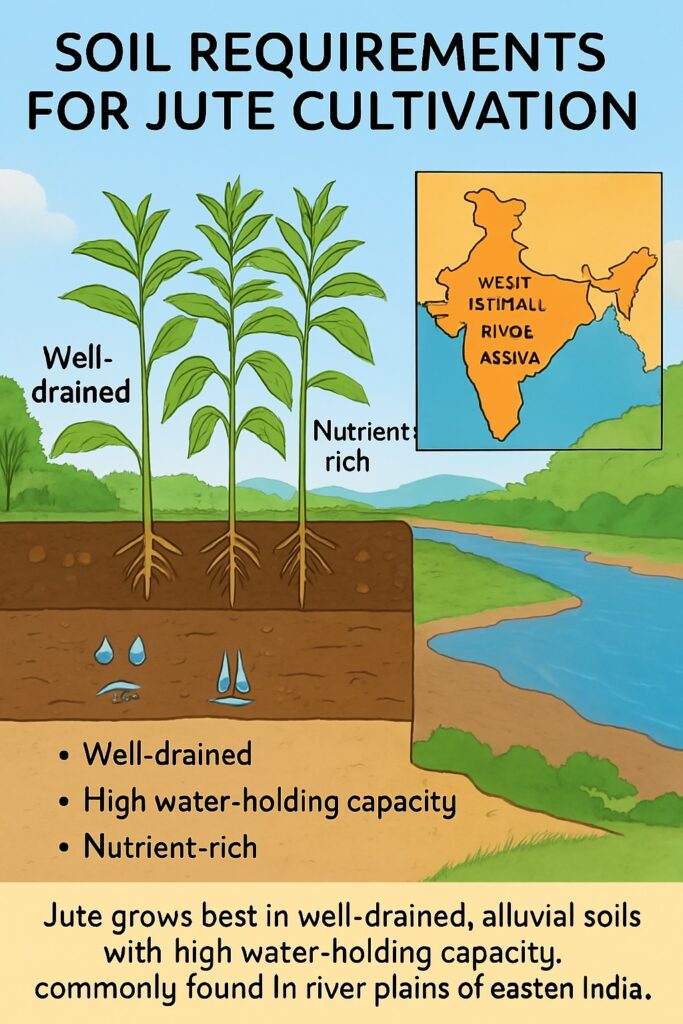
Soil quality heavily influences jute yields. Jute thrives in well-drained alluvial soil with high water-holding capacity. The fertile alluvial soils deposited across the Ganges-Brahmaputra delta in West Bengal and neighboring regions are universally ideal for jute farming.
Availability of Water
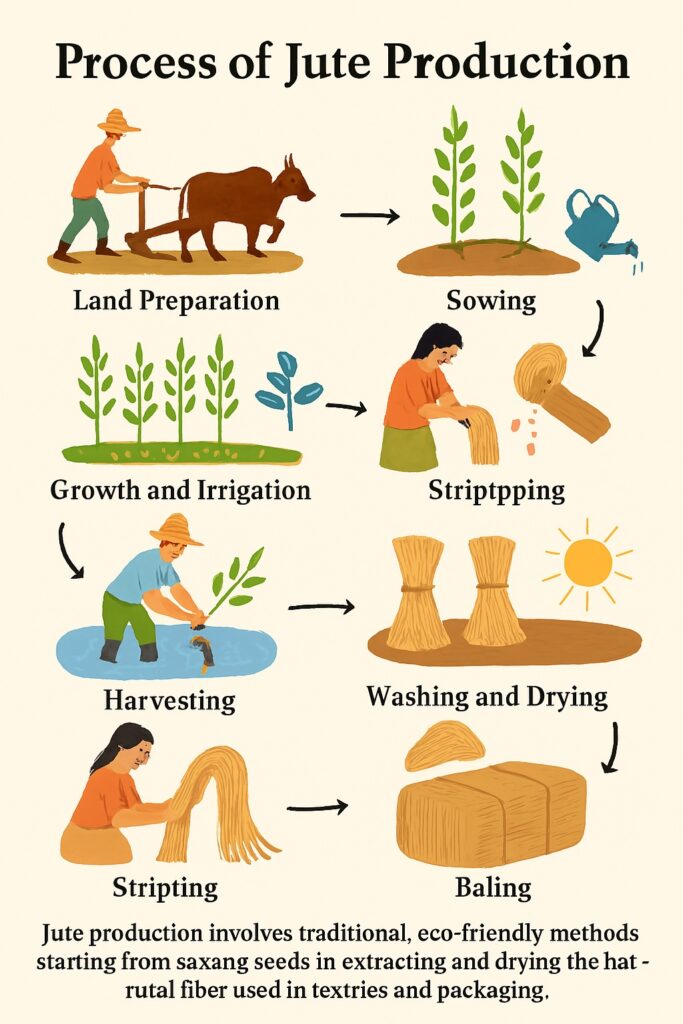
Water availability is critical not only for crop growth but also for the crucial post-harvest retting process where jute fibers are extracted from stalks. The dense network of rivers, distributaries, and canals throughout the Ganges-Brahmaputra delta supplies abundant water for both irrigation and fiber processing.
Proximity to Markets
Because processed jute goods and raw fiber require efficient commercial distribution, proximity to major domestic and international markets is essential. The primary jute-producing hubs in West Bengal and Bihar are situated near major urban consumption centers and trading nodes like Kolkata.
Transportation Infrastructure
A robust multi-modal transportation network—comprising navigable waterways, railways, national highways, and proximity to ports like Kolkata Port—enables seamless bulk movement of raw jute to mills and finished packaging goods to global export markets.
Conclusion
The dominance of India's jute industry is fundamentally shaped by favorable climatic conditions, fertile deltaic soils, abundant water resources, and strong transport and market linkages. Understanding these geographic determinants remains vital for sustaining raw jute production and industrial trade.