The Radical Approach in Geography emerged in the 1960s and 1970s as a direct critique of traditional geography's limitations—specifically its adherence to positivism and the quantitative revolution—and its failure to address social inequalities, power structures, and political forces.
What is the Radical Approach in Geography?
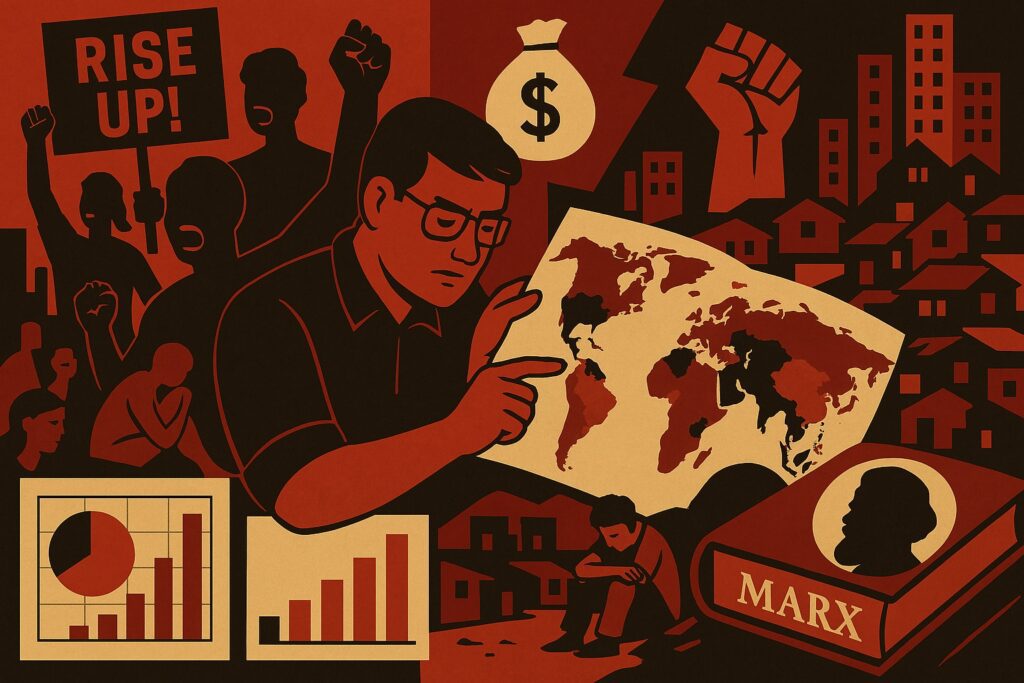
Radical geography is a critical, politically engaged perspective that challenges dominant power structures and ideologies. While the quantitative revolution sought an apolitical, "scientific" spatial science, radical geographers argued that geography is deeply intertwined with political processes, wealth distribution, resource exploitation, and environmental hazards.
Emphasizing social justice, environmental sustainability, and democratic participation, radical geography focuses on the lived experiences of marginalized communities often ignored by traditional frameworks.
Key Themes in Radical Geography
- Political Economy: The study of how economic and political systems shape social relations and resource distribution.
- Critical Cartography: Examining how maps and spatial data reinforce social inequalities and power dynamics.
- Feminist Geography: Analyzing gendered power relations and their impact on individuals and communities.
- Postcolonial Geography: Investigating how colonialism and imperialism continue to shape social relations and geography.
- Environmental Justice: Studying how environmental issues disproportionately affect marginalized communities.
Significance of the Radical Approach
The radical approach has made enduring contributions to the discipline:
- Focus on Social Justice: Highlighted the impacts of geographical phenomena on vulnerable populations (e.g., urban inequality and extractive industrial degradation).
- Catalyst for Alternative Approaches: Inspired subfields like feminist geography, cultural geography, and political ecology.
- Advancement of Critical Geography: Promoted critical reflection on how geographical knowledge is produced, framed, and utilized.
Conclusion
The radical approach transformed human geography by reorienting the discipline toward social justice and political critique. By questioning dominant power structures, it established a reflective foundation for addressing contemporary socio-spatial inequalities.