The location of any industry is influenced by several geographical and economic factors. For the Iron and Steel Industry, which is resource-intensive and capital-heavy, location plays a critical role in operational efficiency and cost management. As a major contributor to India's GDP and employment, the distribution of steel plants across the country reflects diverse locational determinants.
1. Availability of Raw Materials
Because raw materials like iron ore, coking coal, and limestone are bulky and heavy, proximity to mines heavily dictates production costs.
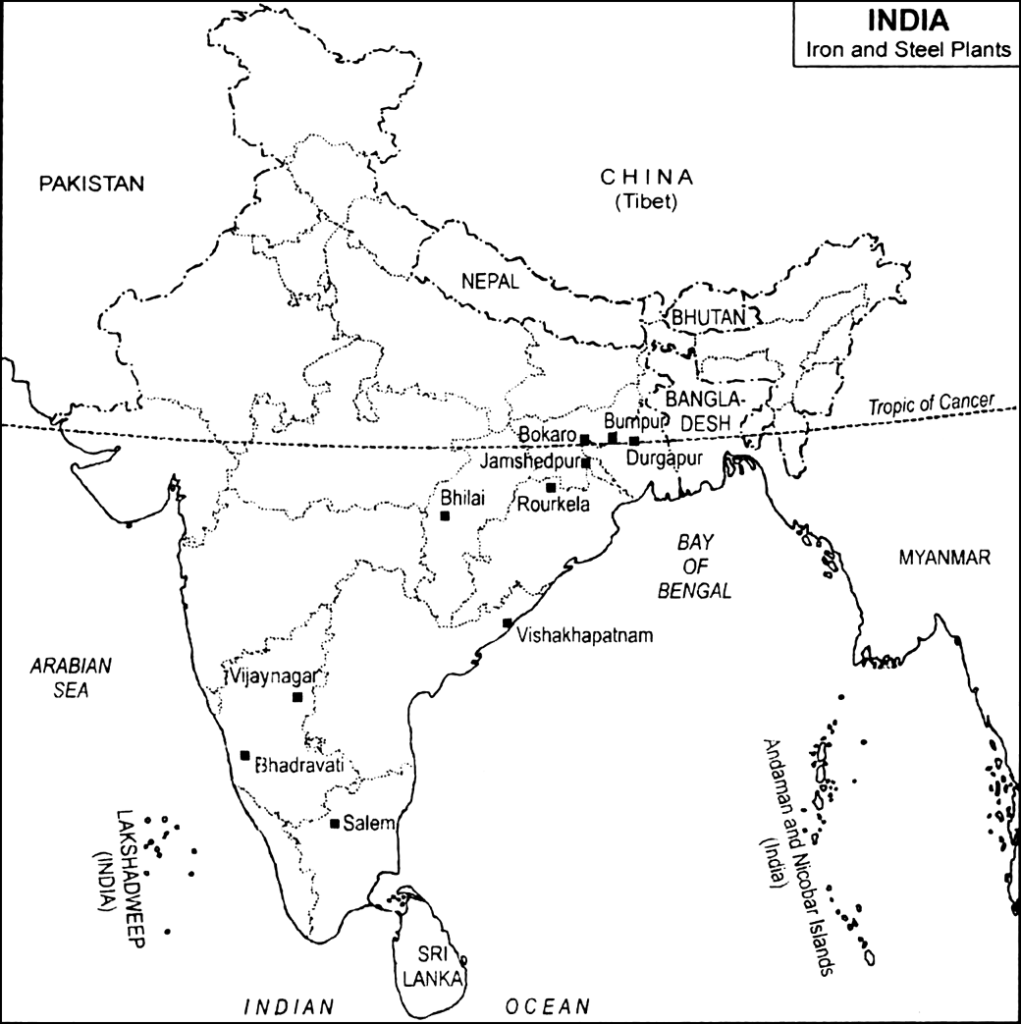
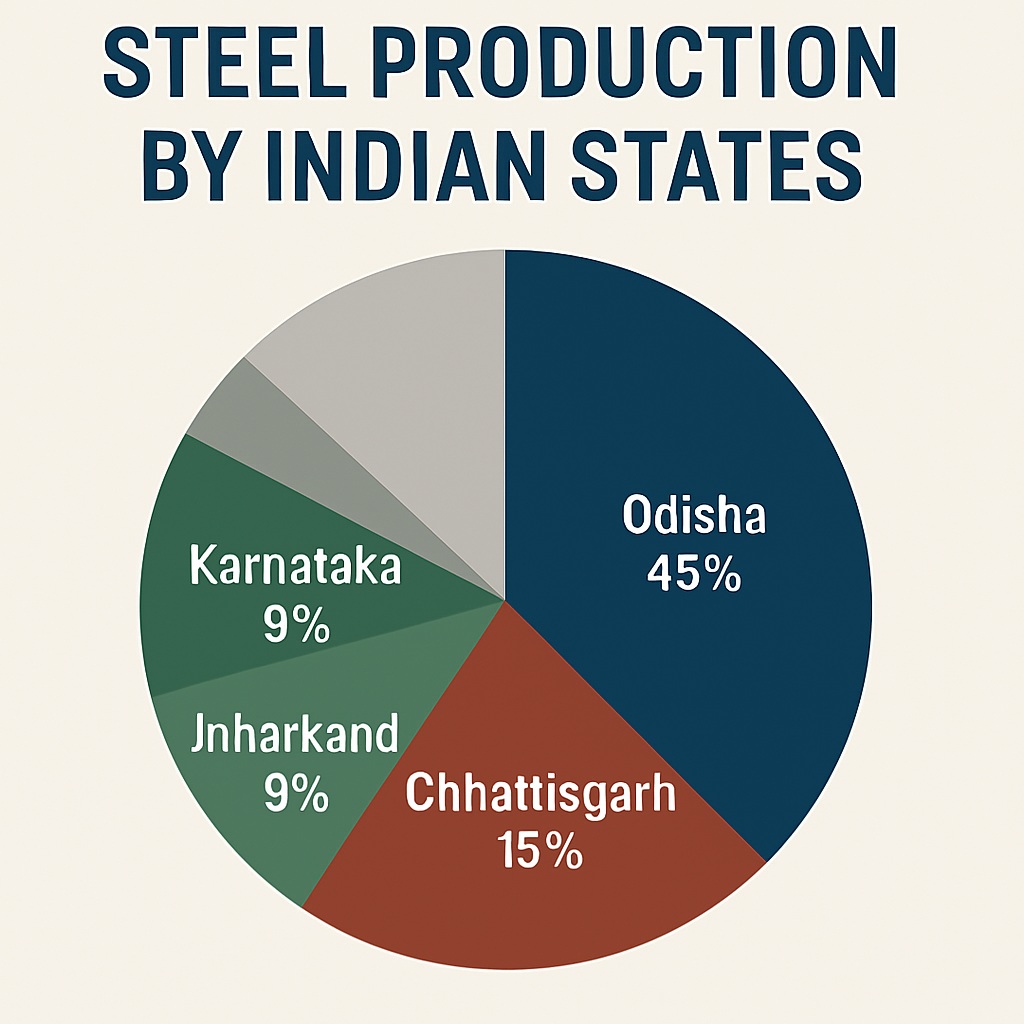
- Iron Ore: The basic raw material found in high grades across Odisha, Chhattisgarh, Jharkhand, and Karnataka (e.g., Dalli-Rajhara mines supplying the Bhilai Steel Plant).
- Coking Coal: Acts as a reducing agent; while partly imported, domestic supplies from Jharkhand and West Bengal remain vital.
- Flux Materials: Limestone, dolomite, and manganese are abundant in central and eastern India.
2. Proximity to Markets
Steel products are heavy and costly to transport. Proximity to major consumer markets—such as construction hubs, automobile manufacturing centers, and export ports—ensures quick distribution and boosts profitability (e.g., JSW Steel's plant in Vijayanagar, Karnataka).
3. Access to Water and Power
Steel manufacturing is intensely energy- and water-dependent. Plants are typically located near rivers for steady industrial water supply, and near coalfields or utilizing captive power plants (such as those by Tata Steel) to guarantee uninterrupted energy.
4. Transportation Infrastructure
Well-developed rail, road, and port networks (such as Kolkata port, Paradeep port, and major national highways) are indispensable for hauling massive volumes of raw materials to plants and finished steel to domestic and global markets.
5. Labour Availability
The industry relies on both skilled engineers and a steady stream of manual labor. Industrial regions in eastern India benefit from well-established training institutions and dense rural populations supplying a reliable workforce.
6. Government Policies
Incentives, taxation frameworks, labor regulations, and strategic policies like the National Steel Policy shape industrial growth by encouraging domestic production and export competitiveness.
Shifts in Location Trends
While historical plants were strictly raw material-oriented, modern advancements in transportation, power generation, and port infrastructure have sparked new location trends:
- Establishment of plants near coastal regions (e.g., Hazira in Gujarat, Vizag in Andhra Pradesh).
- A strategic shift towards market-oriented and port-based locations to optimize export efficiency.
Conclusion
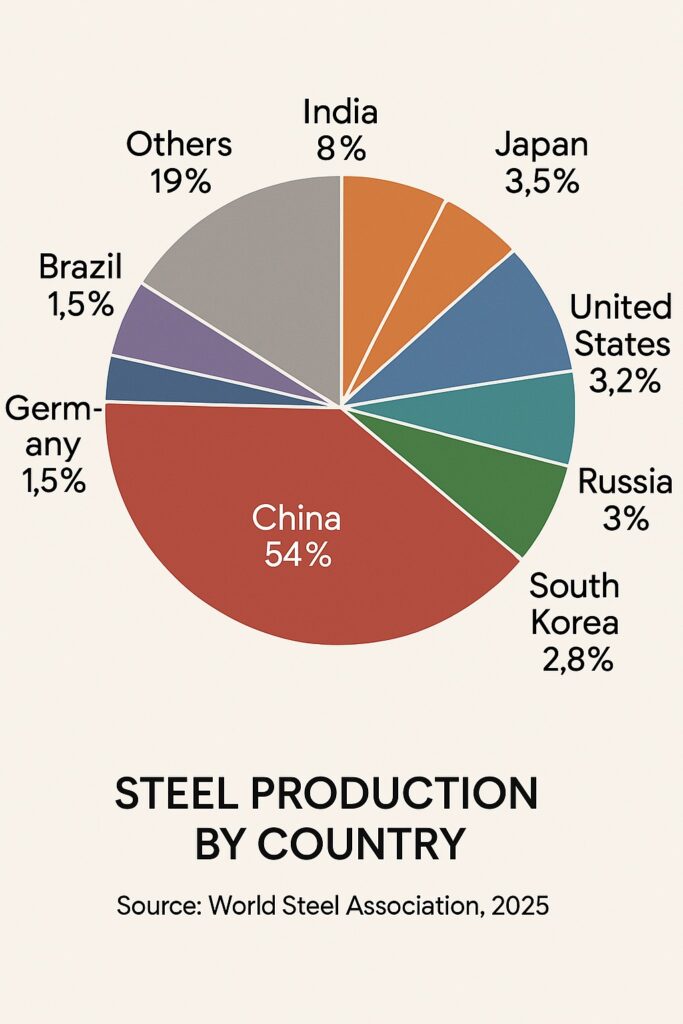
The iron and steel industry in India is shaped by the interplay of raw material availability, market proximity, water and power access, transport networks, and government policies. Understanding these locational dynamics is crucial for the continued growth of steel production and trade in India.