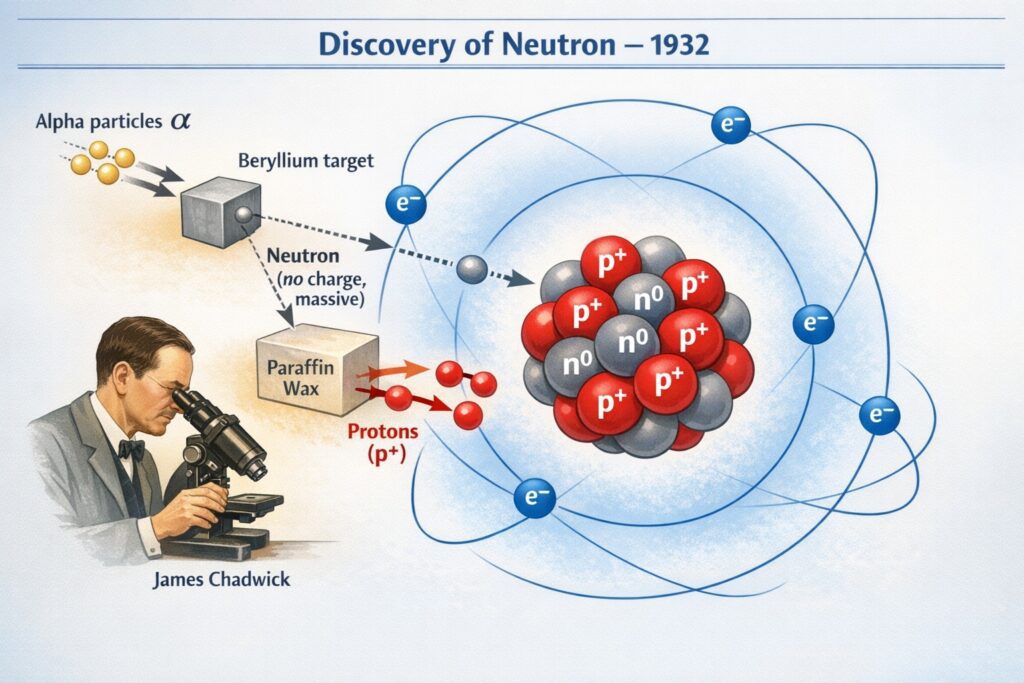
Q1. Isotopes of the same element differ in the number of
(a) Protons
(b) Neutrons
(c) Electrons
(d) Positrons
(UPSC Prelims 1980)
Answer: (b) Neutrons
Explanation: Isotopes have the same number of protons but differ in the number of neutrons, resulting in different atomic masses but similar chemical properties.

Q2. Mesons are found in
(a) X-rays
(b) Cosmic rays
(c) frays
(d) None of the above
(UPSC Prelims 1985)
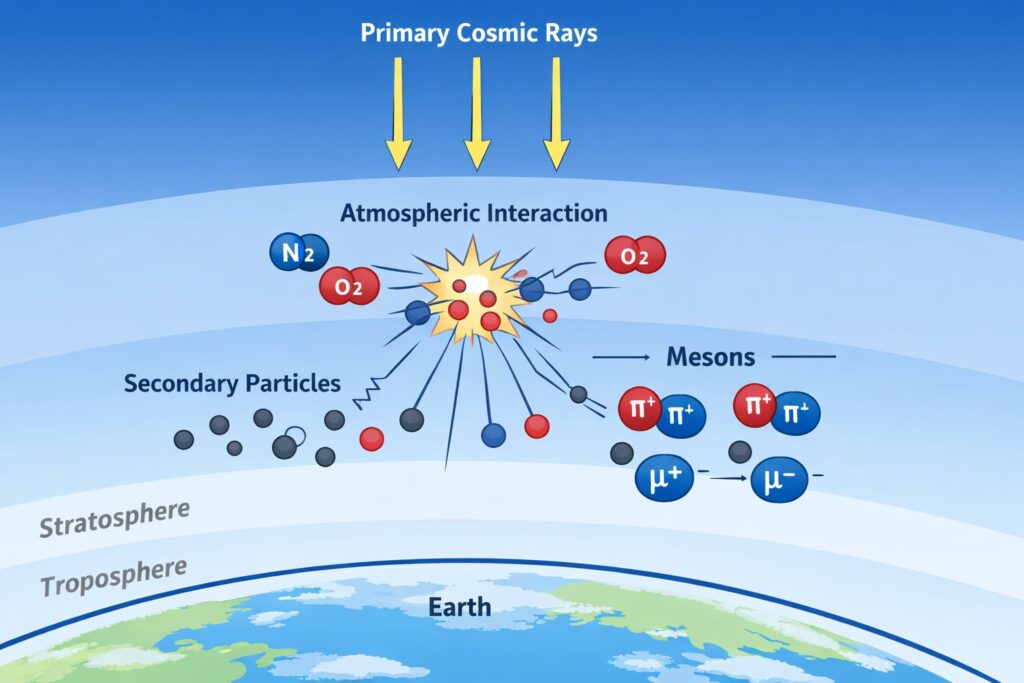
Answer: (b) Cosmic rays
Explanation: Mesons are subatomic particles that are commonly found in cosmic rays, which are high-energy particles originating from outer space. When cosmic rays interact with the Earth’s atmosphere, they produce secondary particles, including mesons.
Q3. Neutron was discovered by
(a) Ouo Hahn
(b) Enrico Fermi
(c) Lise Meitner
(d) James Chadwick
Answer: (d) James Chadwick
Explanation: The neutron was discovered in 1932 by James Chadwick, which greatly advanced nuclear physics.