Q1. In India it is found recently that incidence of Malaria is increasing because
(a) The mosquitoes have become DDT resistant
(b) Of poverty in villages
(c) Of poor sanitary conditions
(d) On account of increase in population it has become impossible to maintain cleanliness everywhere
(UPSC Prelims 1979)
Answer: (a) The mosquitoes have become DDT resistant
Explanation:
DDT resistance in mosquitoes has led to a resurgence of malaria, as the chemical is no longer effective in controlling mosquito populations. This resistance has emerged due to overuse and prolonged exposure, reducing the efficacy of vector control programs.
Q2. Mouth and foot diseases in cattle are caused due to
(a) Bacteria
(b) Virus
(c) Fungi
(d) Penicillium
Answer: (b) Virus
Explanation:
Foot-and-mouth disease (FMD) is a highly contagious viral infection affecting cloven-hoofed animals. It causes fever, blisters in the mouth and feet, and can lead to severe economic losses in livestock farming due to reduced productivity and trade restrictions.
(UPSC Prelims 1979)
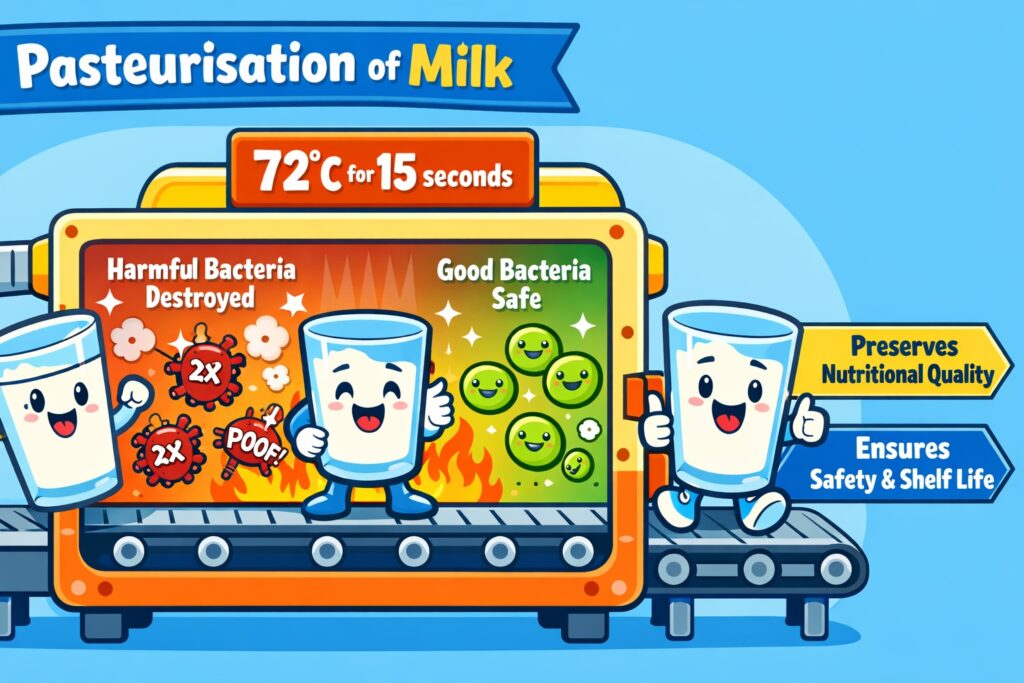
Q3. The temperature for pasteurisation of milk is selected so as to
(a) Kill the micro-organisms
(b) Kill all bacteria
(c) Store it for long time without coagulation
(d) Kill the micro organisms and other harmful bacteria
(UPSC Prelims 1979)
Answer: (d) Kill the micro organisms and other harmful bacteria
Explanation: Pasteurisation involves heating milk to a specific temperature (usually around 72°C for 15 seconds) to destroy pathogenic microbes while preserving nutritional quality. It targets harmful bacteria without eliminating all microbes, ensuring safety and shelf life.
Q4. What is the most important factor for the growth of pests in stored grains ?
(a) The moisture of grains
(b) The temperature of grains
(c) The moisture and temperature of grains
(d) None of the above
(UPSC Prelims 1979)
Answer: (a) The moisture of grains
Explanation:
High moisture content in stored grains creates a favorable environment for pest infestation and fungal growth. Moisture promotes germination and microbial activity, making it the primary factor in storage-related spoilage.
Q5. Decomposition of organic matter is due to
(a) Virus
(b) Fungi
(c) Bacteria
(d) None of these
(UPSC Prelims 1979)
Answer: (c) Bacteria
Explanation: Bacteria play a primary role in decomposing organic matter, breaking down complex compounds into simpler substances. This process is essential for nutrient recycling in ecosystems. While fungi also assist, bacteria are the dominant decomposers.
Q6. BCG vaccination is to be given to a new born child
(a) Immediately after birth
(b) Within 48 hours
(c) Within seven days
(d) Within six months
(UPSC Prelims 1979)
Answer: (a) Immediately after birth
Explanation: BCG vaccine protects against tuberculosis, especially childhood TB and TB meningitis. It is recommended to be administered immediately after birth, ensuring early immunity during the most vulnerable stage of life.
Q7. Dysentery and Influenza are caused by
(a) Bacteria
(b) Viruses
(c) Bacteria and Viruses respectively
(d) Viruses and Bacteria respectively
(UPSC Prelims 1981)
Answer: (c) Bacteria and Viruses respectively
Explanation: Dysentery is typically caused by bacteria like Shigella or E. coli, while Influenza is caused by viruses. This distinction is important for treatment, as antibiotics work against bacteria but not viruses.
Q8. Which of the following is the most common wheat disease in India ?
(a) Green ear
(b) Smut
(c) Loose smut
(d) Rust
(UPSC Prelims 1981)
Answer: (d) Rust
Explanation: Rust is the most prevalent wheat disease in India, caused by fungal pathogens. It affects the leaves and stems, reducing photosynthesis and grain yield. Control measures include resistant varieties and fungicides.

Q9. Flood hit areas are to be immediately given medical cover. Which of the following is the most appropriate step ?
(a) BCG injection
(b) Inoculation against Cholera
(c) Smallpox vaccination
(d) None of these
Answer: (b)
Explanation: In flood-hit areas, the risk of waterborne diseases like Cholera increases due to contaminated water and poor sanitation. Hence, inoculation against Cholera is the most urgent and appropriate medical response.
Q10. Which of the following enters human body through skin
(a) Tape worm
(b) Hook worm
(c) Ring worm
(d) Thread worm
(UPSC Prelims 1982)
Answer: (c)
Explanation: Ringworm is a fungal infection that affects the skin, entering through direct contact. It causes itchy, circular rashes and spreads via contaminated surfaces or infected individuals.
Q11. Health hazard floods are responsible for the spread of
(a) Cholera
(b) Malaria
(c) Influenza
(d) Diarrhoea
(UPSC Prelims 1982)
Answer: (a)
Explanation: Floods contaminate drinking water sources, leading to outbreaks of waterborne diseases like Cholera, which spreads through infected water and food, causing severe dehydration and diarrhea.
Q12. In typhoid which of the following drugs is administered?
(a) Chloromycetin
(b) Penicillin
(c) Sulphonamide
(d) Tetracycline
(UPSC Prelims 1983)
Answer: (a) Chloromycetin
Explanation: Chloromycetin (also known as chloramphenicol) is commonly used to treat typhoid fever, caused by Salmonella typhi. It is effective because it penetrates tissues deeply, reaching the infected areas and inhibiting bacterial protein synthesis.
Q13. Amoebiasis, malaria and typhoid are diseases due to amoeba, malarial parasites and typhoid bacillus which are collectively called
(a) Anthropods
(b) Protozoa
(c) Mollusca
(d) Pisces
(UPSC Prelims 1983)
Answer: (b) Protozoa
Explanation: Amoebiasis and malaria are caused by protozoan parasites, while typhoid is caused by a bacterium. However, in this context, the grouping refers to microscopic pathogens, and protozoa is the most appropriate classification for amoeba and malarial parasites.

Q14. Hypochondria is a
(a) Disease of eyes
(b) Disease of sexual organs
(c) Disease of low blood pressure
(d) State of morbid anxiety about one’s own health, with complaint of imaginary disorders
(UPSC Prelims 1983)
Answer: (d) State of morbid anxiety about one’s own health, with complaint of imaginary disorders
Explanation: Hypochondria is a psychological condition where individuals experience excessive worry about having a serious illness, often based on imaginary symptoms. It reflects a morbid preoccupation with health, despite medical reassurance.
Q15. Aspirin is a
(a) Pain reliever
(b) Sedative
(c) Cortisone
(d) Soporific
(UPSC Prelims 1983)
Answer: (a) Pain reliever
Explanation: Aspirin is widely used as a pain reliever and anti-inflammatory drug. It works by inhibiting enzymes involved in prostaglandin synthesis, which are responsible for pain and inflammation.
Q16. Foot and mouth disease is prevalent among
(a) Cattle only
(b) Cattle and pigs only
(c) Sheep and cattle only
(d) Cattle, goats, sheep and other hoofed animals
(UPSC Prelims 1983)
Answer: (d) Cattle, goats, sheep and other hoofed animals
Explanation: Foot and mouth disease affects cloven-hoofed animals, including cattle, goats, sheep, and pigs. It is a highly contagious viral disease that causes fever, blisters, and lameness, impacting livestock productivity.
Q17. In a remote Indian village with a scarcity of fuel, the people draw water from a well. They should be advised before drinking that water to
(a) Boil it
(b) Use ion exchange resins
(c) Use solar stills for distilling
(d) Use potassium permanganate for purifying the water
(UPSC Prelims 1983)
Answer: (a) Boil it
Explanation: Boiling water is the simplest and most effective method to kill pathogens and make it safe for drinking, especially in fuel-scarce rural areas. It eliminates bacteria, viruses, and parasites.
Q18. Which of the following diseases is spread through cows milk?
(a) Diphtheria
(b) Typhoid
(c) Measles
(d) None of these
(UPSC Prelims 1984)
Answer: (d) None of these
Explanation: Diseases like diphtheria, typhoid, and measles are not transmitted through cow’s milk. While unpasteurized milk can carry pathogens like brucellosis or tuberculosis, the diseases listed in the options are not milk-borne, making “None of these” the correct answer.
Q19. One of your friends is in hospital and you want to see him. You are safest if he is suffering from
(a) Mumps
(b) TB
(c) Small pox
(d) Typhoid
(UPSC Prelims 1984)
Answer: (d) Typhoid
Explanation: Typhoid is primarily spread through contaminated food and water, not through airborne transmission or direct contact, making it less contagious in a hospital setting compared to diseases like mumps or smallpox.
Q20. Jaundice is caused due to the malfunctioning of
(a) Kidney
(b) Liver
(c) Pancreas
(d) Stomach
(UPSC Prelims 1984)
Answer: (b) Liver
Explanation: Jaundice occurs when there is an excess of bilirubin in the blood, often due to liver dysfunction. The liver is responsible for processing and excreting bilirubin, and any damage or disease affecting it—such as hepatitis or cirrhosis—can lead to yellowing of the skin and eyes.
Q21. Lichens is an association of two types of organisms. They are
(a) Algae and fungi
(b) Algae and virus
(c) Fungi and virus
(d) Virus and bacteria
(UPSC Prelims 1984)
Answer: (a) Algae and fungi
Explanation: Lichens are a symbiotic association between algae (or cyanobacteria) and fungi. The algae provide food through photosynthesis, while the fungi offer protection and structure, making lichens resilient and ecologically important.
Q22. What is the common feature in insects like ant and cockroach ?
(a) They bite and chew their food
(b) They live in temperate climate conditions
(c) They have cutting and sucking type of mouth parts
(d) They are social insects
(UPSC Prelims 1984)
Answer: (d) They are social insects
Explanation: Both ants and cockroaches exhibit social behavior, especially ants which live in organized colonies. Cockroaches also show group tendencies, such as aggregation and communication, making sociality a shared trait.
23. Match List I with List II
| List I | List II |
|---|---|
| (a) Mumps | (1) Protozoa |
| (b) Tuberculosis | (2) Bacterium |
| (c) Beri-Beri | (3) Virus |
| (d) Dysentery | (4) Lack of thiamine |
Select the correct answer using the codes given below:
| a | b | c | d | |
|---|---|---|---|---|
| (A) | 3 | 2 | 4 | 1 |
| (B) | 1 | 2 | 3 | 4 |
| (C) | 1 | 2 | 4 | 3 |
| (D) | 1 | 3 | 2 | 4 |
Answer: (A)
Explanation:
Mumps is caused by a virus. Tuberculosis is caused by a bacterium. Beri-Beri results from a lack of thiamine (Vitamin B1). Dysentery is commonly caused by protozoa.
Thus, the correct matching reflects the accurate medical classification of each disease.
Q24. ‘Ranikhet’ is a disease found in
(a) Poultry
(b) Cows
(c) Sheep
(d) Dog
(UPSC Prelims 1985)
Answer: (a) Poultry
Explanation: Ranikhet disease, also known as Newcastle disease, is a viral infection affecting poultry birds. It causes respiratory distress, diarrhea, and neurological symptoms, and is a major concern in poultry farming.
Q25. Poliomyelitis is an epidemic virus infection. Which of the following is responsible for it ?
(a) Rhabdo virus
(b) Entero virus
(c) Dengue virus
(d) Mumps virus
(UPSC Prelims 1985)
Answer: (b) Entero virus
Explanation: Poliomyelitis (polio) is caused by the poliovirus, which belongs to the Enterovirus group. It affects the nervous system, leading to paralysis, especially in children.
Q26. Triple antigen vaccine is given to the children to protect them against
(a) Polio
(b) Whooping cough
(c) Contagious diseases
(d) None of the above
(UPSC Prelims 1986)
Answer: (b) Whooping cough
Explanation: The Triple Antigen vaccine protects against Diphtheria, Pertussis (Whooping Cough), and Tetanus. Among the options, Whooping cough is explicitly mentioned, making it the correct choice.
Q27. AIDS is
(1) Caused by virus
(2) Carried by body fluid, blood and serum
(3) Found mostly in males
(4) Found mostly in homosexuals
(a) 1 and 4 are correct
(b) 1, 2 and 4 are correct
(c) 2 and 3 are correct
(d) 1, 2, 3 and 4 are correct
Answer: (b) 1, 2 and 4 are correct
Explanation:
- AIDS is caused by the HIV virus
- It is transmitted through body fluids, blood, and serum
- In early epidemiological data, it was more prevalent among homosexuals, though it affects all demographics.
Hence, statements 1, 2, and 4 are correct.
28. Match List I with List II
| List I | List II |
|---|---|
| (a) Otitis | (i) Throat |
| (b) Encephalitis | (ii) Ear |
| (c) Laryngitis | (iii) Liver |
| (d) Hepatitis | (iv) Brain |
| (v) Kidney |
Select the correct answer using the codes given below:
| A | B | C | D | |
|---|---|---|---|---|
| (a) | i | ii | iii | iv |
| (b) | iv | iii | i | ii |
| (c) | ii | iv | i | iii |
| (d) | iii | iv | i | ii |
Answer: (c)
Explanation:
Otitis is inflammation of the ear. Encephalitis refers to inflammation of the brain. Laryngitis affects the throat (larynx). Hepatitis is a disease of the liver.
Therefore, the correct matching is A-(ii), B-(iv), C-(i), D-(iii).
Q28. Which of the following diseases is hereditary?
(a) Haemophilia
(b) Tuberculosis
(c) Cancer
(d) Dysentery
(UPSC Prelims 1987)
Answer: (a) Haemophilia
Explanation: Haemophilia is a genetic disorder passed from parents to offspring, affecting the blood’s ability to clot. It is hereditary, unlike tuberculosis, cancer, and dysentery, which are caused by external agents and not inherited through genes.

Q29. The human body is immune to which of the following diseases?
(a) Smallpox
(b) Diabetes
(c) Tuberculosis
(d) Jaundice
(UPSC Prelims 1987)
Answer: (a) Smallpox
Explanation: Due to successful global vaccination programs, humans have developed immunity to smallpox, and the disease has been eradicated. The other diseases—diabetes, tuberculosis, and jaundice—are still prevalent and not universally immunized against.
Q30. ‘Blight’ – the disease of potato can be cured by
(a) Diathane
(b) Bordeaux mixture
(c) Dionine T-4
(d) Agrimycin and Ceresan
(UPSC Prelims 1987)
Answer: (b) Bordeaux mixture
Explanation: Late blight of potato, caused by Phytophthora infestans, is effectively controlled using Bordeaux mixture, a fungicidal preparation of copper sulfate and lime. It prevents the spread of fungal infection on leaves and tubers.
Q31. Which of the following is not a seed-borne disease ?
(a) Brown leaf spot of rice
(b) Black arm of cotton
(c) Red rot of sugarcane
(d) Potato mosaic
(UPSC Prelims 1987)
Answer: (d) Potato mosaic
Explanation: Potato mosaic is caused by viral infection, typically spread through vectors or infected plant material, not seeds. The other diseases—brown leaf spot, black arm, and red rot—can be transmitted through seeds, making option (d) the correct exclusion.
110. Match List I with List II
| List I | List II |
|---|---|
| (A) Bajra | (i) Rust |
| (B) Wheat | (ii) Wilt |
| (C) Groundnut | (iii) Tikka |
| (D) Banana | (iv) Ergot |
Select the correct answer:
(a) A-(i) B-(ii) C-(iii) D-(iv)
(b) A-(i) B-(iv) C-(iii) D-(ii)
(c) A-(iv) B-(i) C-(iii) D-(ii)
(d) A-(iv) B-(ii) C-(i) D-(iii)
Answer: (c)
Explanation:
Bajra is affected by Ergot, a fungal disease caused by Claviceps species.
Wheat commonly suffers from Rust, a widespread fungal infection.
Groundnut is prone to Tikka disease, also known as leaf spot disease.
Banana is affected by Wilt, a serious vascular disease.
Hence, the correct matching is A-(iv), B-(i), C-(iii), D-(ii).
Q33. ELISA test is prescribed for
(a) AIDS
(b) Typhoid
(c) Polio
(d) Cancer
(UPSC Prelims 1987)
Answer: (a) AIDS
Explanation: The ELISA (Enzyme-Linked Immunosorbent Assay) test is commonly used to detect HIV antibodies, making it a standard diagnostic tool for AIDS. It is sensitive and widely used in screening programs.