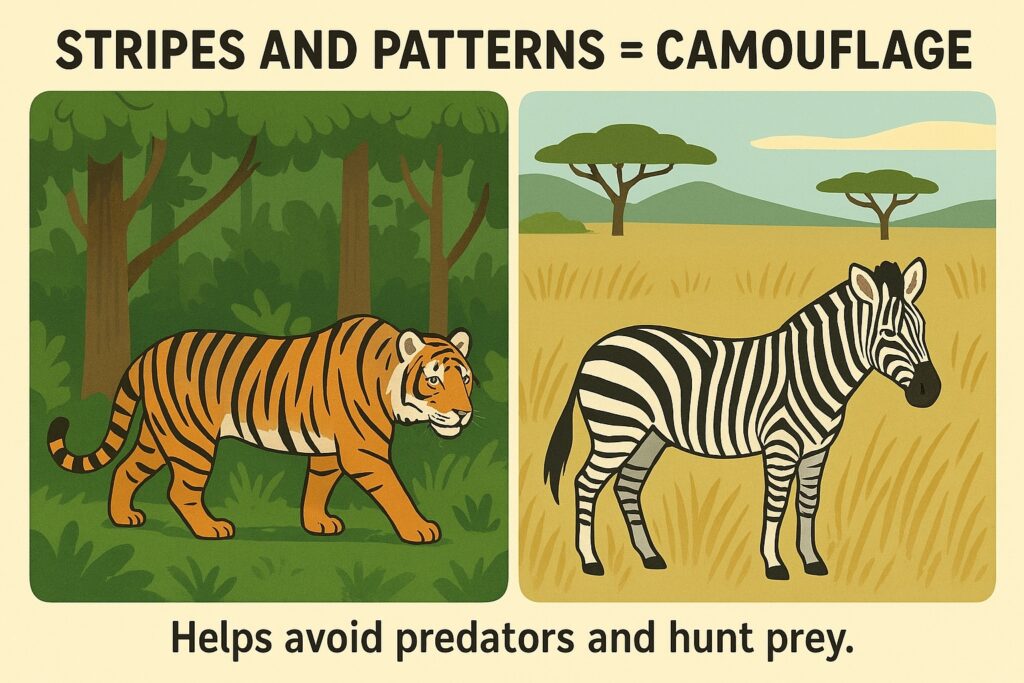
Q1. Stripes on the back of the animals are the indication of
(a) Mating habit
(b) Food habit
(c) Cave dwelling
(d) Matching of skin colour with surroundings
(UPSC Prelims, 1979)
Answer: (d) Matching of skin colour with surroundings
Explanation: Stripes and patterns on animals serve as camouflage, helping them blend with their environment. This adaptation aids in avoiding predators and hunting prey, especially in forests or grasslands where visual concealment is crucial.
Q2. Tallest four-legged animal is
(a) Zebra
(b) Elephant
(c) Giraffe
(d) Ostrich
(UPSC Prelims 1980)
Answer: (c) Giraffe
Explanation: The giraffe is the tallest four-legged animal, with its long neck and legs, reaching heights of up to 18 feet, adapted for feeding on tall trees.
Q3. Reptile that is well known for its intense colour change is
(a) Lizard
(b) Chameleon
(c) Glass Snake
(d) Turtle
(UPSC Prelims 1980)
Answer: (b) Chameleon
Explanation: Chameleons are famous for their ability to change skin colour, which helps in camouflage, temperature regulation, and communication.
Q4. Which bird has a chisel like bill ?
(a) Parrot
(b) Nightingale
(c) Woodpecker
(d) Woodchuck
(UPSC Prelims 1980)
Answer: (c) Woodpecker
Explanation: The woodpecker has a chisel-shaped bill designed for drilling into wood, allowing it to search for insects and build nests.
Q105. When a person moves from poles to the equator, the population of plants and animals will
(a) Increase
(b) Decrease
(c) Remain unchanged
(d) Not show any consistent behavior
(UPSC Prelims 1981)
Answer: (a) Increase
Explanation: Biodiversity increases as one moves from the poles to the equator due to warmer climate, higher sunlight, and greater ecological productivity. Tropical regions support dense vegetation and diverse fauna, unlike the harsh polar zones.