Q1. A body partially floats in wafer when
(a) The volume of the displaced liquid is equal to the volume of the body
(b) The volume of the displaced liquid is greater than the volume of the body
(c) The weight of the displaced water is equal to the weight of the body
(d) The weight of the displaced water is greater than the weight of the body
(UPSC Prelims 1979)
Answer: (c) The weight of the displaced water is equal to the weight of the body
Explanation:
According to Archimedes’ principle, a body floats when the upward buoyant force, which equals the weight of the displaced fluid, balances the weight of the body. If the body is partially submerged, it means the displaced water’s weight equals the body’s weight, allowing it to float stably.

Q2. Ice cubes are floating in a glass of water. When the ice cubes melt, the water level in the glass
(a) Will first increase and then start decreasing
(b) Will first decrease and then start increasing
(c) Will remain unchanged
(d) Will increase
(UPSC Prelims 1985)
Answer: (c) Will remain unchanged
Explanation: Floating ice displaces water equal to its weight. When it melts, it turns into the same volume of water it had displaced. Hence, the water level remains unchanged, demonstrating Archimedes’ principle.
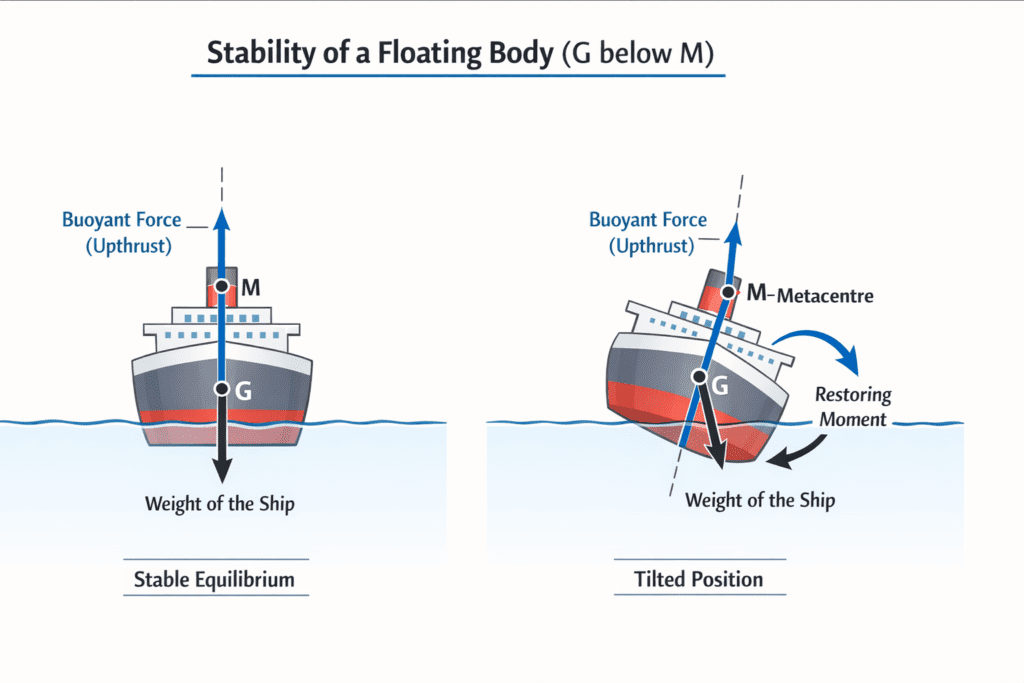
Q3. The centre of gravity of the floating ship
(a) Lies above the metacentre
(b) Lies below the metacentre
(c) Coincides with the metacentre
(d) None of the above
(UPSC Prelims 1985)
Answer: (b) Lies below the metacentre
Explanation: For a floating body to be stable, its centre of gravity must lie below the metacentre. This ensures that the ship returns to equilibrium after tilting, maintaining buoyancy and balance.