Q1. Gobar gas contains mainly
(a) Carbon dioxide
(b) Methane
(c) Ethylene
(d) Carbon monoxide
(UPSC Prelims 1979)
Answer: (b) Methane
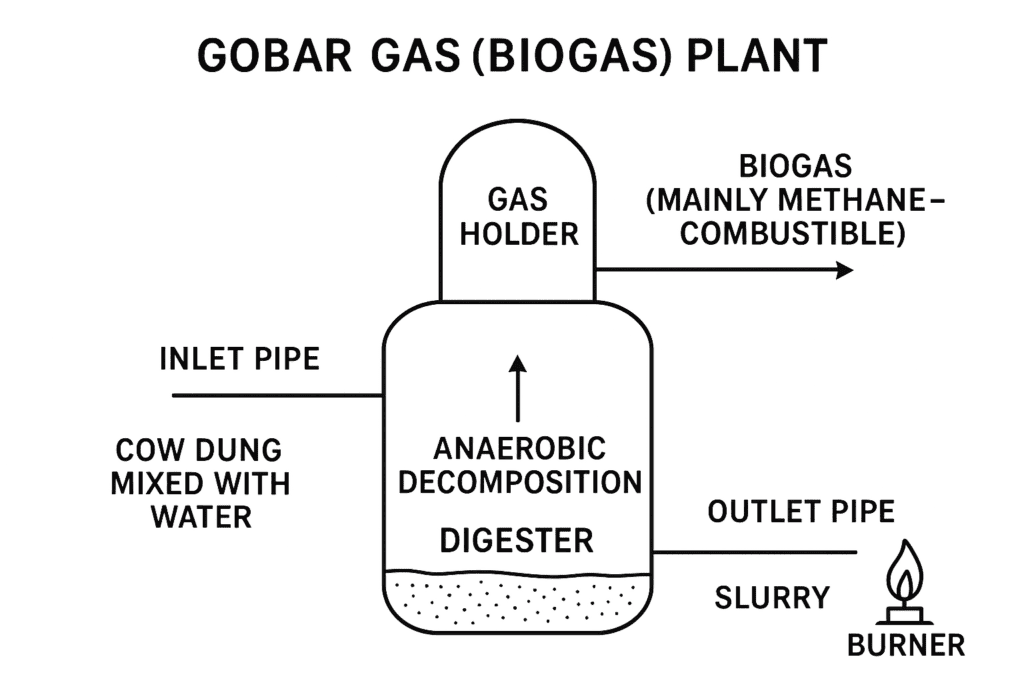
Explanation: Gobar gas, produced from the anaerobic decomposition of cow dung, primarily consists of methane, which is a combustible gas. It is used as a renewable source of energy for cooking and lighting. The presence of methane makes it an efficient fuel.
Q2. The chief constituent of gabar gas is
(a) Methane
(b) Carbon dioxide
(c) Acetylene
(d) Ethylene
(UPSC Prelims 1980)
Answer: (a) Methane
Explanation: Gobar gas, produced from cow dung and organic waste, primarily contains methane, used as a renewable fuel source.
Q3. Dry ice is
(a) Solid carbon dioxide
(b) Ice dust
(c) Liquified nitrogen
(d) Liquified hydrogen
Answer: (a) Solid carbon dioxide
Explanation: Dry ice is the solid form of carbon dioxide, used for cooling and preservation, and it sublimates directly into gas without leaving liquid residue.

Q4. Which substance is commonly used in refrigerators ?
(a) Freon
(b) Oxygen
(c) Ammonia
(d) Sulphur dioxide
Answer: (a) Freon
Explanation: Freon is a chlorofluorocarbon (CFC) used as a refrigerant in cooling systems due to its stability and efficiency, though now being phased out for environmental reasons.

Q5. Gasohol is mixture of gasoline and
(a) Ethyl alcohol
(b) Methyl alcohol
(c) Kerosene
(d) Butyl alcohol
(UPSC Prelims 1982)
Answer: (a)
Explanation: Gasohol is a blend of gasoline and ethyl alcohol, used as an alternative fuel. It helps in reducing fossil fuel consumption and emissions, making it a cleaner energy source.
Q6. The chief constituent of gobar gas is
(a) Hydrogen
(b) Nitrogen
(c) Ethane
(d) Methane
(UPSC Prelims 1982)
Answer: (d)
Explanation: Gobar gas, produced from cow dung and organic waste, primarily contains methane, a combustible gas used for cooking and lighting. It is a renewable energy source supporting rural sustainability.
Q7. Chlorine is
(a) A rare earth element
(b) A halogen
(c) A noble gas
(d) Coinage metal
(UPSC Prelims 1984)
Answer: (b) A halogen
Explanation: Chlorine belongs to Group 17 of the periodic table, known as the halogens. Halogens are highly reactive non-metals and include fluorine, chlorine, bromine, iodine, and astatine. Chlorine is widely used in disinfection, bleaching, and chemical synthesis.
Q8. The most appropriate source of energy for cooking and lighting purposes in rural India is
(a) Bio-gas
(b) Solar energy
(c) Nuclear energy
(d) Tidal energy
(UPSC Prelims 1984)
Answer: (a) Bio-gas
Explanation: Bio-gas is a renewable and locally available energy source derived from organic waste and animal dung. It is ideal for rural households due to its low cost, ease of use, and environmental benefits, especially for cooking and lighting.
Q9. Main constituents of Biogas are
(a) Methane and Carbon dioxide
(b) Ethylene and Carbon dioxide
(c) Butane and Carbon monoxide
(d) Methane and Carbon monoxide
(UPSC Prelims 1987)
Answer: (a) Methane and Carbon dioxide
Explanation: Biogas is primarily composed of methane (CH₄) and carbon dioxide (CO₂), produced through anaerobic digestion of organic matter. Methane is the combustible component, while CO₂ is a byproduct.
Q10. A biogas plant works to its maximum capacity when
(a) Conditions are aerobic and temperature 40℃.
(b) Conditions are unerobic and temperature 40℃.
(c) Conditions are aerobic and sewage is supplied.
(d) Conditions are unaerobic and sewage is supplied.
(UPSC Prelims 1987)
Answer: (b) Conditions are unerobic and temperature 40℃
Explanation: Biogas production relies on anaerobic (unerobic) conditions, where microorganisms break down organic matter in the absence of oxygen. The optimal temperature for this process is around 40℃, ensuring maximum gas yield.