Q1. Green colour of plants is due to the presence of
(a) Chlorophyll
(b) Sugar
(c) Mitochondria
(d) Xylem
(UPSC Prelims 1980)
Answer: (a) Chlorophyll
Explanation: Chlorophyll is the green pigment in plants that plays a key role in photosynthesis, absorbing sunlight to convert into chemical energy.

Q2. Which of the following crops has the highest photosynthetic activity ?
(a) Cotton
(b) Sugarcane
(c) Rice
(d) Wheat
(UPSC Prelims 1981)
Answer: (b) Sugarcane
Explanation: Sugarcane exhibits the highest photosynthetic efficiency due to its C4 pathway, which is more effective under high light and temperature conditions. This leads to rapid biomass accumulation and high productivity.
Q3. Chlorophyll is a/an
(a) Halogen acid
(b) A green pigment found in the plants
(c) A chloro-organic compound
(d) Element
(UPSC Prelims 1982)
Answer: (b)
Explanation: Chlorophyll is the green pigment in plants responsible for photosynthesis, allowing them to absorb sunlight and convert it into chemical energy. It plays a central role in plant metabolism.

Q4. The process of light exposure in a 24-hour cycle that controls the growth and development of certain plants and animals is called
(a) Photosynthesis
(b) Photoionisation
(c) Photoperiodism
(d) Photoluminescence
(UPSC Prelims 1983)
Answer: (c) Photoperiodism
Explanation: Photoperiodism refers to the biological response of organisms to the length of day and night, influencing flowering, breeding, and migration. It plays a critical role in seasonal adaptation.

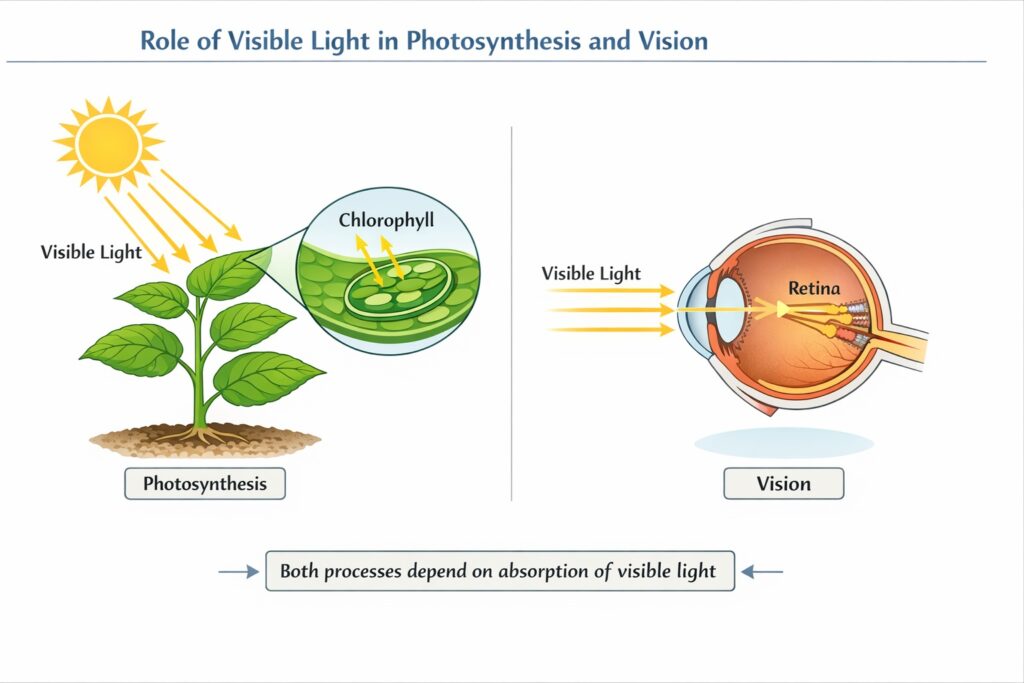
Q5. Assertion (A): Photosynthesis and vision are the phenomenon of visible light.
Reason (R): The visible light is absorbed by small particles containing chlorophylls as well as the retina of the eye.
(a) if A and R both are correct and R is the correct explanation of A
(b) if A and R both are correct but R is not the correct explanation of A
(c) if A is incorrect but R is correct
(d) if A is correct but R is incorrect
(UPSC Prelims 1985)
Answer: (a) if A and R both are correct and R is the correct explanation of A
Explanation: Photosynthesis uses visible light absorbed by chlorophyll, and vision occurs when retinal cells absorb visible light. Both processes depend on light absorption, making the assertion and reason correct and causally linked.
Q6. The final product of photosynthesis is
(a) Carbohydrates
(b) Carbon dioxide
(c) Oxygen
(d) Water
(UPSC Prelims 1986)
Answer: (a) Carbohydrates
Explanation: During photosynthesis, plants convert carbon dioxide and water into carbohydrates (mainly glucose) using sunlight. Oxygen is a by-product, but the primary product is carbohydrates.
Q7. Assertion: Carbon dioxide in air is necessary for sustaining life.
Reason: Carbon dioxide is assimilated in carbohydrates in photosynthesis.
(a) if A and R both are correct and R is the correct explanation of A
(b) if A and R both are correct but R is not the correct explanation of A
(c) if A is correct and R is incorrect
(d) if A is incorrect and R is correct
(UPSC Prelims 1986)
Answer: (a) if A and R both are correct and R is the correct explanation of A
Explanation: Carbon dioxide is essential for photosynthesis, where it is converted into carbohydrates by plants. This process sustains life by producing oxygen and food, making both the assertion and reason correct and connected.
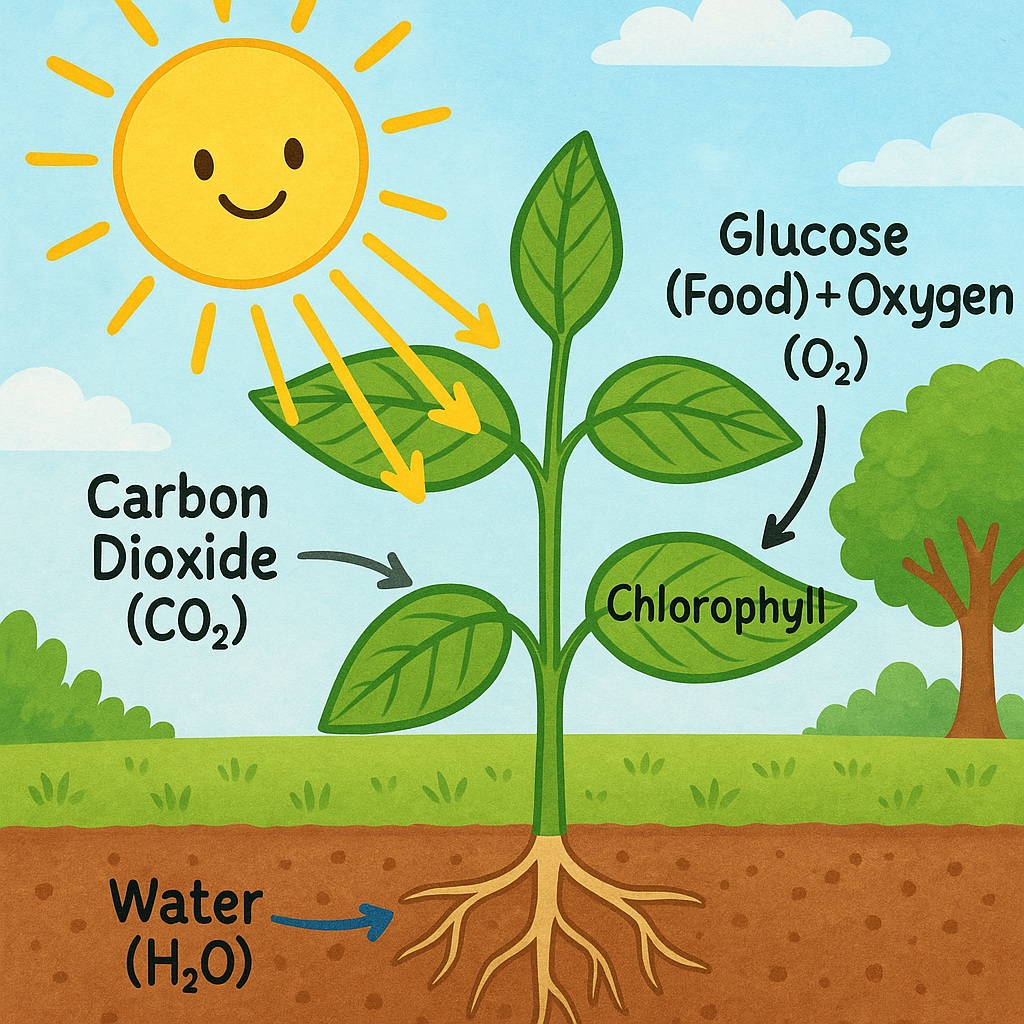
Q8. Photosynthesis generally occurs in which portions of the plant ?
(a) Leaf and other chloroplast bearing parts
(b) Stem and leaf
(c) Roots and chloroplast bearing parts
(d) Bark and leaf
(UPSC Prelims 1987)
Answer: (a) Leaf and other chloroplast bearing parts
Explanation: Photosynthesis takes place in chloroplasts, which are abundant in leaves and other green parts of the plant. These structures contain chlorophyll, essential for converting sunlight into chemical energy.